

Why Harbor Freight's Tools Smell So Bad: Here's What We Uncovered
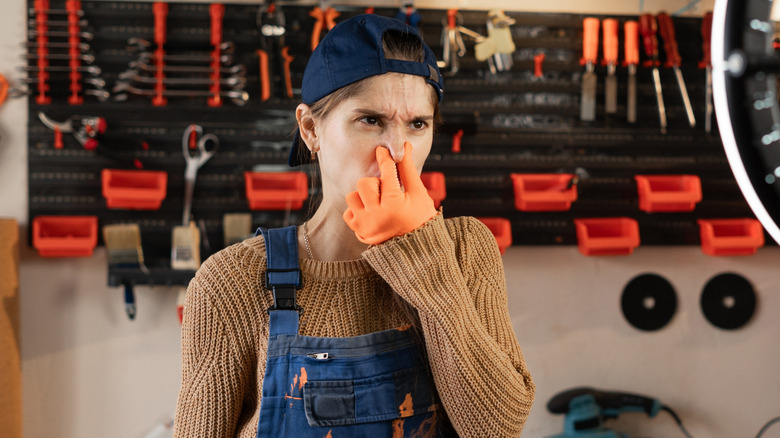
My wife, like many spouses, knows what it means when I disappear for a while, then come home and rush straight into the shower. Yep: I've been sneaking out to Harbor Freight again.
Of course, anyone who has been drawn in by the siren song of the store's trailer tires or its preposterously cheap 10-inch lawn and garden tires knows the scent won't wash off so easily. Rubber is probably the worst source of that distinct "Harbor Freight smell" that wafts into your nose when you step into the store. The production of rubber tends to involve a lot of plasticizers, stabilizers,, oils, resins, and other chemicals that can release VOCs like benzene, toluene, styrene, formaldehyde, and phthalates. Some of these can smell remarkably bad. Consider mercaptans, a sulfur-containing compound that can be smelled in concentrations as low as 10 parts per billion ... which is why they're added to natural gas and propane, making a common home safety hazard a little less hazardous. Mercaptans are also a byproduct of the sulfur vulcanization of rubber.
But unless you work at Harbor Freight, the scent of tires is ultimately less troubling than the smell of the store's plastic tools. Tires, after all, tend to stay outdoors, while your tools would be relatively useless if they didn't follow you everywhere. Unfortunately, plastics crop up everywhere in both hand and power tools. And as with rubber, the cheaper the plastic, the more dramatic the smells they emit. This is the result of cost-cutting in material purity, selection of additives, and various manufacturing processes, including post-treatment steps used to eliminate odors ... or not used to eliminate them, as the case may be.
Plasticizers that improve the creation & price of Harbor Freight tools also make them smelly
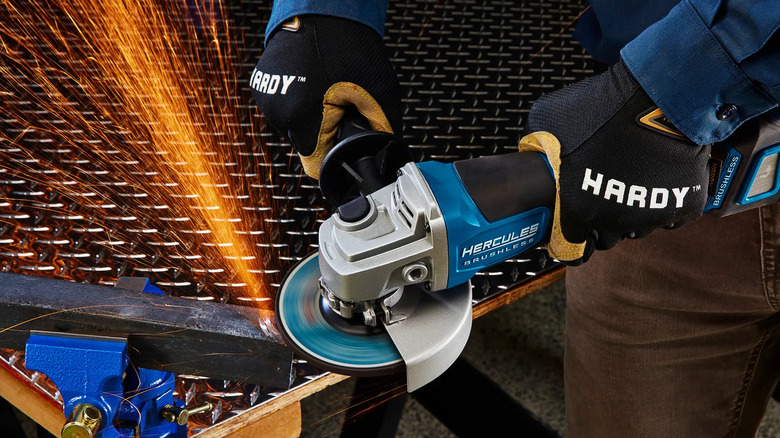
All of this is nothing new. And to be clear, it's not only a Harbor Freight problem, even if their tools offer the most notorious offense to our nasal passages. For example, I recently bought a plastic conduit body at Lowes that smelled so strongly of rancid butter that it made everything on my workbench smell hideous. Old hard plastic screwdriver handles were once famous for exuding this very perfume: That's because the smell of deteriorating cellulose acetate butyrate (CAB), is often characterized as being similar to rancid butter or vomit, as CAB releases butyric acid — also present in vomit and rancid butter — when it breaks down.
Some manufacturers, like PB Swiss, have been known to add a vanilla scent to their plastics to counteract the odor. I've seen claims that this characteristic of CAB is a result of incorrect formulation, but it seems unlikely that a company like PB Swiss would be so careless, or that it would invest in vanilla-scented screwdrivers rather than refining their formulation over the years.
Plasticizers do a lot to make Harbor Freight tools usable. They make plastics easier to mold and work, improve the plastic's flexibility and impact-resistance, and even promote flame-retardance. They make the differences between hard and soft PVC. They soften hard rubber. They also soften plastics and rubbers used for tool overmolds to improve grip. On the other hand, plasticizers and other unreacted monomers, solvents, and processing chemicals release VOCs at room temperature if expensive materials, processes, and additives are neglected. And the smell can come from a very small part of a large tool, as was sometimes the case with gaskets and other components of the diesel heaters that became popular a few years ago.
Should you be concerned if Harbor Freight tools smell bad?
To the extent that the odors hint at shortcomings in the manufacturing process, funky odors might be a price you pay for cheap tools. But is the price too high? Reading about the effects of plasticizers is an unpleasant experience, and please just trust me when I say that one can acquire too much information about what those warnings about "reproductive effects" mean.
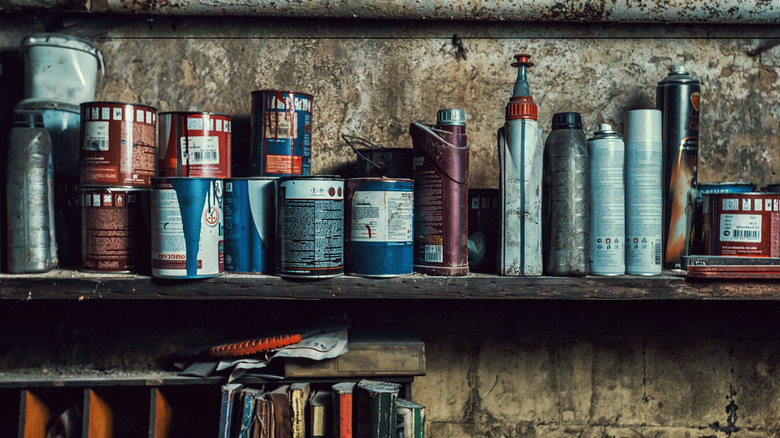
There's really no disagreement about the potential dangers involved here. Plasticizers are becoming increasingly common in the population at large, and some are known to have negative effects for endocrine and neurological systems ... to say nothing of reproductive harm (and again, I will indeed say nothing of it. You'd thank me if you knew). VOCs, from plasticizers and otherwise, are everywhere. The EPA's list of common VOC sources includes paints, paint strippers, solvents, wood preservatives, aerosol sprays, stored fuels, automotive products, pesticides, glues, and building materials. It's like they took an inventory of my workshop.
But the EPA doesn't mention tools, and it's hard to say how much smelly, cheap tools contribute to the potential risks of VOCs. But it seems safe to assume that a tradesperson or a DIYer or woodworker who spends many hours holding tools has more reason to be cautious. For me, that caution means improving ventilation and occasionally sticking the smelliest tools out in the sunlight or into a sealed container with some activated charcoal. Knowing the causes of the Harbor Freight tool smell probably won't affect my purchasing decisions, since the knowledge won't increase my budget, and besides ... did you see that list of VOC sources? I've got bigger problems to contend with.