

Do You Need To Cover Your Outdoor Faucets This Winter? Here's The Truth
We may receive a commission on purchases made from links.
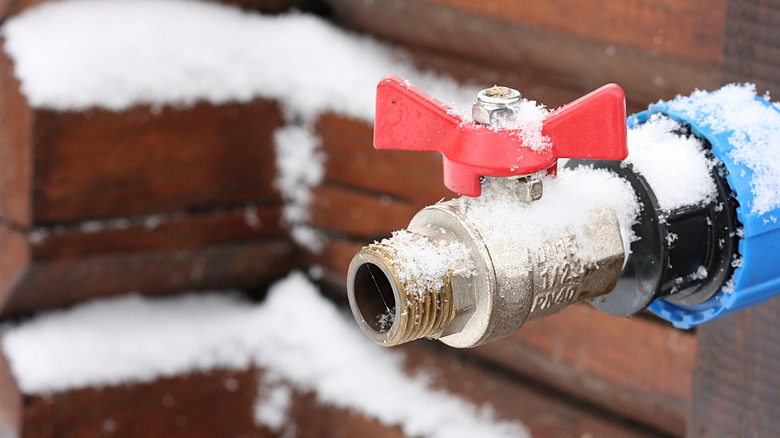
As the days get shorter and temperatures start to plunge, there are lots of things to do to prepare your house for freezing weather. Covering your outdoor faucets is usually on the winter prep to-do list for anyone who lives in regions with freezing temperatures, but is it really necessary? In newer homes, you may have a frost-proof outdoor faucet, which is designed to prevent any water buildup in the pipe that heads outside. If you know for certain that you have this design, you won't need to do anything special when winter hits. For most homeowners, though, you'll have a more standard outdoor faucet with a pipe that can freeze and burst when the temps plummet. And this means expensive, messy damage to your home unless you prevent it by properly covering that outdoor spigot.
Home damage from frozen and burst pipes in winter is one of the most common insurance claims, according to the Insurance Institute for Business and Home Safety. Water expands when it freezes, which is why your very exposed outdoor faucet is especially vulnerable to cracking anytime temps drop to 32 degrees or lower for more than a few hours.
While you may have read that you can just let your spigot drip slowly during cold stretches, this is not only wasteful of water, it isn't very effective. A dripping outdoor faucet may keep water from freezing in the pipe over a couple of days of cold weather, but for any seriously chilly stretches, that water may turn into ice anyway. Not to mention the drips will create an icy patch below your faucet, which is a slipping hazard. Covering your spigot is the better move, and it's a quick and inexpensive way to protect your home.
How to cover your faucet to protect against freeze
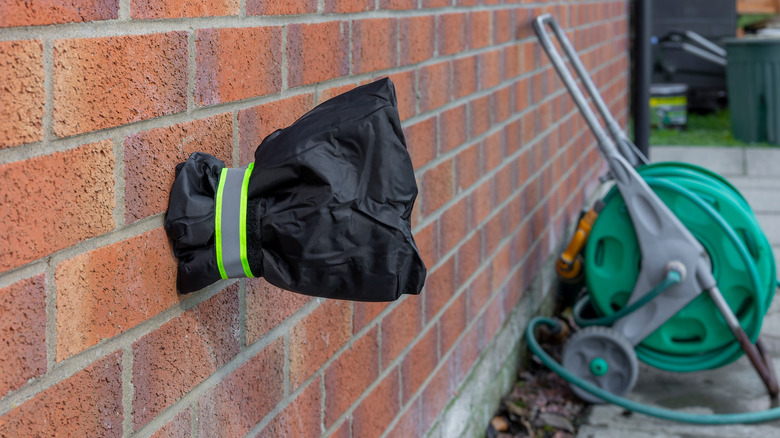
Before you cover your faucet, first, disconnect any outdoor hoses and clear away any plant growth or debris around the faucet itself. Then, you need to shut off the water supply valve and drain any water that is inside the pipe. Once you've done these steps, you can choose from a few different methods to cover your spigot.
You can find foam shields, such as the Home Intuition Foam Covers, online or at any hardware store. These are very easy to use and are effective at trapping heat from your indoor plumbing around your outdoor spigot to prevent freezing. You don't need any tools to install this type of cover, which works by attaching an inner loop to your faucet pipe and then pulling on the outer string to secure the cover against your wall. However, you need to really seal these covers tightly against your house for them to work properly. Another type of faucet cover on the market is an insulated cloth cover, like NEKSKA Spigot Cover, that fits like a sock over your faucet and secures into place by a strap you can tighten. Both the foam covers and insulated spigot covers come in multiple packs for less than $20.
A DIY method simply involves wrapping an old towel all the way around the faucet, covering the towel with a plastic bag, and cinching up this homemade insulation with weatherproof duct tape. YouTuber @DaddingAllDay demonstrates this easy method but cautions that it may not provide a perfect insulated seal for very long stretches of below-freezing weather. If you live in an area with harsh winter temperatures, you may want to invest in a store-bought cover to better prevent frozen pipes and a damaged spigot this winter.