

Read This Before You Use Liquid Dishwasher Detergent Again
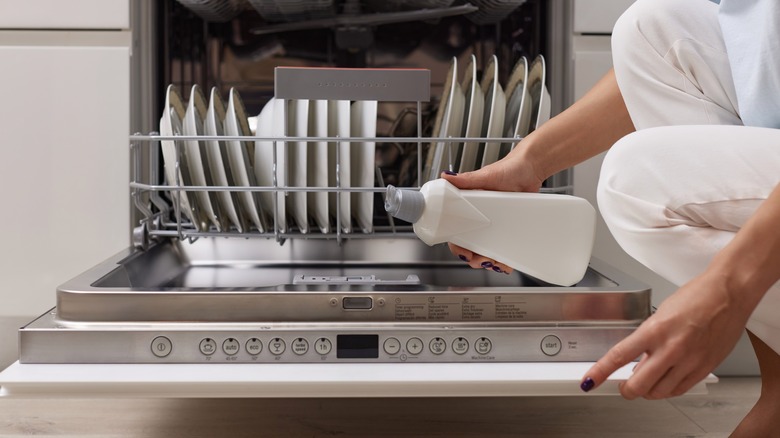
Liquid dishwasher detergent isn't bad, but the truth is that it's not quite as good as powder detergents, and substantially less effective than detergent tablets and pods. The problem is one of chemistry, and so it is fairly straightforward: A combination of bleach and enzymes does the best job of cleaning dishes, and liquid dishwasher detergents can't contain both. On the other hand, you have the alternatives — powders, pods, and the surprisingly versatile tablets — where non-chlorine bleach and enzymes can coexist until they both find their way into the same water.
Now, there are other, less science-y reasons that powders and pods outperform liquid dishwasher detergents as well: Powders, for their part, are less expensive, are packaged with less material, and can be used in amounts measured out for each load, eliminating waste. Meanwhile, pods and tabs clean better and leave less residue on dishes (though they do require longer washing cycles). However, if you're still going back and scratching your head at the "Why can't liquid detergents have both enzymes and bleach?" part, let's dig in a little further.
The science behind why powders and pods are better than liquid detergents
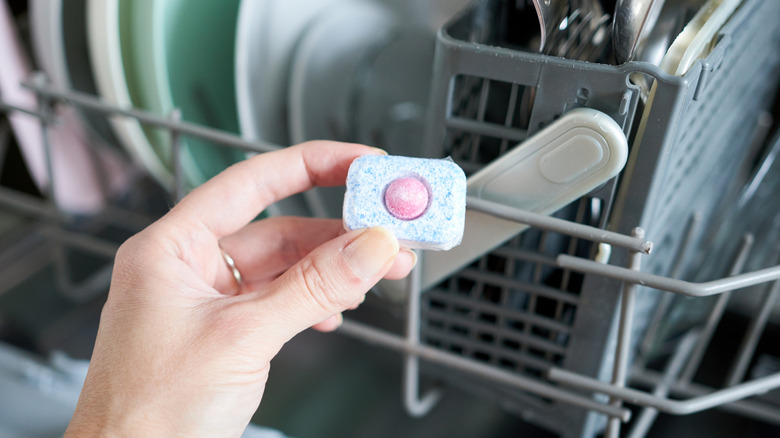
While liquid dishwasher detergents don't contain both bleach and enzymes, powders and pods do. What both rely on is the enzyme remaining intact for a bit before it's destroyed by the bleach. The dry state of powder detergent effectively eliminates such chemical interactions, and pods accomplish this separation by literal, physical separation in their compartmentalized, time-released capsules.
Chlorine bleach will denature and inactivate cleaning enzymes almost immediately, while non-chlorine bleaches (you'll often see them named on detergent labels as "oxi" or similar) do the same thing, but a little more slowly. Some make a lot of this distinction, but to be clear, consumer dishwashing detergents don't usually contain chlorine bleach these days. When you see a mention of bleach on dishwasher detergent packaging, it usually refers to a non-chlorine bleach called sodium carbonate peroxide (also known as sodium percarbonate), which is a precursor that breaks down into hydrogen peroxide when dissolved in water.
Enzymes do their work early in the dishwashing process, before any non-chlorine bleach that's present can inactivate them and move on to the cleaning work they're really there for. The enzymes activate first so that one molecule of an enzyme can catalyze the breakdown of millions of food particles. Next comes non-chlorine bleach (again, that's normally sodium percarbonate), which helps with removing stains and breaking down grease. Bleach also sanitizes the dishes. This mirrors the way bleach and enzymes are handled when doing laundry, which might be more familiar: Chlorine is added well after the enzymes have had a chance to work, or non-chlorine bleach is added at the last minute before clothes go in. That's all well and good, but what about environmental and septic factors?
How different dishwasher detergents impact the environment (& septic systems)
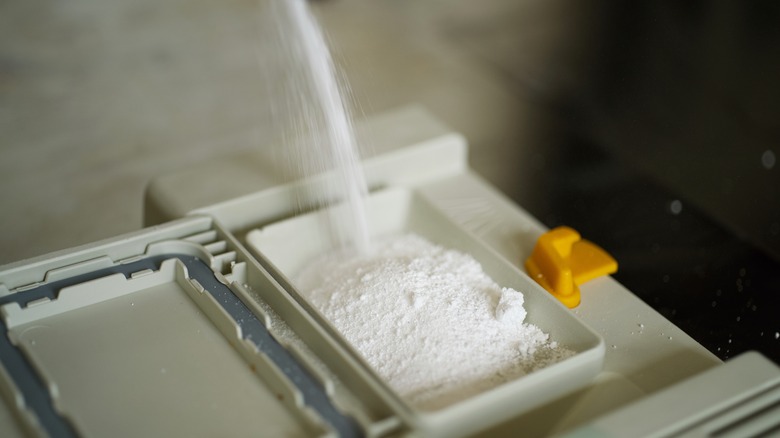
As a whole, environmental protections in the world of detergent are mostly moving in the right direction. Enzymes replaced environmentally damaging phosphates as a means of breaking down food particles. And of course, the elimination of chlorine bleach is a good thing. But we mentioned above that dishwasher detergent powders are packaged with less materials, and that's a good starting point for understanding how nothing about the environmental impact of dishwasher detergents is simple. While it's true that boxed powders require less packaging than liquid or pods, sometimes the cardboard boxes are lined with plastics to keep the powder dry and avoid the destructive chemical reactions discussed above.
The polyvinyl alcohol that makes up the coating of dishwasher pods is often described as biodegradable... but that's a controversial point of view, to put it mildly. The fact is that the degree to which PVA breaks down isn't known, but research suggests that between 75 and 135 metric tons reach wastewater treatment plants each year, many of which are unable to completely break them down and are thus passed them along into waterways as microplastics. We also know that PVA can absorb and transport heavy metals and other contaminants.
Finally, there have also been concerns about dishwasher detergents contributing to septic system problems. After all, septic system maintenance is a common homeowner stress point. Fortunately, that concern mostly arose from earlier detergents that contained phosphates. Regardless of whether you go with powder, liquid, or pods, modern dishwasher detergents don't contain phosphates. Furthermore, their enzymes break down and their bleach is diluted to levels that are septic-safe. With all that said, non-toxic pods are generally claimed by septic companies as the overall best bet from both a cleaning & septic safety standpoint.