

Homeowners Urged To Put A Glass & Paper In The Sink Before Vacation (It's Not As Weird As It Sounds)
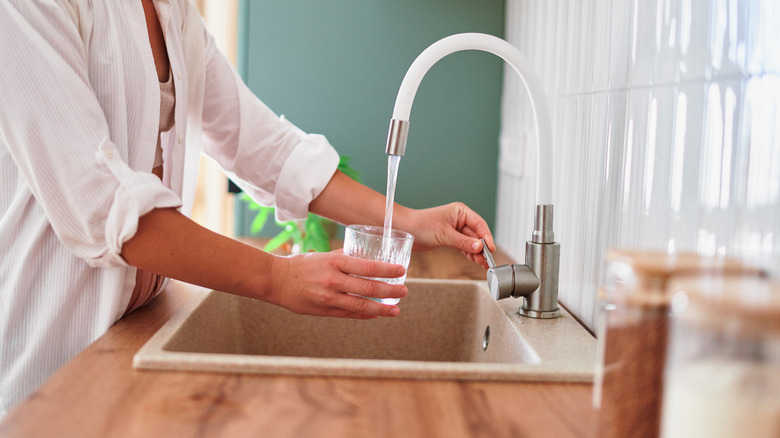
It's normal to feel a little apprehension when returning home from vacation. After all, there are lots of ways to instantly erase all the relaxation and reinvigoration your getaway supplied. One of these — not the most serious, but certainly a big "unwelcome home" — is when you open your front door to the stench of sewer gases. And this turns out to be a shock that's usually super easy to prevent.
Picture it: The kids are in the car and the luggage is spilling out of the trunk. You're an hour late, and you'll have to skip some sightseeing to make it to your hotel, B&B, ferry, or whatever else on time. But after everyone else is out of the house, take the time to pour a glass of water down your sink drain, lay a damp paper towel flat over the drain, and place the empty glass on it before heading out the door.
This simple trick works by keeping your P-trap from drying out while you're away. When you run water down most household drains, some of that water gets held in the drain's P-shaped curve, effectively using your water to stop septic and sewer gas odors from backing up into the house. (It's also an easy fix for a common septic tank issue that sometimes turns out not to really be a septic tank issue at all.) Really, a sink's P-trap is a bit of genius. It works without any moving parts and functions automatically when you simply use the plumbing. On the other hand, it's a pretty low-fi system that doesn't handle exceptions well.
Slow the evaporation of water from the P-trap
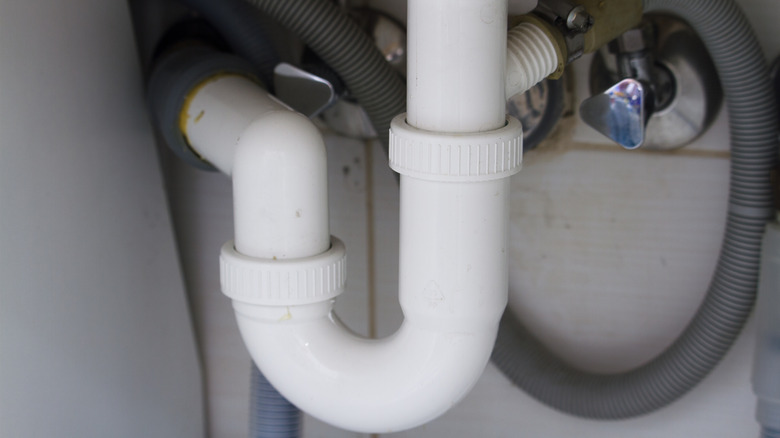
The unusual circumstance your P-trap can't handle? Not being used. And the paper towel and glass trick works so well by addressing every aspect of the problem: The glass of water poured down the drain fills the trap. The wet paper towel seals the drain against evaporation. And setting the glass on top of the paper towel holds the seal in place and prevents it from completely drying out too quickly.
Whether taking a step like this is important for you depends on a bunch of things — most importantly, how long you will be away. In normal circumstances, a trap will dry out in around a month. But if you have fixtures that haven't been used recently, you might find that the drain is already well into that one-month timeframe before you leave for vacation, and the trap could run dry while you're only away for a week or two. The problem tends to crop up in infrequently used drains — perhaps a guest bathroom or the floor drain in a basement or laundry room.
The timeframe can also be shortened a little in winter, when dry P-traps are most common, as well as in areas with a dry climate, which hastens evaporation. Older homes with S-traps will usually experience more frequent dry traps because the physics of S-traps causes them to be more prone to emptying the bend that should hold water.