

Homeowner Shares When A Free New Roof Isn't Worth It: 'Are All Of My Neighbors Committing Insurance Fraud?'
Unless you live in a neighborhood with more drama than a Netflix series, the question "Are all of my neighbors committing insurance fraud?" isn't likely to come up, but leave it to Reddit to ask the unexpected questions. In a conversation that's not nearly as unusual as it should be, Redditors are talking about roofers in vinyl-wrapped, $100,000 pickups who flood some neighborhoods after big storms. According to the legend, these guys knock on your door and offer to convince your insurance company to replace your roof for free, whether you're entitled to it or not.
What's really going on here is very different, though, and at least half of the Redditors know it. Insurers are not trying to lose money, and these companies are chock-full of very smart people who aren't about to pay out $11,000 (the national average price of a roof replacement) if they can get out of it, which is part of what they pay adjusters for. Common roofing scams targeting an insurer will have an uphill battle because insurers are aware of their tactics (like using a hammer to replicate what looks like hail damage, for example). The Insurance Institute for Business & Home Safety (IBHS) conducts hands-on research to differentiate between real storm damage and faked damage, and the insurer's adjuster is there to sniff out any attempt to misrepresent the cause, nature, and severity of the damage.
Who, then, are the sketchy roofers trying to fool? In "Rounders," Mike McDermott said, "If you can't spot the sucker in the first half hour at the table, then you are the sucker." When it comes to roof replacements, there are a number of ways you could find yourself in the sucker's chair.
The day almost everyone on a Reddit thread agreed
The Reddit conversation is similar to some I've participated in myself over the years, both in personal and professional contexts. Underlying many of the comments is an understandable distaste for the insurance industry, and I understand. However, having just had my roof replaced last week with no insurance company involvement and on my own dime, I have a newfound respect for the reasonableness of the industry. The consensus is that it's unlikely to play out the way the roofers claim, and most don't buy that it's even possible to scam an insurer armed with favorable policy terms, storm records, and adjusters to review claims.
One Redditor describes an actual scam directed at insurers in which a roofer submits a high estimate for repair, then rebates the homeowner to cover the deductible. This does happen. According to the National Insurance Crime Bureau (NICB), in 2022, two roofing contractors were arrested for offering homeowners illegal rebates to cover their insurance deductibles in exchange for homeowners' full roof replacement claims.
Of course, insurance companies won't tolerate endless losses and avoid them with rate increases and higher deductibles (many commenters cited astronomical deductibles of 2 percent of the policy value). One commenter who went along with the roofing company had their claim rejected and was then accused of attempted fraud by the insurer. As a result, they saw their rates triple. One Reddit user's claim was actually approved by an adjuster, but as well as a new roof, earned them a canceled policy. On the whole, commenters urge homeowners to avoid such schemes and limit their own financial exposure. One comment puts it succinctly: "Do you think if he will cheat the insurance company he won't cheat you?"
What the claims process should (and shouldn't) look like
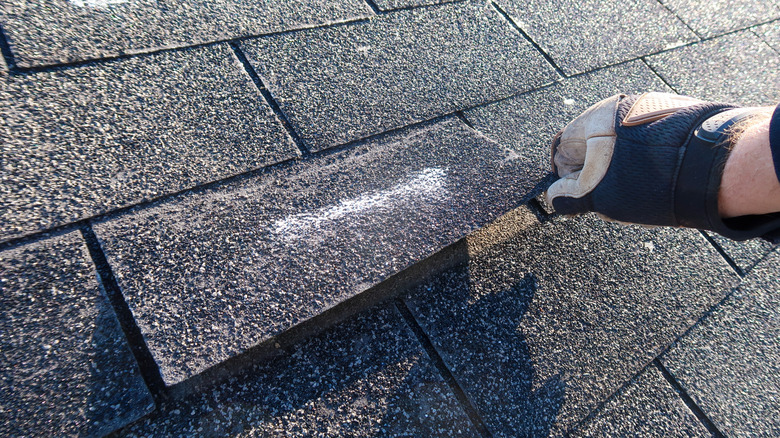
The difference between insurers' claims processes and the process recommended by storm-chasing roofers is telling. In the insurance process, your insurance claim will be founded initially on an inspection of the damage, which you will probably do yourself. After you file the claim with your insurer, they will typically schedule a visit from an adjuster to evaluate the claim. The adjuster will give a thumbs-up or down on the need for repair or replacement and set an amount that the insurer will be willing to pay out on the claim. If all goes well, with an initial payment in hand, you'll find a roofer to do the work for you and then hand the check to them. There are variations, but good roofing companies are wholly on board with this approach.
Disreputable roofing contractors, on the other hand, prefer a process that starts with an inspection by the contractors themselves, which is immediately followed by the homeowner signing a form called an Assignment of Claims (AOC) or, somewhat more honestly, an Assignment of Benefits (AOB). This transfers your rights and responsibilities to the roofer, including payment. This happens before there's a contract, before either cost or a timeline has been determined, and before the claim has been settled. The contractor will then schedule the insurance inspection, submit an estimate (probably without the homeowner's involvement), and receive the first check directly from the insurer. From there, they will hopefully schedule and complete the necessary repairs, but that's not always the case, and some roofers will just take the money and cut and run.
Scams and how to avoid roofing scams
Avoiding trouble starts with understanding your policy. Policies are written to cover either the damaged roof's Actual Cash Value (ACV) or its Replacement Cost Value (RCV), and your insurance company might dictate which you have based on its policies and/or the age of your roof. An ACV policy has lower premiums but depreciates the roof based on age and condition, while an RCV policy has higher premiums but pays the full cost of a roof replacement, minus any deductible.
There are a few guidelines for hiring a roofer. For one, always contact your insurer first and follow their process. If someone knocks on your door unexpectedly, very concerned about your roof, embrace the National Insurance Crime Bureau's mantra: "If you didn't request it, reject it!" Contractors' urgency rushes you into making errors, so give yourself time to think before making decisions. Only approach licensed, insured, and reputable local roofing companies. Interview the contractor, check references and reviews, and always get multiple bids.
It's also a good rule to never pay more than ⅓ of the total job's cost as a deposit. The requirement to pay a large deposit is sometimes a sign that the roofer is about to skip town, ghost you, or hand your business off to sub-par subcontractors. Do not sign an AOB, as these documents primarily benefit roofing contractors and are a recipe for inflated costs, poor accountability, and conflict, and are illegal in some states anyway. An honest, reputable roofer will tell you that an AOB is not required for your roof's repair or replacement. States have begun to take action against the misuse of AOBs. But some insurers prefer working with roofers, according to Redditors, and that might make some basic agreement between you and the roofing company necessary.