

What Happens If You Add Coffee Grounds To Your Blueberry Plants?

If you are lucky enough have a garden where you can grow delicious blueberries, you already know the delights of picking these plump little flavor bombs each summer. A variety of blueberries (Vaccinium spp.) can be grown throughout the United States, from the common highbush blueberry (Vaccinium corymbosum) in the east to the bog blueberry (Vaccinium uliginosum) that thrives along the West Coast. Whatever type you grow, if you want more berries to fill your basket, you may have heard that adding spent coffee grounds is a great way to improve your harvest. But does coffee actually work to enhance those blueberry bushes?
While it is true that many plants love coffee just as much as you do, the benefits using spent grounds around your blueberry bushes may not be what you imagine. A long-standing myth is that adding coffee grounds will raise the acidity of your soil, and since blueberry bushes love acidic soil, it would seem to follow that adding grounds would be helpful. But coffee grounds don't have any acid-enhancing benefits. Brewed grounds are actually close to pH neutral, and adding them to soil won't significantly do much to soil acidity. But there are some benefits that can be derived from adding coffee grounds to your blueberry patch, if you apply them thoughtfully.
How coffee grounds can help, and how to apply them correctly
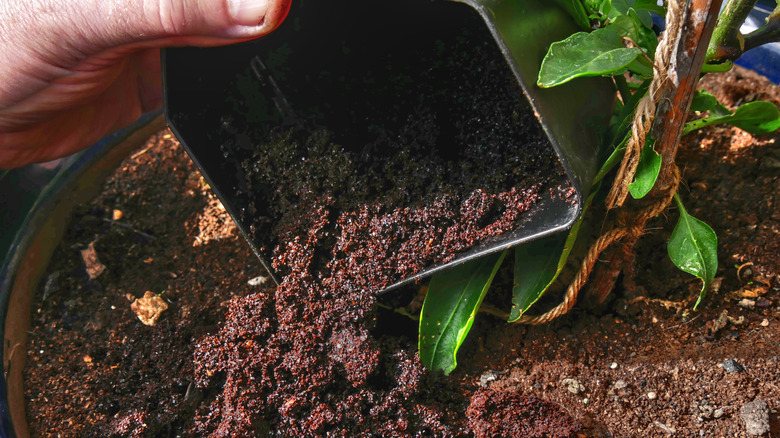
Even if raising soil acidity is a myth, many gardeners swear by adding coffee grounds to improve overall soil structure, including around fruit trees and bushes like blueberries. Adding grounds to your soil will feed beneficial microbes in your dirt, can help improve drainage, and can even keep slugs at bay. Simply add them as a top layer around your mature bushes to enhance your soil like you would mulch. But keep grounds away from new seeds and seedlings. All that caffeine can stunt plant growth and keep seeds from germinating. And don't add too much. A couple of inches is enough to provide known benefits to soil without risking the health of your blueberry bush. Too many grounds applied to blueberries, especially in winter months, can result in yellowing leaves and a weakened plant.
If you've tested your blueberry's soil and find that you need to adjust the pH to raise acidity, skip the coffee grounds and reach for sulfur or sphagnum peat moss. Fertilizers with ammonium will also help acidify soil. These amendments will lower pH and result in healthier bushes and more berries over time.