

Brilliant Teen's Home Safety Invention Rethinks Traditional Deadbolts: How It Works
We may receive a commission on purchases made from links.
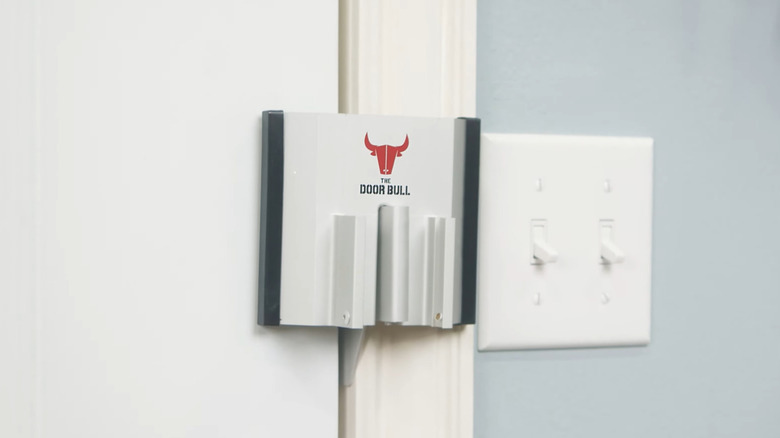
Don't be alarmed, but there's a pretty good chance your home's deadbolt locks aren't doing much to protect you from anyone who's determined to get in and knows the right place to kick. The problem is that a traditional deadbolt focuses all of the force of a kick in a small area of the door frame, which is weaker than the door itself or the surrounding framing. There are also several ways to address this vulnerability, and one option is a device called The Door Bull.
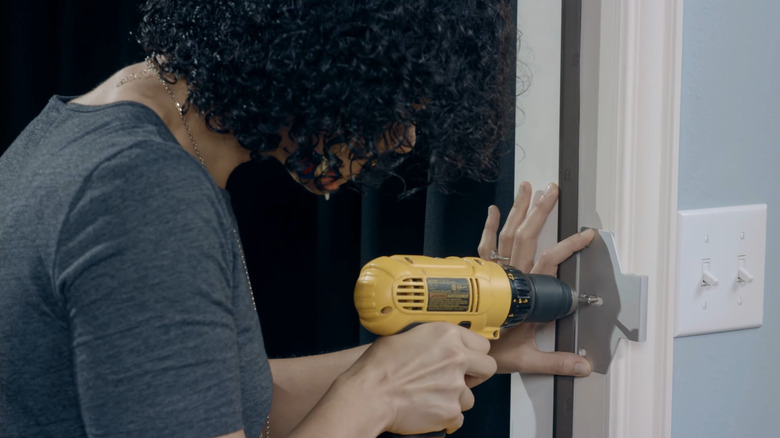
This simple device, called The Door Bull, was invented by Ayush Sidapara, an Arizona high school student who says that some break-ins in his neighborhood and nearby school shooter threats got him thinking about the shortcomings of ordinary deadbolts. The solution Sidapara devised aims to supplement everyday locks rather than replace them. The device starts with a plate that looks a bit like an elaborate strike plate secured with long screws. The plate holds the main part of the Door Bull, an aluminum device that interlocks with the plate and pushes against both the door and the door frame when someone attempts to open the door.
The Door Bull has a lot going for it. It's effective, by all accounts, and it's certainly easy to install. But given all the options available to homeowners and renters, one key attribute of The Door Bull is the aesthetic. Sidapara describes more traditional barricade locks as "dystopian-looking," and they do call to mind a time and place in America where city dwellers might think of crime as more of an inevitability than a worry. The Door Bull is sleek and relatively unobtrusive compared to these other heavy-duty locks.
How the Door Bull (mostly) works
The Door Bull isn't an entirely new sort of lock. Ways to use the door itself, its frame, and the floor for strength have been around for well over a century. An early version of the police lock was patented in 1907, known as the Fox police lock. The Door Bull is similar to it in that it uses the strength of the door frame itself to reinforce a standard deadbolt. The product distributes the force used to batter the door across a larger area than a typical deadbolt will, preventing door kick-ins that rely on the deadbolt breaking through the door frame.
The Door Bull also uses longer-than-usual screws to affix its locking plate and comes with additional long screws that can be used to fortify existing hinges. These long screws allow the hinges and locking plate to be mounted to the studs into which the door frame is set, which are typically much stronger than the door jamb itself. It should be noted that replacing your deadbolt mechanism's screws with longer ones is one door safety hack you should do, whether you buy The Door Bull or not. The mechanism also includes padding that protects the door and frame from damage, while absorbing some of the force applied by a potential intruder.
There are a couple of potential drawbacks to the way The Door Bull works. The device only works with inward-opening doors, which are the standard for residential doors, but not for commercial and public buildings, and it only works when someone is home to put the device in place.
Alternatives to The Door Bull
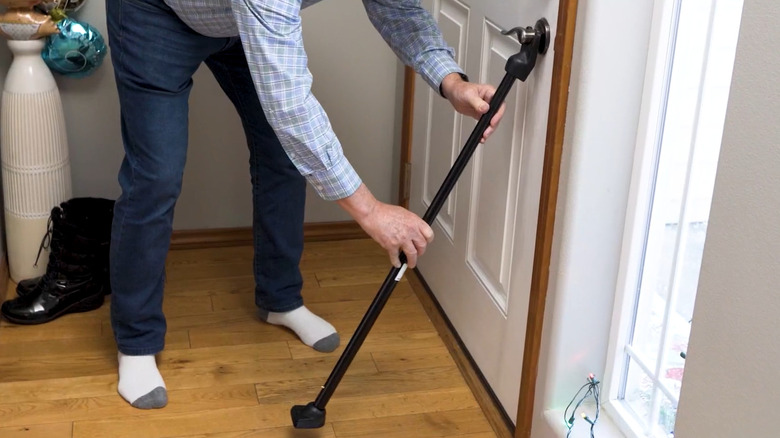
The Door Bull — like chain locks, swing locks, and others — isn't meant to prevent burglaries when you're out of the home, but to stop robberies and crimes like home invasions when you're in the house. If you need something that can be engaged when you're out of the home, there are a few supplemental locking mechanisms, like the classic Segal lock, that can work.
The Segal lock — perhaps the best of the various types of locks — protects your door against "jimmying" by securing its bolt 360 degrees, in the manner of a padlocked hasp. Another classic, the celebrated police lock, came in the same two basic varieties as today's Door Bull competitors, using either the floor or the door's frame for strength — these are generally called "jammers" and come in varieties that use the door handle as an anchor point under the door itself, such as the SECURITYMAN Door Security Bar. Others are attached to the door and flip down to provide an effective door stop and can be mounted using adhesive — ideal for renters looking to avoid damage.
Products like TrueOak's Door Reinforcement Locks are similar to The Door Bull. Some specifically address the woefully insufficient strike plates that come with basic deadbolts, including Door Armor, which includes a 46-inch jamb shield that's basically an extended strike plate. There are even electromagnetic locks that use a 12-volt electrical current to resist up to 600 pounds of force. As another benefit, while deadbolt locks can be picked, electromagnetic locks cannot.