

It's Official - This Cozy Kitchen Trend Is Taking Over In 2026
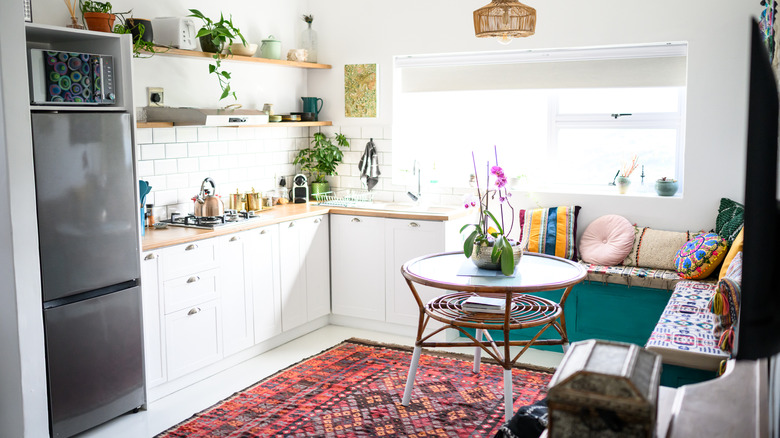
As an area that does heavy double duty as both a practical and social hub, people put a lot of time and thought into designing their dream kitchens. In order to accommodate the ever-changing requirements and preferences of modern society, kitchen design trends shift every few years, resulting in the need for professionals, such as interior designers like myself, to perpetually keep their finger on the pulse of the industry.
In an effort to pinpoint where residential kitchen designs are headed for next few years, the National Kitchen & Bath Association released their 2026 Kitchen Trends Report, which surveyed 634 experts to gauge the popularity of various features, materials, and functions. The report found that customized, multi-purpose spaces were considered to be important, with lifestyle personalizations such as dedicated beverage areas, pet feeding stations, integrated mudrooms, flex-office spaces, and smart storage noted as some of the top features that will be popular in 2026. Among these standout kitchen customizations, there was one important trend that 59% of industry experts say is slated to make a welcome comeback: eat-in kitchens. And, frankly, I agree.
I'm not talking about a formal dining room adjacent to your kitchen, or a large table in an open floor plan. The eat-in kitchens of 2026 are all about creating a welcoming, cozy space that fosters connection, presence, and a slow pace of life, even in smaller setups. So grab a cup of coffee, pull up a chair, and let's chat about why more people will be looking for eat-in kitchen nook ideas in 2026 — and how you can create one in your own home.
Eat-in kitchen areas foster connections and create a cozy space to make memories
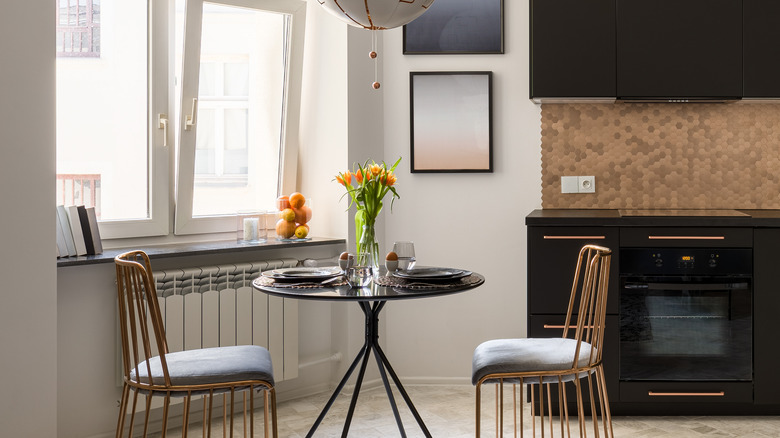
Eat-in kitchens began to pop up in the average American home during the 1940s. They skyrocketed to popularity in the '50s and remained fairly ubiquitous for several decades after that. However, as the open concept floor plan started to really take hold in the '80s and '90s and the working island became a cherished staple, eat-in kitchen nooks fell by the wayside. In recent years, kitchen seating has focused on allowing people to sit on stools at the island, where they can easily socialize with whoever's cooking.
I'm seeing a shift begin to happen, however, in which many people are no longer satiated by a quick kitchen pitstop on a row of forward-facing barstools. Instead, people are drawn in by the more intimate, cozy alternative of small eat-in kitchen setups, which encourage conversation, connection, and intentionality. Perhaps a greater reflection on the resistance against the breakneck speed of modern daily life, people are choosing to take a breath, sip some tea, and catch up face-to-face with loved ones around a small table nestled into a corner of their kitchen.
There's something about the informal, hygge-like atmosphere fostered by a great kitchen table that celebrates the beauty of everyday life. I'm not at all saying that family memories can't be made around a large, formal dining table, but an eat-in kitchen has a way of capturing those quieter, quainter, and more casual memories. In this sense, the eat-in kitchen becomes the setting in which small moments come together to form the fabric of daily life, creating a different sort of lasting impression.
How to create your own eat-in kitchen area
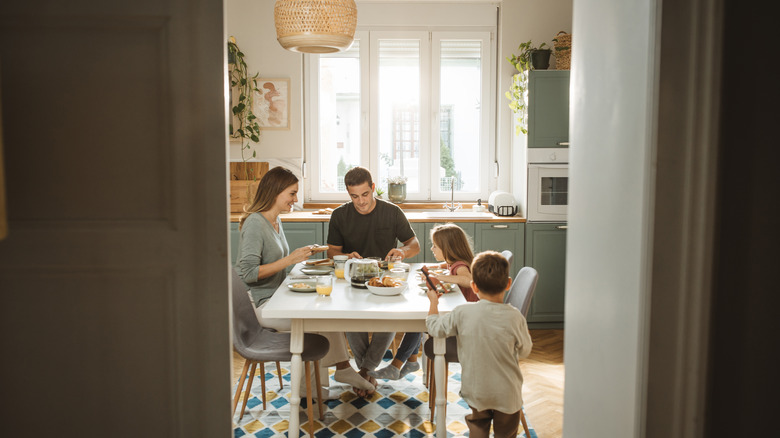
There are many ways to create your own kitchen eat-in area, the most obvious of which is to take advantage of a dedicated nook originally designed for that purpose. Simply pop in a small table and a few chairs, and you can start enjoying a slower, more intentional pace of life. However, specific eat-in breakfast nooks have been omitted from many homes in recent years, so you may need to get creative.
Some kitchens have an underutilized corner or dead space beneath a window, both of which are perfect areas to incorporate a tiny seating arrangement. Try floating a small bistro or drop-leaf table with a pair of chairs that can be moved as needed for a more flexible arrangement. Alternatively, if space is really tight, you can build in a small banquette or bench to nestle the dining setup right against the wall or corner. For those with packed kitchen perimeters but a little extra walking-around room in the center, I love looking back to grandma's kitchen "work table" for inspiration. Rather than a dedicated island, opt for the flexibility and coziness of a larger table floating in the middle of the kitchen; this can function as a working prep surface for many hands as well as a gathering and dining table.
Whether you choose a bistro, banquette, or work table, incorporating a more intimate seating arrangement into your kitchen creates the perfect peaceful, intentional space for reading a book, watching the birds, prepping dinner, catching up with loved ones, waking up slowly with a cup of coffee, and making a lifetime of family memories in the heart of the home.