

The Simple Trick That Makes Cleaning Your Microwave Filter A Breeze
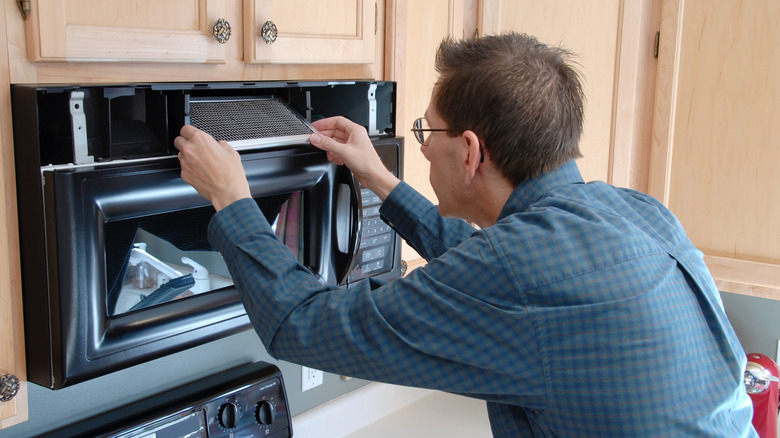
Over-the-range microwaves are great for saving space, heating food, and even helping to ventilate your kitchen, but there may be an important cleaning step you're skipping. Depending on the type of ventilation your microwave has, you should be either cleaning or replacing your microwave's filter. Charcoal filters can't be cleaned and need to be replaced, but metallic grease filters must be cleaned. Most of the time, this is a simple process. All you need to do is remove the filter and give it a quick wash in soapy water. However, if it's been a while since you've cleaned it (or if you're just now learning it exists), the grease might be tougher than a short soak can handle. Luckily, there's an easy trick to getting rid of the grease without breaking your filter! All you need is a little bit of baking soda and some hot water.
Baking soda is a mildly abrasive alkaline substance, making it perfect for removing tough grease. It's great at dissolving kitchen grease while being gentle enough to avoid damaging your microwave's filter. Mix baking soda with water to form a paste, then remove the filter from your appliance and coat it in the paste. Let it sit for roughly 20 minutes, then wipe off the excess with a soft cloth and rinse the rest by soaking it in hot water. Heat helps to loosen the grease further, making this trick extra effective. Electronics and water don't mix, so remember to dry the filter completely before reattaching it.
How often do microwave filters need to be cleaned?
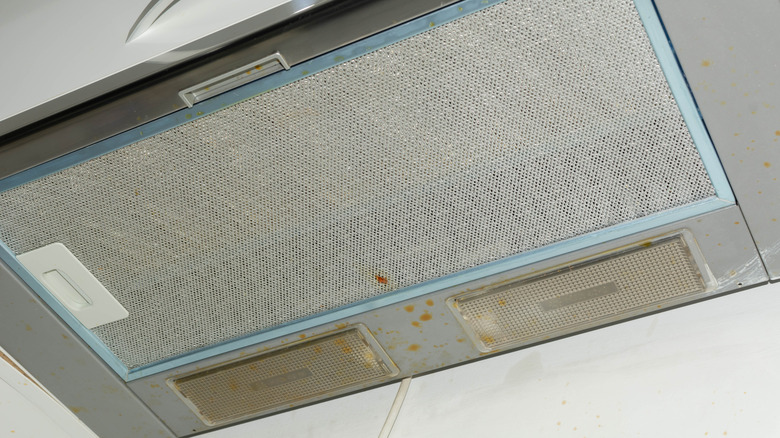
Baking soda can get rid of grease, but it doesn't prevent more grease from building up! You'll still need to regularly inspect and clean your filter. Ideally, you should be cleaning your microwave filter every month to every four months in order to keep your ventilation and microwave in its best working condition. It can be difficult to remember, since the filter isn't often a part of the appliance with which you interact, but incorporating it into your microwave cleaning routing can save you time and trouble in the long run. Whenever you start to clean your microwave, go ahead and clean your filter, too.
If you realize you've missed some maintenance, clean your filter as soon as you can and inspect it for damage. While baking soda doesn't damage stainless steel like undiluted vinegar does, scrubbing too hard while trying to remove stuck-on grease can lead to scratches or dings. Regular light cleaning and being gentle when using baking soda helps prevent damage in the long run.
Metallic grease filters generally only need to be replaced if they are damaged. Consistent cleaning helps prevent damage from grease buildup, but sometimes accidents happen. If your filter is broken, try to replace it as quickly as possible. Without a working filter, other parts of the system are more likely to break down. Replacement filters can usually be ordered directly from the manufacturer. Charcoal filters typically last six months, so they need to be replaced roughly twice per year.