

Deadly Gardening Trend Alert: Gardener Warns, 'I Will Never Use This Stuff Again'
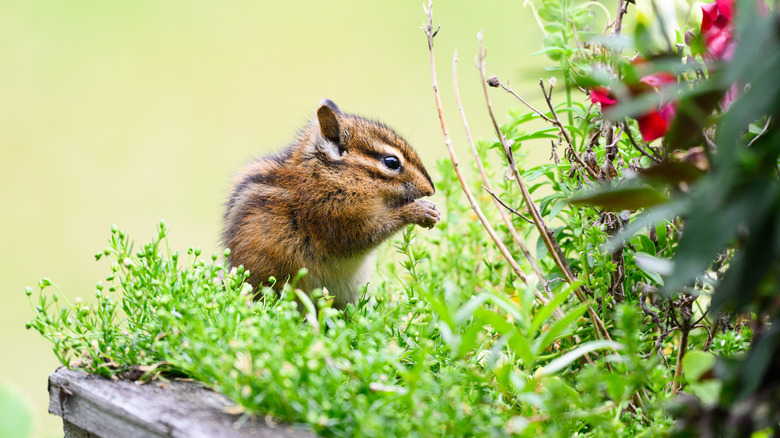
Yards and gardens can be sanctuaries for wildlife, and you may even have designed your outdoor space specifically to attract birds to your yard. But gardeners know that birds can also be pests, and a common tool to keep them from gobbling up your plants is bird netting. Unfortunately, this netting can prove to be more than a simple deterrent — in fact, it can be deadly. In a thread on Reddit, one user claimed that they will "never use this stuff again" after seeing a chipmunk get tangled in their garden netting and die. Meanwhile, on another thread, a Redditor said: "My daughter works in a berry farm in upstate NY and regularly comes across birds that get tangled in protective netting placed around the bushes."
Gardeners commonly use bird netting by draping it over plants to keep birds from eating their tomatoes, other vegetables, or fruit. Some homeowners even install it over chicken coops to discourage predators, or use it around a house's eaves to keep birds from roosting there. Bird netting comes in a variety of mesh sizes, with some designed for specific birds. The problem is, though, that birds of all sizes can get tangled in your netting, as can a number of mammals and other small animals. Sometimes, even larger animals such as deer can get stuck. It's enough of a hazard that certain types of bird netting are banned in cities like Victoria, Australia, and there have been public calls to restrict its use in places such as New York City and the U.K.
How to safely use bird netting
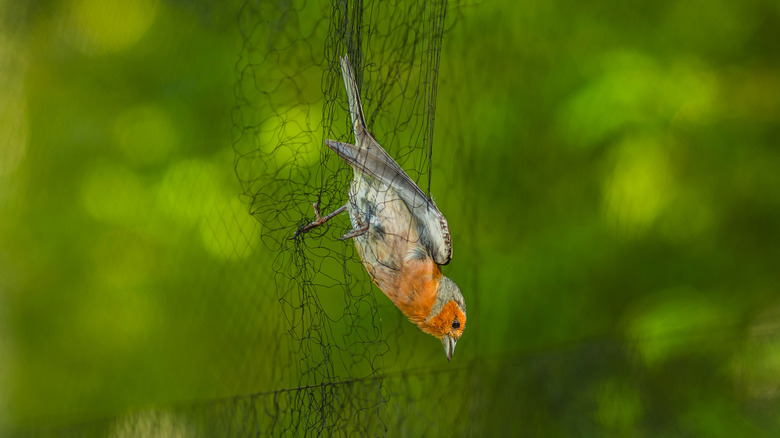
If you're stuck on using netting to protect your garden, you can buy a mesh that's considered safer for wildlife — for example, this Pollynet Premium Bird Netting is recommended by some local Audubon societies. You can also go for a very fine mesh with holes too small to trap most animals. But even the finest netting can still become a hazard if it's installed too loosely. Make sure that yours is secured over a hoop or cage where it can be pulled nice and taut, reducing the risk of entanglement. Also, be sure to repair or remove any damaged netting as soon as you see it, and always remove it from your garden completely after harvest.
In addition to bird netting, you should be aware of other hazards that can tangle up the wildlife in your yard. A loose soccer pug or volleyball net can be just as perilous, and it's best to avoid fake spider web material when decorating for Halloween, as this can pose a similar risk to birds and other wildlife. By keeping an eye on these potential dangers, you can create a wildlife-friendly garden while still protecting the fruits of your labor.