

Why You Might Want To Think Twice Before Buying A Snow Blower
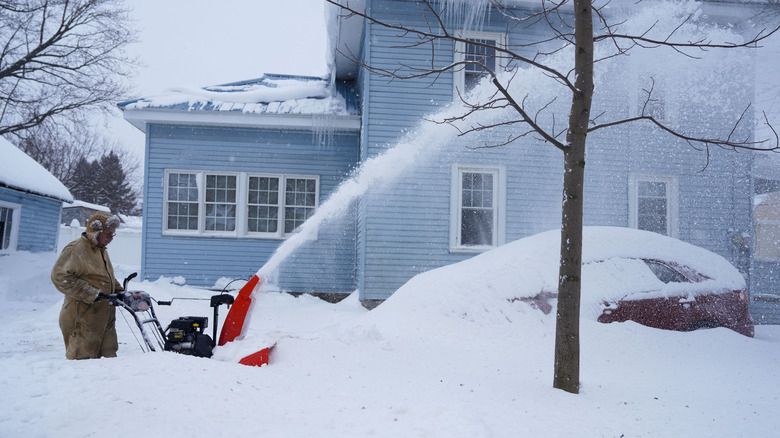
As the cold season approaches and you dread the prospect of spending time on freezing mornings clearing snow off your driveway, you may be seriously considering buying a snow blower. These handy machines do the job of shoveling with a fraction of the time and effort, but they aren't a magic key to eliminate your wintery problems altogether. Snow blowers are expensive and take considerable ongoing maintenance to function properly.
Whether it is worth getting a snow blower has a lot to do with how much snow you need to be clearing at your home. If you just have a porch and short walkway to manage and expect only light snows through the winter, a quality snow shovel is probably the wiser investment. But if you aren't in decent physical shape, snow shoveling can be hazardous to your health, leading to increased risk of heart attack, according to the American Heart Association. If you are concerned with all the exertion that comes with shoveling, or if you have a long driveway likely to be covered with several inches or even feet of the white stuff, a snow blower may be the safer and more efficient choice. Just be warned that these powerful machines will cost a pretty penny, and they aren't trouble-free.
The downsides of a snow blower
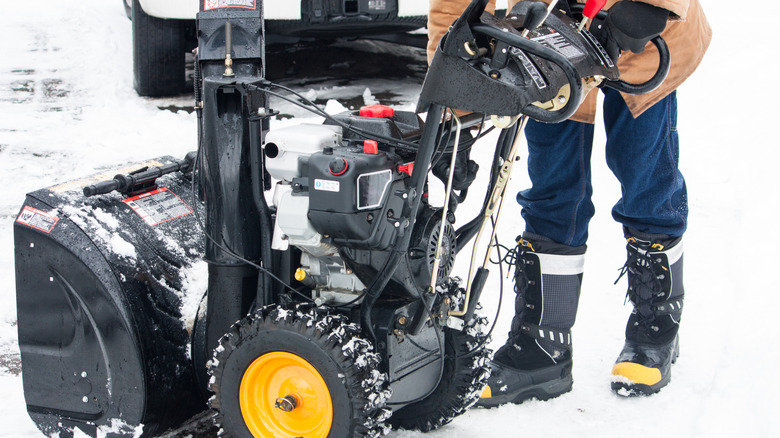
While a good snow shovel might cost you around $40, a snow blower can range from several hundred dollars to several thousand. If you have lots of heavy snow in your neighborhood, you may need a more expensive "two-stage" snow blower that has a large capacity to scoop heavy snow, break it up, and then expel it. A single-stage, walk-behind snow blower is less expensive and generally easier to operate but is best for lighter snows. Either way, snow blowers are fairly complex machines, and the inner workings of the engine, like your car, are subject to breakdown. Things like fuel lines, drive belts, and spark plugs should be inspected each year and replaced as needed.
Electric snow blowers can be very powerful while avoiding maintenance needs like oil and spark plug changes, unlike gas-powered models. But even with good maintenance, any kind of snow blower can jam or ice-up and needs to be cleaned thoroughly after each use. Parts, like the auger that gathers up the snow and the scraper paddle that runs along the ground, both wear out easily because of their contact with your concrete or asphalt, and you may need to replace these parts each year if they get heavy use. If neither the exertion of shoveling nor the maintenance of a slow blower sounds attractive, you can consider heated mats or using a homemade ice-melt solution to keep your pathways clear of snow this winter.