

No Windows, No Problem: This Gorgeous Houseplant Thrives Anyway

When it comes to houseplants, the rule of thumb — or green thumb, perhaps — is to provide a moderate amount of water and as much sunlight as you can. But what if you really want a plant in a spot with no windows? Grow lights are a possibility, but sometimes shadowy corners don't come with electrical outlets. In this case, you're best off choosing a houseplant that doesn't need much light to thrive. Whether you're seeking greenery for a screened porch with no direct sunlight or a plant to brighten a dark basement, consider welcoming a snake plant (Sansevieria spp.) into your home. In addition to thriving in dark indoor spaces, these low-maintenance beauties practically care for themselves.
Sometimes called mother-in-law's tongue, the snake plant is an incredibly adaptable addition to your houseplant lineup. Though it loves bright, indirect light, it has no major complaints about low-light conditions. It's just likely to grow a bit slower in this type of environment. You shouldn't place your snake plant in a pitch-black closet, as this will make photosynthesis impossible, but a window-free den or office is just fine. The snake plant is also more susceptible to pathogens and insects when it spends most of its time in dark areas, so take some extra steps to ward off these problems if you're not growing it near a window.
Caring for a snake plant in a windowless room
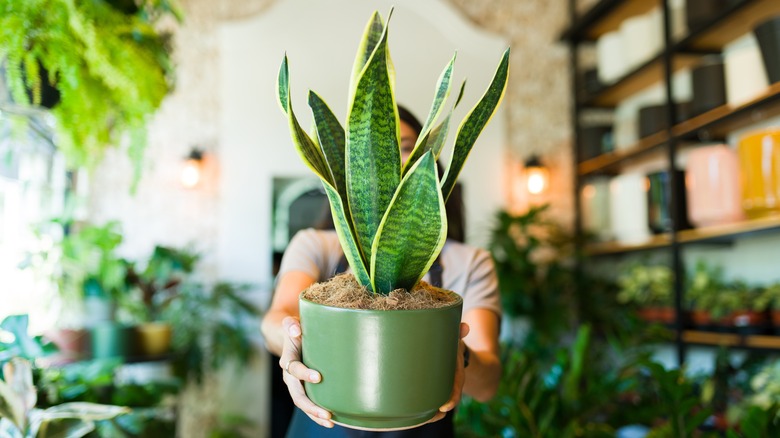
Caring for a snake plant is surprisingly easy, even with the challenges of limited light. Monitoring the moisture of your plant's soil and keeping an eye out for pest problems should be your top priorities. Good moisture management can discourage diseases and oxygen deprivation. Give your snake plant a healthy start by making sure its pot has drainage holes. Overwatering is a common snake plant problem because when excess water can't escape the container, the plant is more likely to develop root rot. Providing the right amount of water matters, too. Since a snake plant keeps lots of moisture in its foliage, it doesn't need many visits from your watering can. When its soil feels dry, you can give it a drink. A snake plant will typically need more frequent watering during the spring and summer when its growing medium may dry out within a week. Speaking of growing mediums, surround your snake plant's roots with a high-quality potting mix. A blend designed for succulents often works well, as it's unlikely to hold too much water.
When it comes to pests, air circulation is a powerful prevention tool. Consider running a fan nearby if improvement is needed. Also, know the signs of common houseplant pests. The list of bugs that target snake plants includes spider mites, mealybugs, and whiteflies. Spider mites build tiny webs on plant foliage, while mealybugs leave behind eggs that look like bits of cotton. Leaves losing their vibrant color may indicate the presence of pestsor your snake plant's yearning for a vacation by a window. If you plan to take it somewhere brighter, introduce light gradually to minimize shock and leaf scorch.