

Want Fewer Weeds Next Spring? Do This Quick Lawn Care Task In November
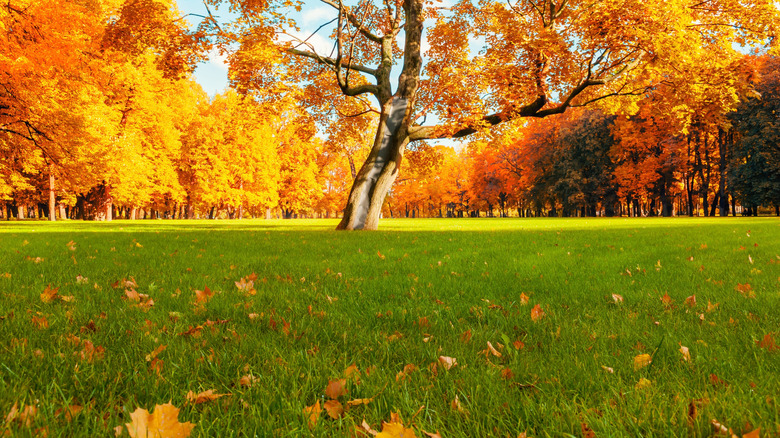
If you're living in the northern half of the U.S. and you've already experienced your first seasonal frost, you may think that your lawn care duties are over. In order to prepare for a lush, healthy spring lawn, you've painstakingly aerated, overseeded, fertilized, dethatched, and watered it. You've also stopped mowing at the right time and winterized your mower, just before the overnight temps dropped below freezing for the first time. You're all set, right?
Well, not quite. You need to carry out one last task for winterizing your lawn before you officially call it for the season: edging. Lawn edging is the process of creating a crisp, defined transition line between your yard and other landscape features, such as walkways, patios, driveways, and garden beds. Most people are aware that edging your lawn makes it look professionally manicured, boosting your curb appeal — but the process also helps with weed control, grass growth management, water flow, and reducing fungal growth, both during grass-growing seasons and over the winter.
It's recommended that you edge your lawn at least once every two weeks during the main growing months, but, as the autumn slows down grass growth, you can reduce this down to once every two to three weeks. And, in the same way that you need to plan for one last mow before winter, you should also take a few minutes this November to edge the borders of your yard. Not only will this maintain the crisp, defined perimeter throughout the remainder of fall and winter, but it actually helps with the health and maintenance of your grass in the long run.
The benefits of lawn edging
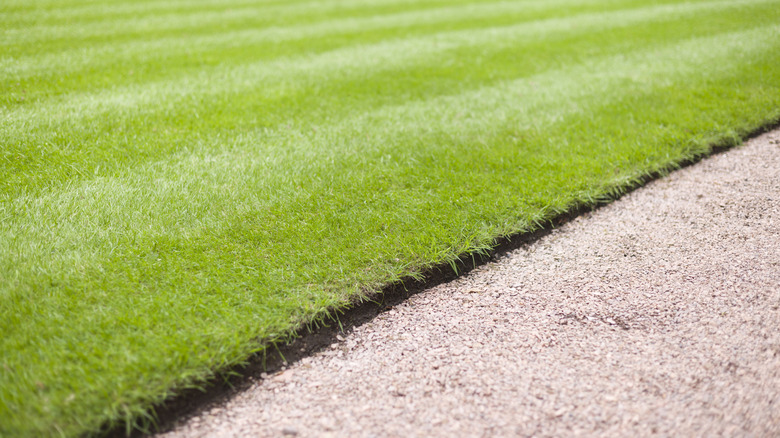
Whether you do it using one of the many lawn edgers on the market or with a physical edging material, the process of edging creates a physical separation and root barrier between your grass and other landscaping areas. This means that it helps keep grass growth contained to the yard, reducing its spread into flower beds, mulched or gravel areas, or cracks in walkways. Similarly, edging also helps prevent weeds from moving onto your lawn, effectively preventing unwanted plant growth from rooting in your grass. This will make spring maintenance less of a chore. Additionally, the process of edging helps remove leaves and debris along your yard's perimeter, which can lead to fungal growth and grass damage over the winter. The defined edging channel also helps to control and direct water flow across your yard, reducing the risk of pooling and soggy, waterlogged grass.
So, before you pack away your lawn care tools for the season and give yourself a pat on the back for a job well done, take a few minutes this November to grab the lawn edger and do a pass around the borders of your yard. For just a little more work, you'll get a healthier, manicured spring lawn with fewer weeds and less need for maintenance.