

Your Rosemary Plants Will Flourish If You Add This Simple Garden Staple To The Soil
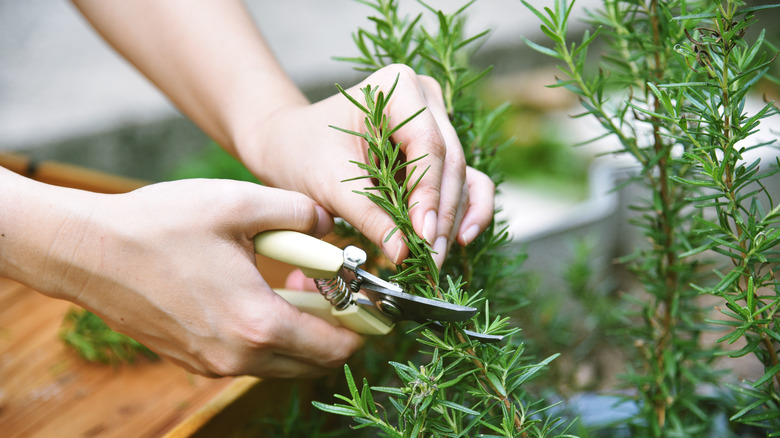
Whether roasting a chicken or making homemade essential oil, a sprig of fresh rosemary plucked from your very own pot or garden bed makes all the difference. Rosemary (Salvia rosmarinus) is a common garden herb enjoyed not only for its multitude of uses and great earthy flavor but because it is relatively easy to grow. Outside, rosemary is generally hardy in USDA growing zones 8 to 10 and won't last through a very cold winter. But rosemary can be grown year-round anywhere with enough sunlight and warmth, like an indoor windowsill or in a container that can be brought inside when the temperature drops. Aside from getting cold, one thing that definitely does not make rosemary happy is wet feet. You can keep your rosemary's roots sufficiently dry by adding in a garden staple you may already have on your shelf: perlite.
Perlite is a small, white granule that looks a bit like balls of styrofoam, but it is a natural material that comes from volcanic glass. It is a common material used for drainage of potted plants. When perlite encounters excess moisture in your soil, it will absorb this moisture and expand to create pockets of air in the soil. This improves drainage and keeps the soil from getting waterlogged, which is why you'll find perlite pre-mixed into soils marketed for use with cactuses and succulents. Overwatering is a common problem with rosemary plants because this herb is susceptible to root rot, so adding perlite to the soil will protect against too much water and keep your soil dry and airy, like the Mediterranean environment this herb evolved to inhabit.
Using perlite and other soil amendments for rosemary
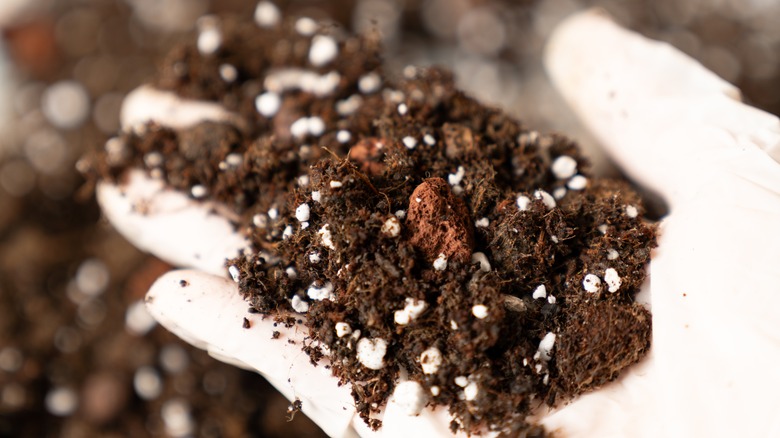
Perlite comes in large granules suited for trees and shrubs, a medium size best for flowers and herbs, and tiny granules best suited for seedlings. Adding medium granules to your rosemary's soil is best. You can easily make your own potting soil that is just right for rosemary by adding about one part of perlite to two parts of your other soil mixture. Adding horticultural sand to your rosemary's soil mix will also ensure that water can easily drain away. Whatever you do, mix your grit of choice into the soil itself. Just putting a layer of rocks or gravel at the bottom of your pot will do nothing to help drainage and can have the opposite effect by pushing the wettest soil up closer to the roots of your rosemary.
If you live in a climate where rosemary can grow outside all year, adding lots of organic matter like compost to your garden bed will improve drainage and keep rosemary thriving. Refresh your compost every couple of years to ensure your soil is maintaining proper drainage, and keep this aromatic herb growing happily in your garden.