

The Foolproof Way To Clean Rusty Baking Sheets And Make Them Look Like New

We may receive a commission on purchases made from links.
Rust is what happens when iron oxidizes, creating — you guessed it — iron oxide. The crusty brown stuff that forms on cookie sheets and other baking pans is a product of water seeping into the metal. It may lend character to an outdoor statue, but it's an unwelcome sight on surfaces that touch food. Thankfully, there are several ways to remove rust with non-toxic products you may already have in your pantry. It's easy to remove rust with vinegar and another cooking and cleaning staple: lemon juice. Though you can use these ingredients on their own to get rid of rust on baking sheets, they're more powerful when combined.
Rust shouldn't be ingested, so it's important to get it off your baking sheets if you spot it. Acidic foods that touch rust can even dissolve it slightly, encouraging heavy metals to seep into the item you're baking. Plus, rust compromises the flat, smooth surface of a baking pan. This makes certain parts of the pan hotter, leading to uneven cooking. While replacing rusty pans is a solution, you may want to try removing the rust with vinegar and lemon juice first. This combination is thought to work because it pairs two rust-busting acids: acetic acid from the vinegar and citric acid from the lemon juice.
Dissolving baking sheet rust with vinegar and lemon juice
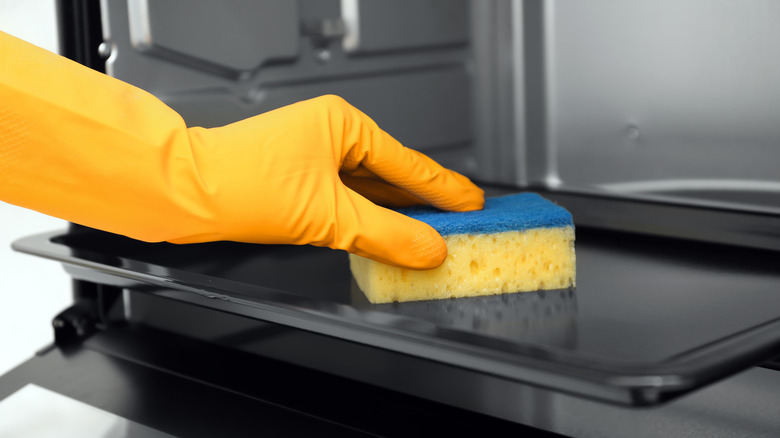
There are a couple of ways to unlock the power of vinegar and lemon juice to restore rusty pans. The first method involves mixing equal parts of lemon juice and vinegar and letting the pans bathe in it. Any style of vinegar will do — white, apple cider, balsamic, or whatever's in your cupboard — since all contain acetic acid. Soaking the pans for 30 minutes may be sufficient if the oxidization is mild, but overnight might be necessary if there are many layers of rust. After the soak is complete, scrub away any remaining rust with a kitchen brush. Alternatively, you can submerge baking pans in vinegar for a couple of hours before bringing in the lemon juice. After the vinegar soak, attack rust plaques with a brush, working lemon juice into particularly difficult-to-remove patches.
Before drying your baking sheets, it's wise to halt the chemical reaction citric acid and acetic acid set off when they touch rust. You can do this by mixing a bit of baking soda into a dish tub and dipping each pan in it. If you run out of lemon juice, swap in lime juice or another source of citric acid — for example, One in a Mill citric acid powder. When vinegar is in short supply, you may not have another source of acetic acid on hand. In this situation, you may want to investigate how to use WD-40 to dissolve rust. Just be sure to remove any residue this product leaves behind, since it isn't designed for consumption.