

The Simple Trick That'll Help Keep Centipedes Out Of Your Home
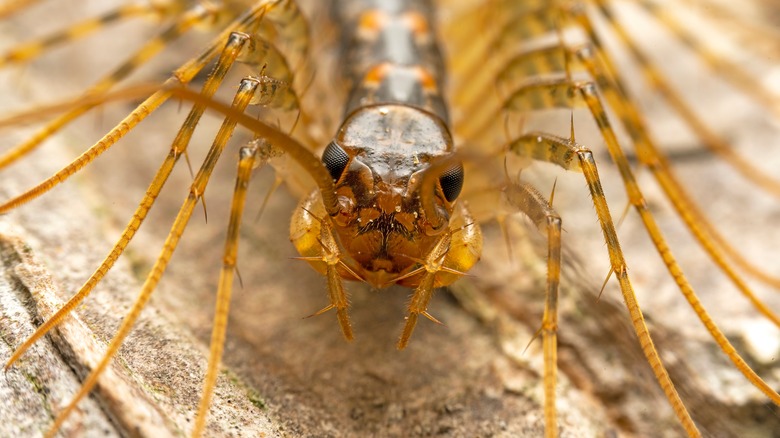
The house centipede is a common visitor to many homes, one that often brings an ick factor on par with roaches and spiders. Nocturnal denizens of damp basements and dark closets, it may seem impossible to rid your home of these creatures, but keeping them at bay is easier than you think. If you have flower beds, potted plants, or other landscaping right up against your foundation, you've created a lovely home for these centipedes, who enjoy living in moist, dark environments. Once the weather turns cold, they will happily crawl inside your house for warmer digs.
The first step in deterring house centipedes is to remove areas of mulch, as well as any damp dirt or wood piles, along the base of your house. This is a useful tip even if you don't have a pest problem, as it generally isn't safe to mulch right up against the foundation of your house anyway. Instead, replace that mulch with something that's dry and inhospitable to centipedes. You can put down a layer of gravel around your house, for example. Alternitavely, you could dry out your mulch by thinning it with a rake, but the layer should be no deeper than about 3 inches so as not to cause a fire hazard. In total, there should be about 1 foot of space around your home's footprint for it to properly work as a centipede barrier.
Other ways to keep centipedes away from your home
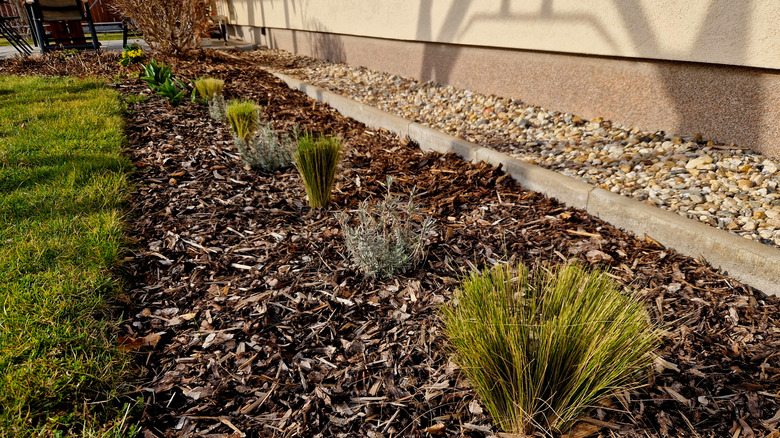
Keeping your centipede barrier dry is important, so ensure your house's grading and downspouts are sending water away from the building. You should also elevate any potted plants near to your house, so there aren't any dank places for centipedes to hide in. After removing their outdoor habitat, your next step will be to seal up common entrance points to your home, like cracks in your basement walls. If you have damp places in your basement or first floor bathrooms, consider installing a dehumidifier to take away the moisture that attracts centipedes.
If a few centipedes still linger, it's worth remembering that they eat other bugs such as carpet beetle larvae, cockroaches, and spiders. So, if you have a lot of centipedes in your house, that's an indication that you have a lot of centipede food; taking care of your other pest problems will be key to removing them. You may want to use a sticky strip to trap and identify different household pests, then target your approach appropriately. But before reaching for that toxic insecticide, consider natural pest control remedies – such as sprinkling peppermint oil along baseboards and closet corners. Not only will this discourage centipedes and their prey, but it will also make your home smell great.