

Don't Skip This Pre-Winter Mowing Trick For A Lush Spring Lawn
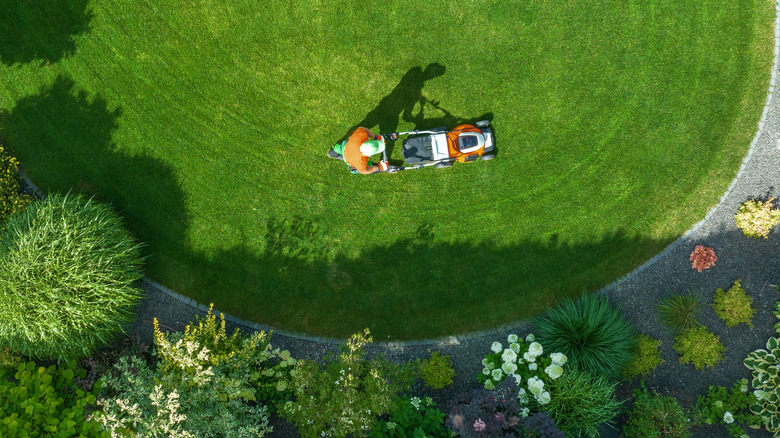
As you establish your fall lawn care plan to winterize your grass, many factors come into play when achieving a thick, green yard once spring arrives. From aerating and overseeding to continued watering and mowing, autumn lawn care is crucial to the success and health of your spring lawn. Since temperatures cool but are not yet freezing, these fall months are also crucial for grass recovery after a hot, dry summer. However, as the first frost date hits the anticipated forecast, it marks the time to stop mowing your lawn for the season, as frozen ground changes the game, shifting grass from fall recovery to winter dormancy. But there's one crucial step you won't want to skip on your last mow of the season to set your grass up for success: Lowering the mowing deck to cut the grass shorter than you usually would ahead of winter.
While grass benefits from being a bit longer during fall recovery months (about 3 inches, depending on the species of grass), it's important that you plan to go a little shorter before retiring your lawn mower for the season. Doing so has a variety of benefits, from preventing snow mold to reducing thatch and more. Let's dive into all the details about what grass height is just right for winter dormancy, as well as the many benefits cutting it short provides for the health and beauty of your spring lawn.
The height you should cut your grass during the last mow
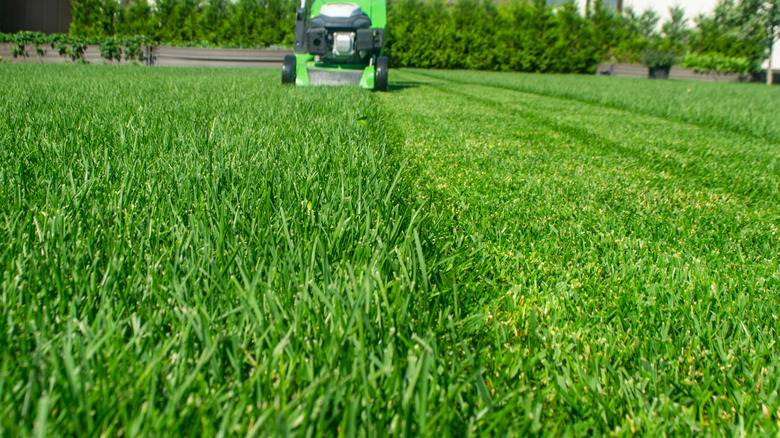
For northern and mid-temperature climates with cool-season grasses, the last mow will come just before the first frost, which varies in timing by location. For this last official mow of fall, lower your mower's cutting deck to trim the grass to about 2 to 2.5 inches high to properly winterize. Fall recovery grass is typically best when kept around 3 inches (give or take, depending on species), so it should be fine for a single adjustment on the final mow. But if your grass is longer than that, tapering down your cut height over the last few mows of the season avoids over-stressing the grass. For those in southern climates with warm-season grasses, maintaining the usual height of about 2.5 to 4 inches (species dependent) or even a half-inch higher is usually sufficient for weathering mild winters and preventing winterkill.
Why cut your grass shorter before winter? The taller the grass blade, the more at risk it is from the weight of frost and snow, potentially causing damage. Longer grass that can't dry out creates more favorable conditions for mold, bacteria, and fungal diseases like snow mold to grow. Pests like insects and tunneling voles also eat longer grass, so cutting it short helps avoid all of these issues. Come spring, grass cut shorter allows more sun to permeate through its less dense canopy, meaning the soil warms up faster and you start to see those beloved green grass shoots sooner than grass that had to fight through a thick canopy, overly-heavy layer of thatch, and dense existing growth. So for a lush, healthy spring yard, cut your grass shorter on the last mow of the season to best prepare it for winter.