

How To Easily Clean Up Messy Grease Splatters With A Common Kitchen Ingredient
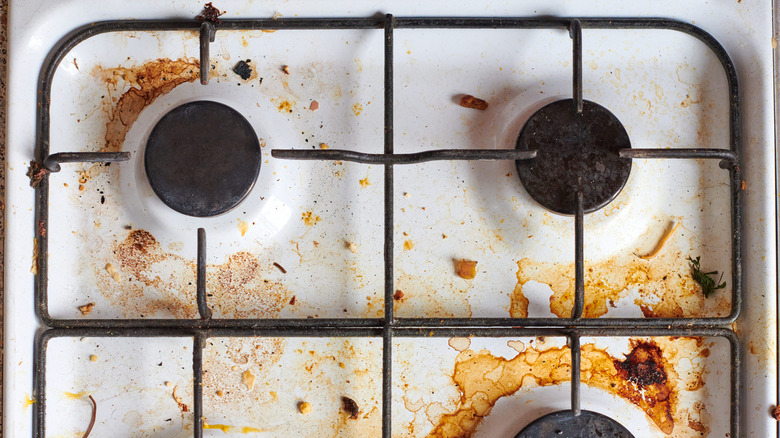
Grease happens to everyone working in the kitchen. Even if you're the neatest cook who wears your trusty apron and meticulously plans your family meals, grease tends to splatter, which means you likely won't be able to avoid it hitting your stovetop, countertops, floors, and even tile backsplashes. No matter how careful you are, some of that oil inevitably escapes the pan. And as much as you'd love to ignore it, you shouldn't. Grease buildup is not only messy, but it can also contaminate food, draw bugs, cause fires, and make your floor slippery. Luckily, you have a safe solution sitting in your pantry right now that can help dissolve kitchen grease: cornstarch. Yes, the same solution that you use to thicken gravy can also work wonders on gunky grease.
Cornstarch is gentle and non-toxic, so it won't harm the delicate surfaces in your kitchen like marble, granite, or stainless steel. It works by absorbing moisture and oils, which helps lift grime and tough stains without scratching or dulling your kitchen surfaces. It's simple and safe to use, too. Keep reading to find tips on how to use it on those greasy surfaces.
Tips for using cornstarch to remove grease stains
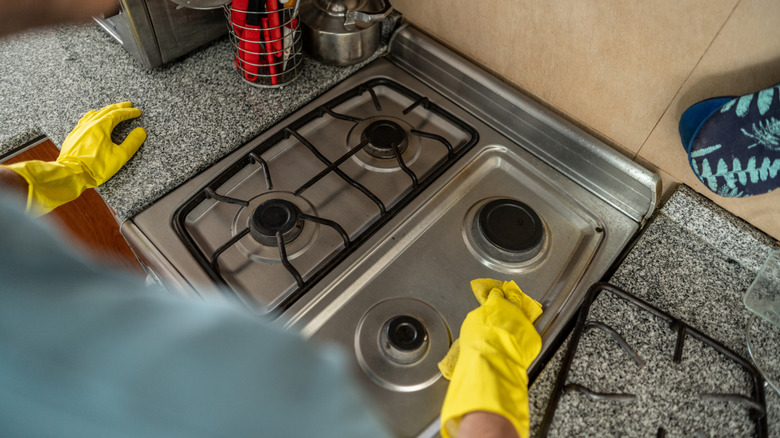
Making your own grease-fighting paste with cornstarch is easy. Mix about 2 tablespoons of cornstarch with enough water to form a thick, spreadable paste. You don't want it thin or runny. For an extra cleaning boost, stir in a tablespoon of baking soda. And if you are facing some particularly stubborn stains, add a few drops of white vinegar or lemon juice, which are both natural degreasers, to your cornstarch mix. Spread the paste generously on greasy areas where oil has splattered or pooled. Use a soft cloth or sponge to smooth it out, and let it soak for 15 to 30 minutes. For bad grease stains, let it sit overnight.
Next, grab a non-abrasive sponge and start wiping away the cornstarch paste. The baked-on grease should start to loosen right away. Wipe everything down with a damp cloth, rinsing often to avoid spreading residue. Finish with clean water and dry the area with a soft towel or microfiber cloth. For lighter cleaning days, sprinkle cornstarch over greasy spots, spritz with white vinegar, and let the fizz do the heavy lifting for a few minutes before wiping those spots clean. To keep your kitchen from turning into a grease trap again, wipe up spills and splatters right away. A little daily maintenance can save you from spending hours cleaning later on. Now that your kitchen surfaces are sparkling, you might want to tackle those pesky grease stains on your clothes next.