

The Best Time To Stop Watering Your Lawn This Fall For A Healthy, Green Spring
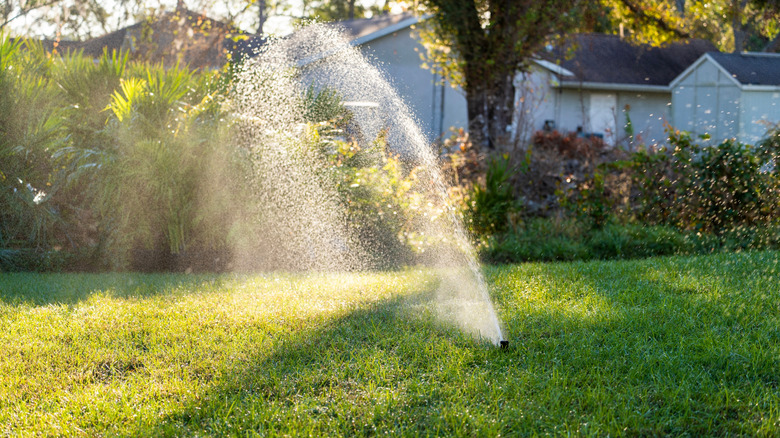
With the hues of autumn beginning to appear on the trees and the temperatures dropping, you may be rejoicing that your days of regular lawn watering are over. But just because we're living in a pumpkin spice-themed season doesn't mean that you can retire your sprinkler just yet. In fact, fall is actually one of the best times to allow your grass to recover from the stress and high heat of summer, and, believe it or not, it still needs water to do so. However, with cooler temps and rainier weather, the good news is that you can likely decrease the frequency of your watering routine depending on your location, rainfall forecast, and overseeding plans for the season.
Generally, a lawn is able to stay happy and healthy with about 1 to 1.5 inches of rain per week. During hot, dry summer months, this means plenty of supplemental watering to keep your grass looking lush. However, as the grass growth rate slows in the fall and the weather becomes cooler and moister, you will need to adjust your irrigation schedule to adapt. The trick is to walk the fine line between plenty of moisture to help grass thrive and recover during autumn months while avoiding overwatering or watering too late into the season, and end up with damaged turf. The good news is that the recommended general guideline for the sweet spot is approximately one inch of water per week, including rainfall and supplemental watering, until the first frost for your area. Let's break down all of the specifics on watering amounts, timing, and best practices so your fall efforts will set you up for a lush, healthy yard come spring.
How to avoid over- or under-watering
You will need to tailor your fall watering schedule based on your local weather forecast. Generally, in cooler climates with four seasons, watering a couple of times a week is a good benchmark, aiming for about one inch of water a week in the fall for established grass. However, if there is a lot of moisture in the forecast, you may only need to water every few days or as little as once every 7-10 days, depending on the amount of rainfall or humidity in your area. For those in warmer southern climates, grasses grow more slowly when the average nighttime temperature drops below about 70 degrees Fahrenheit, so this is a good time to taper down the amount of watering to one inch a week at this time.
No matter your location, if you're planning to aerate your lawn and overseed (or are installing new sod), regular watering is essential for making sure the grass spouts become properly established. Water twice a day until the seedlings are about two inches high, at which point you can reduce it to once a day, assuming Mother Nature doesn't lend a hand.
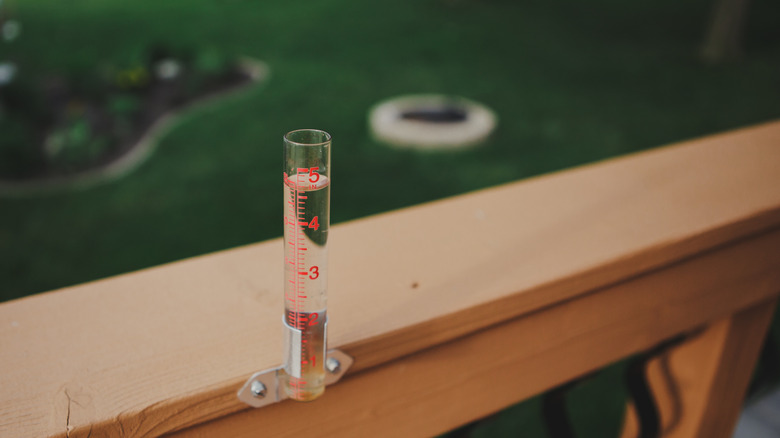
Use a rain gauge or flat-bottomed pan placed in the yard to get an accurate picture of how much rain you're receiving to avoid overwatering, which can lead to bacterial or fungal growth, grass damage, or other issues. If the area feels soggy or has standing puddles, it's too wet. If you plunge a screwdriver into the ground and it goes in about 3-5 inches without much resistance, it's likely just right – soft but not spongy. If the screwdriver is difficult to put into the ground, it's time to water.
What your area's first frost date signals
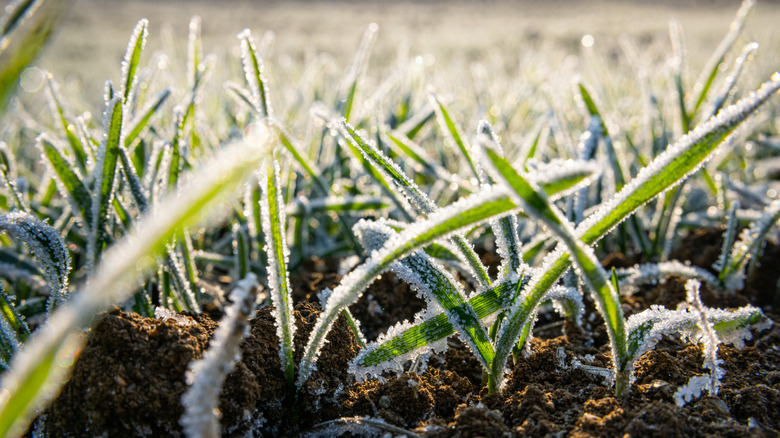
Now that you've tapered down to an inch a week during the fall months, how do you know when it's time to stop watering for the season to ensure a full, thick green grass in the spring? Rather than a definite date, the answer can once again be found in your local area's weather forecast. Since water will not penetrate the barrier of frozen ground, you should stop watering your grass as of the first frost. In order to determine your location's anticipated first frost date, you can check the Old Farmer's Almanac's online Frost Dates Calculator to get a better idea of your area's typical first frost for the season. You can also check the local weather for more accurate timing as the estimated time frame approaches. For northern climates, the first frost could be around the first week of October, whereas it can be long after Thanksgiving for southern climates.
Aside from watering your lawn, the first official frost of the season is also your signal to stop mowing your lawn for the season, retire your sprinkler, and winterize the irrigation system. It's important to avoid watering after the ground has frozen or when the weather is below 30 degrees Fahrenheit, as ice can damage the grass blades and root system. By determining your local frost dates, you can formulate a solid fall lawn care plan to ensure all of your hard work now will pay off big time in the spring with a gorgeous, healthy green lawn.