

This Is What Happens If You Use Your Garbage Disposal Without Running Water
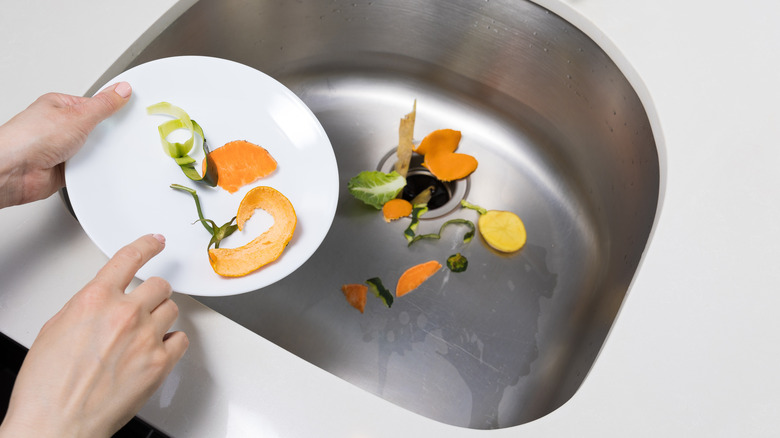
You wouldn't wash your car without rinsing it off with water, would you? You'd just be moving the dirt, oil, and other substances around on your car. The same applies to a garbage disposal. If you run your garbage disposal without rinsing the ground-up food scraps down the drain, they'll just sit there, becoming fodder for flies and fruit flies. Accumulating food scraps can clog your drain, and if they sit there long enough, the scraps will get moldy, leaving you with a smelly mess to clean up. So, run water while using your garbage disposal, and run it long enough (15 seconds or more) that you're washing your food scraps fully through your pipes, not just until they reach the U-shaped sink trap beneath your sink.
You might think it's a better idea to run hot water than cold water when running the garbage disposal. After all, hot water cleans things better than cold water because it softens solid grease and allows you to rinse it away. But knowing how a garbage disposal works will tell you otherwise. In your drain, hot water can have a negative effect. Yes, it will soften oils and greases, but if that material isn't fully flushed out of your pipes, it can harden up again further down your drain and clog your pipes. Always use cold water when running your garbage disposal. You can also make the garbage disposal's job easier by turning on the (cold) water before adding food scraps. This softens and moistens the scraps, making it easier to grind them and wash them away.
How to keep your garbage disposal in good condition
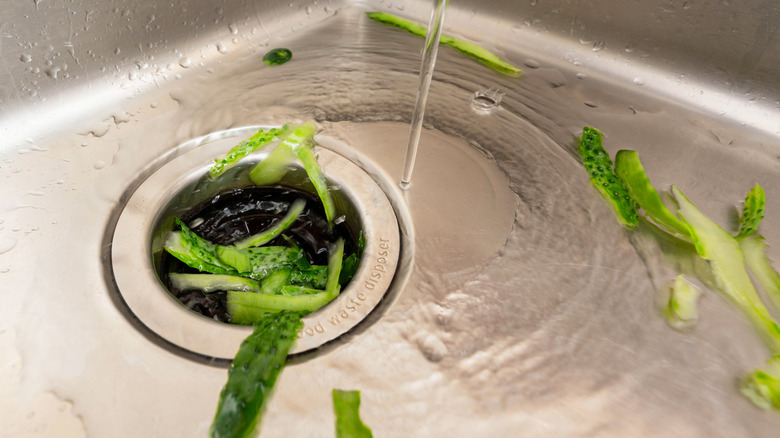
Some simple habits can keep your garbage disposal from becoming a headache. Using it less frequently is the best way to keep your drain clear and increase your disposal's longevity. Get a drain screen to prevent food scraps from accumulating in your garbage disposal between times when you run it. Don't use your garbage disposal as a trash receptacle for larger food scraps, like potato peels, apple cores, or (especially) larger bones. These can put a strain on the disposal's motor and increase its wear and tear.
Keep fats, oils, and grease out of the disposal. Wipe off a grease-covered pan with a paper towel or scrape it into your compost bin before putting it in the sink. Fibrous items, like celery or banana peels, can get caught in the disposal's blades, requiring manual removal — turn off the disposal and cut the power to it if this occurs.
Regular cleaning helps, too. If your disposal has begun to smell, you can freshen your smelly drain with baking soda, vinegar, or lemon juice. This will kill the bacteria causing the foul odor. You can then keep your disposal fresh by putting a few ice cubes in the disposal before turning on the water and running the disposal. This will loosen scraps and send them down the drain. When all else fails, call a professional.