

What Trump's New Tariffs Mean For Your Home Renovation Plans

Home renovators and DIYers may see their costs go up due to new tariffs on imported goods essential to home renovation projects. On Thursday, September 25, 2025, President Trump announced that his administration will impose tariffs on kitchen cabinets, bathroom vanities, and upholstered furniture starting October 1, 2025. Per a post published by President Trump on Truth Social, while consumers can expect a 30% tariff on imported upholstered furniture, they will also face a 50% tariff applied to kitchen cabinets and vanities. This will force American businesses to recalculate prices and for consumers to reevaluate costs on home improvement projects, such as a DIY kitchen remodel, if costs were reliant upon the savings found in these imported options.
According to the furniture industry weekly publication Furniture Today, imported furniture sales alone reached $25.5 billion in 2024. Assuming that all of these sales were for upholstered furniture, a 30% tariff would add $7.65 billion in costs to the supply chain just in furniture upgrades. Per the Federal Reserve's August 2025 Beige Book report, consumer spending is either flat or in decline across the U.S., citing tariffs as one of the top two reasons.
When tariffs on imports were implemented in spring 2025, the National Association of Home Builders released a report stating that this would add an additional cost of approximately $10,900 to each new home built. Now that there will be a 50% tariff on kitchen cabinets and bathroom vanities, that number is sure to increase. The tariffs can also make it harder to find key goods on the shelves of your favorite home improvement stores. Another report published in Furniture Today stated that since the tariffs were imposed earlier in 2025, retail managers have found it difficult to replenish empty store shelves due to a lack of stock availability.
What tariffs mean for the home improvement industry
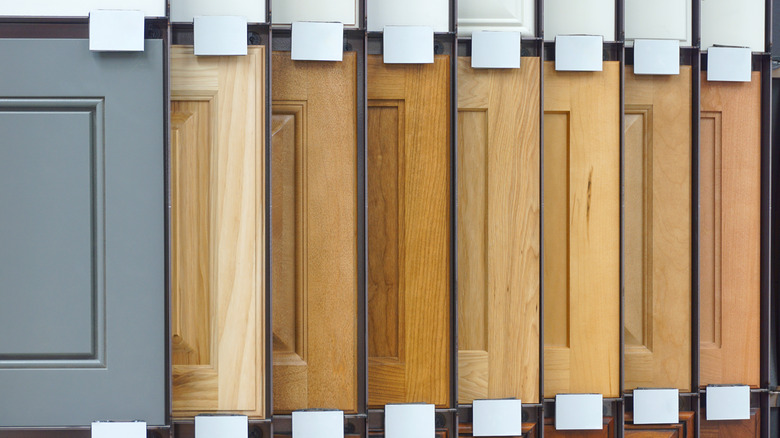
Per Statista, the U.S. furniture and home furnishing industry (which also includes appliances, cookware, and gardening equipment) is big business, with nearly $140 billion in annual sales in 2023. However, American manufacturing of furniture and fixtures experienced a sharp decline throughout the first quarter of the 21st century. The Federal Reserve Bank of St. Louis noted that, adjusted for inflation, the value of U.S. manufacturing of furniture and related products is roughly half of what it was before tariffs and other trade barriers were removed in 1999.
The totality of the 2025 tariffs is also meant to protect the more than 5,600 furniture and fixtures manufacturers in the United States from lower-priced imported furniture pieces. In addition to furniture and fixture manufacturers, cabinetry is also impacted by foreign imports. As noted in a press release from the American Kitchen Cabinet Alliance (AKCA), a letter was sent to President Trump on behalf of 15 company CEOs urging him to sign the proclamation imposing these tariffs. The AKCA noted that the importation of foreign cabinets puts approximately 250,000 American manufacturing jobs at risk.
The announcement regarding the new tariffs comes at a time when inflation is already hitting American households, with the U.S. Bureau of Labor Statistics reporting in August 2025 a steady increase in consumer costs. While tariffs may promote a longer-term shift towards consumers buying brands made in America and other goods, the short-term impact will be higher prices on imported goods, with less availability of affordable American-made alternatives. Yet the long-term future of these tariffs may still be uncertain. In late August, the U.S. Court of Appeals for the Federal Circuit agreed with a lower court ruling that President Trump did not have the authority to put forth many of his tariffs, stating that the president's imposition of them was (per the Court) "invalid as contrary to law." However, the Court chose to delay further action until mid-October 2025. Stay tuned.