

This Bubble Wrap Fall Gardening Hack Is Pure Genius
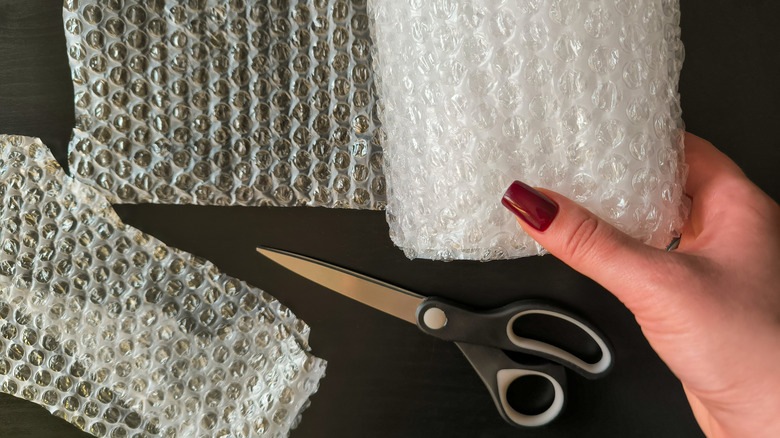
When summer temperatures begin to drop, many home gardening enthusiasts are getting ready to prep their treasured plants for cooler weather. The unpredictable, fluctuating temperatures during this transition season create an extra challenge for plants to adapt and thrive. However, there's one product likely sitting around inside your latest package delivery that can help change the game for autumn plant protection: Bubble wrap. Besides being super fun to pop, bubble wrap actually makes a fantastic reusable heat-retaining insulated blanket for plants.
While it physically shields plants from harsh weather, like intense wind, frost, or excessive sun, which is certainly a big help on its own, let's break down why bubble wrap also works for insulating plants. The bubble wrap creates a protective microclimate for the plants wrapped inside of it, thanks to its ability to retain heat. Each of its bubbles traps warm air and creates a barrier that slows down the transfer of heat away from the plant, keeping the warmer air inside the container more effectively than if uncovered. Plus, since bubble wrap is translucent, it will still allow light to reach the plant while protected in the bubble cocoon. From resting sheets on top of plants for frost protection to lining the interior of your greenhouse, let's break down all the ways this insulating packing material will make your fall plant care a (not-so-chilly) breeze.
Bubble wrap acts as an amazing insulator and weather shield for cold-sensitive plants
There are a few ways to use bubble wrap to shield your plants from the elements this fall. First, you can simply drape sheets over the top of garden beds (you may need to anchor them to prevent them from taking flight) to provide a bit of cold-weather protection, as well as a physical barrier for frost, wind, and hail. Since a bubble wrap covering will also work to trap moisture underneath, it helps reduce water evaporation during dry or hot periods as well so you can conserve water while keeping your plants moist. Because the sheets are loosely draped, they will still allow the plants to receive proper, essential airflow.
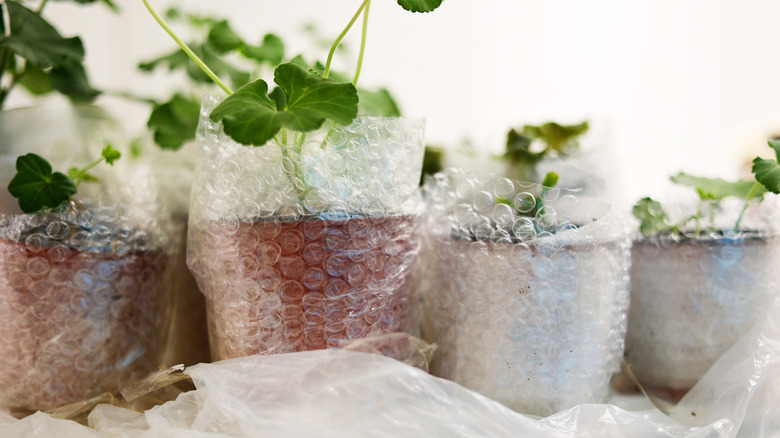
You can also loosely wrap individual plants in the ground for additional protection from frost and colder temperatures, especially young seedlings that may be more susceptible to damage without an established root system in place yet. Similarly, plants in outdoor containers are more affected by temperature than those planted in the ground, so wrapping the container (and perhaps the plant as well) on cold nights will help protect them for longer into the season. Finally, when it comes time to overwinter your plants, wrapping cold-sensitive container plants in bubble wrap inside the greenhouse will act as an extra layer of protection while still letting light through. To take it a step further, you can actually use larger sheets of cost-effective bubble wrap to bolster the insulation of your greenhouse windows, reducing heat loss and therefore your reliance on other heat sources during the winter.
Whether you're using it as a temporary weather barrier or a season-long insulating blanket, recycled bubble wrap can help protect your beloved plants long after the summer has ended.