

Why Gardeners Are Done With Hydrangeas — And The Stunning Plants Replacing Them
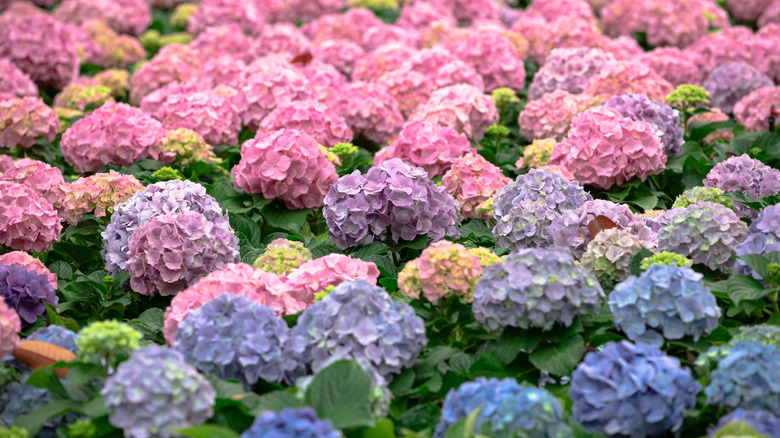
If you've ever seen this large, pretty shrub covered in huge, snowball-like blooms ranging from purple to blue or white and appreciated its beauty, then you are not alone. Hydrangeas (Hydrangea macrophylla) are a well-loved plant known for adding color, height, and charm to a range of yards and gardens. It has been categorized in the past as thriving best in Hardiness Zones 5 to 11, but the climate is changing — and the locations that plants can survive in are changing, too. As temperatures all across the U.S. have begun to increase, this moisture-loving bush is struggling to keep up.
As a result, many gardeners have noticed that it is becoming harder to care for hydrangeas due to blooms that never reach their full peak and sagging stems. In addition, when these plants experience consistent dehydration, they can be affected by leaf scorch, which causes the foliage of the plant to become yellow and dried out. Unfortunately, simply watering these shrubs more will not help them in the face of rapidly heating climates. This is because overwatering in hot conditions actually opens the door to various diseases and infections. With the hydrangeas already in a weakened state, these ailments can cause them to become faded, stunt their growth, and even cause them to die off completely in extreme cases. This means that some gardeners are making the difficult decision to move away from hydrangeas. However, there are some alternatives that can provide the same color and charm to your yard with a higher level of drought and heat tolerance.
Alternatives to hydrangeas for hotter climates
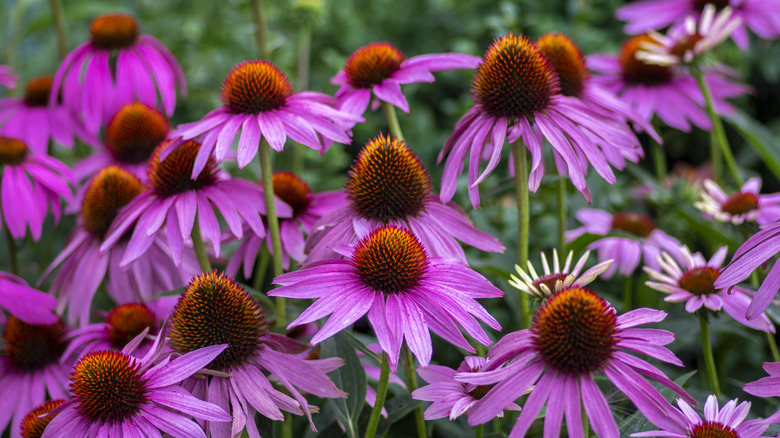
If you've been looking to plant hydrangeas but are worried about the warming climate making them unviable, there are a few alternatives that you can consider instead. For instance, if you're still looking to add height and eye-popping color to your yard, why not go for some purple coneflowers (Echinacea purpurea)? These unique blooms thrive best in Hardiness Zone 3 to 8, do well in hotter conditions and even droughts, and can grow up to five feet tall. Learning how to grow coneflowers instead of hydrangeas will make your garden more heat-resistant, meaning you won't have to water as frequently. This is especially important for areas that struggle with drought, such as California and Arizona. This plant can be purchased from garden centers or grown from seed, such as these purple coneflower seeds from Garden Lawncare Guy.
Another substitute for hydrangeas that are better suited to increasingly hotter climates is beardtongue (Penstemon digitalis). These shrubs are tolerant of drought and heat, and they do best in areas that receive full sun. In addition, their grouped blooms come in a range of stunning colors from deep purple to red and white. Beardtongue grows best in Hardiness Zones 3 to 8, though keep in mind that this plant can spread quickly, so it is important to keep it trimmed back and separate from any areas you don't want it growing in. This pretty plant also has the added bonus of attracting hummingbirds to your yard, as well as butterflies and bees, which can be hugely beneficial both to your own garden and the surrounding areas.