

Get More Blooms On Your Lavender Plants With An Easy One-Step Solution
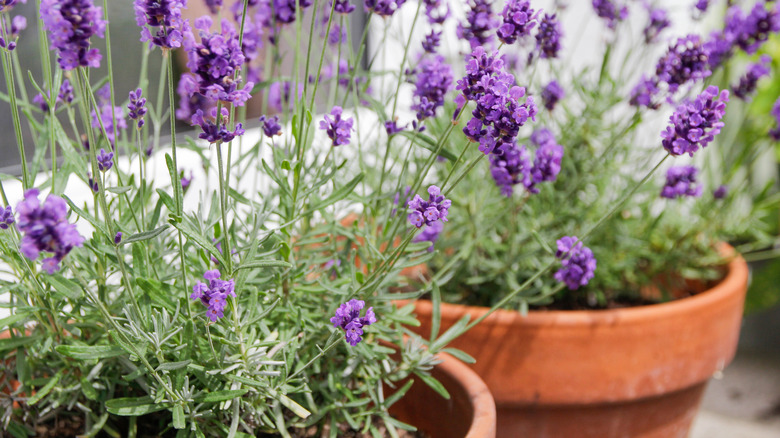
Lavender (Lavandula spp.)is a popular garden herb due to its intoxicating smell and how it benefits local bee populations. And, according to The University of Maryland Medical Center, some small studies have even shown that lavender may even be helpful in reducing insomnia, hair loss, stress, and anxiety. So although the plant's green-grey leaves are also attractive, it can be frustrating when your lavender doesn't produce as many pleasant-smelling flowers as you had hoped. You may be surprised to learn that the key for how to grow lavender effectively may actually be found underneath the ground.
Lavender is native to the areas around the Mediterranean Sea, meaning that it is best suited to dry, well-draining soil. Therefore, if yours is struggling or not producing as much as it should, it may be because the soil is too wet for this arid-loving plant. It is easy to rectify this problem, however, with the addition of one simple ingredient: gravel. Adding a one-third portion of gravel to your plant's soil is a great way to ensure that its roots are receiving the proper level of drainage to stop it from getting waterlogged. Additionally, lavender actually prefers lean soil, so adding gravel will dilute the concentration of minerals in the soil and help your lavender to thrive.
How to add gravel to your lavender
The first thing to consider is what type of lavender you should have in your garden. English or 'common' lavender (Lavandula angustifolia) is a plant that bears colder temperatures better and does well in zones 5 to 8. On the other hand, Spanish lavender (Lavandula stoechas) and French lavender (Lavandula dentata) are more able to stand hotter climates and are thus best-suited to zones 8 to 10. By considering what zone you live in, you will be able to choose the correct type and give it a better head start in your garden.
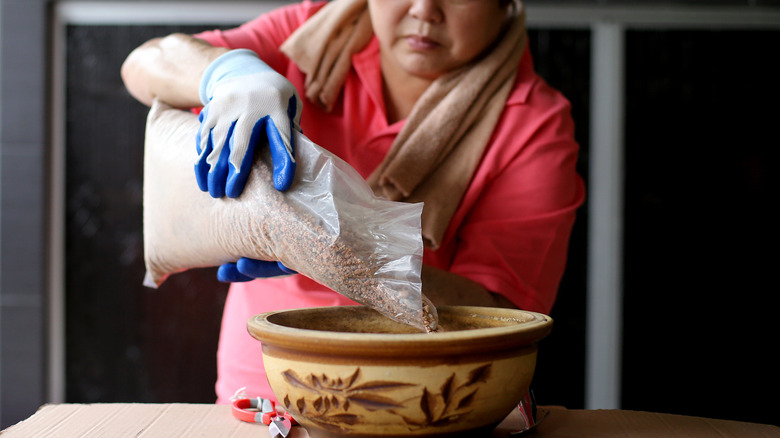
Then, plant your lavender in an area that gets plenty of sun to mimic its Mediterranean origins with a mixture of 2 parts soil to 1 part gravel. Pea gravel — such as this gravel from Tractor Supply — is often recommended for lavender as its small size allows air to circulate and gives the roots space to grow without being saturated in water. It is important not to be tempted to opt for mulch or wood chips instead, however, because these wood-based materials can trap in excess moisture and cause the lavender to suffer. You can also use this gravel mixture if you are planting lavender in a pot. Placing this herb in a container is a particularly good idea for French or Spanish lavender as they are less resilient to colder temperatures and can be brought inside. Additionally, having lavender inside means you will benefit from its beautiful scent in any room of the house you choose.