

Why You Should Think Twice Before Leaving Your Porch Lights On At Night
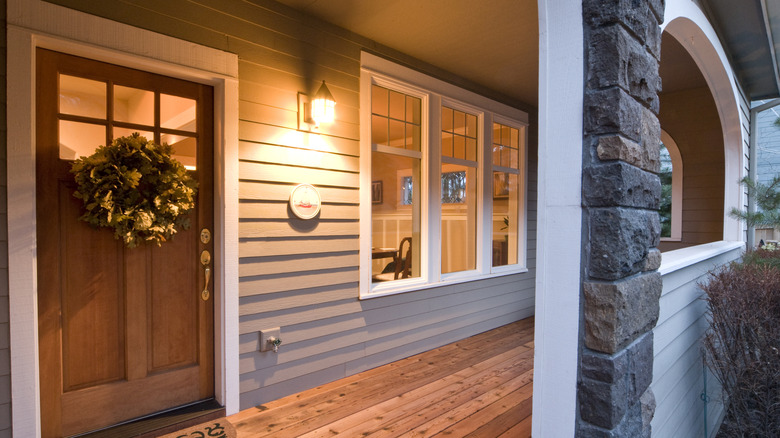
Porch lights add a warm, welcoming ambiance to any entry way and can serve as a beacon for guests looking for your home for the first time. For weary travelers arriving home late, they are a welcome sight and light the path to the front door. Many people also believe porch lighting adds to a home's security. Authorities have long recommended lighting doorways and windows to prevent break-ins, but very few burglaries are actually deterred by outdoor lighting. In fact, according to ADT, the average burglary takes place during the day between 10 a.m. and 3 p.m. and is committed by someone who lives within a two-mile radius.
With that in mind, leaving a porch light on all night actually does very little to prevent someone from breaking into the house. However, it can create a false sense of security for the homeowner. It seems like well-lit areas like the porch would provide a good deterrent for would-be burglars, but in reality, the lighting helps a potential intruder better see entry points and formulate a plan for breaking and entering. In addition, glare from outdoor lighting can actually make it harder to see potential dangers that may be lurking in the dark. Glare also creates deeper shadows, which make great hiding places. Check recommended wattages for outdoor lighting to help minimize this glare.
Porch lights can signal to burglars that you're not home
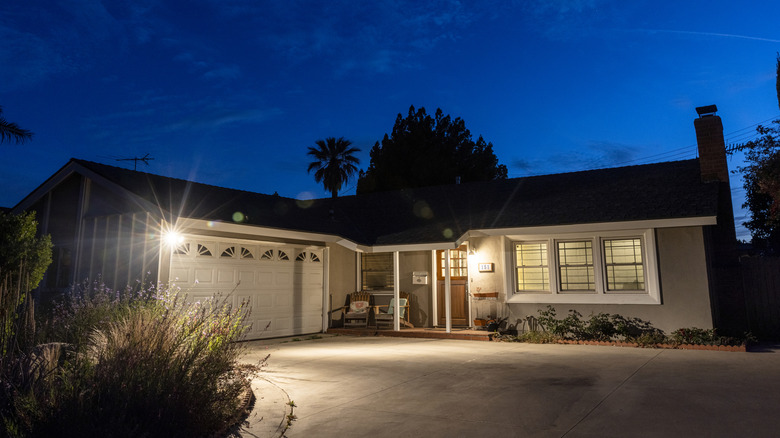
Not only does leaving a porch light on create a false sense of security, it can actually mark your home as a target. If a burglar is watching your house, leaving the lights on may actually signal that you are not home and invite an intruder to try to break in. This is especially true if you regularly leave the house in the evening and leave the porch lights on. Some burglars watch their targets for patterns like this.
Despite these drawbacks, outdoor and porch lighting can and should still be a part of your overall home security plan. Motion sensor lighting is one of the easiest ways to use lighting to deter potential invaders. A sudden light will attract your and your neighbors' attention and hopefully scare away any potential burglars. Motion sensor lights can be activated and deactivated when this feature is not needed. Use indoor lighting along with outdoor lighting to mimic being home. For instance, use timers on interior lights and set them to turn on at irregular intervals. Leave the porch light off as you would if you were home. You can also use smart lighting, which gives you the ability to control the lights remotely. Turn the lights on and off at irregular intervals. Regardless of how you use lighting for security, be sure to pair it with a home security system to ensure that your home is protected.