

12 Gorgeous Perennials To Plant This Fall For Spectacular Spring Blooms
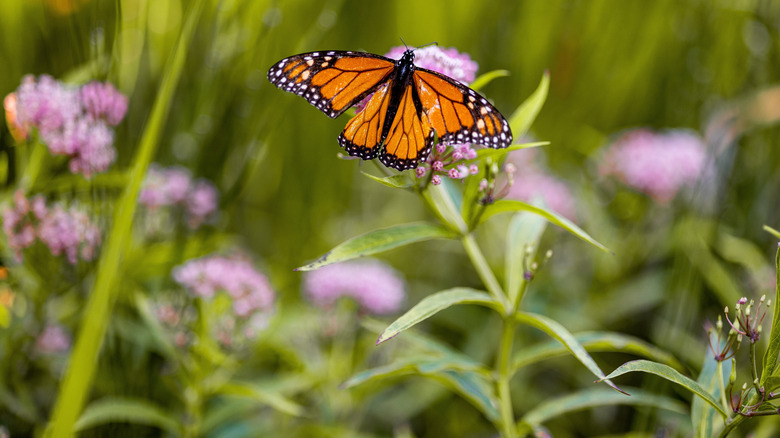
What a disappointment it can be to purchase flowers in bloom at the garden center in summer, only to see their blooms fade in the heat soon after you've planted them. By contrast, what delayed gratification it can be to plant in fall some discounted flowers that have already bloomed, then see them come to life the following spring. That's nature at work. Newly planted blooms are likely to shed their flowers as they prioritize growing their root system. Food comes first, after all, and roots provide it. You're working with nature when you plant perennials in the fall: They have a longer and cooler growing season to broaden their roots underground, then they will reward you in spring with a spring flurry of flowers. If you want spectacular spring blooms, fall is the time to plant perennials.
If you haven't made a garden map, now is a good time to start one. It's a key step in landscape design. You'll want to know where you've planted any bulbs last fall so that you don't dig them up or plant your perennials right over them. Nor do you want to dig up your perennials next fall when you plant bulbs, especially since some spring perennials die back by midsummer, making it harder to remember where you planted them. With a map in hand and a willingness to delay your pleasure, you're ready to head to the garden center.
Creeping phlox
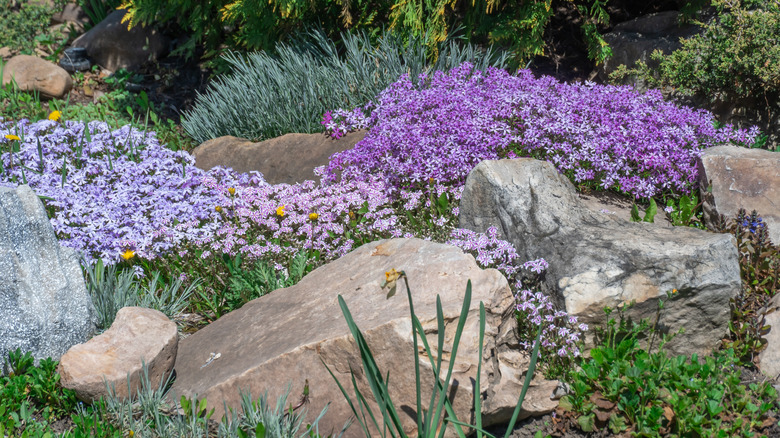
Creeping phlox (Phlox subulata) is a show-stopper. Though it tolerates dappled sunlight, plant it in full sun to get the best of its iridescent blue, white, lavender, or pink flowers in late April to early May. It creeps, not runs, so it can fill in an area but won't become invasive. Growing no more than 6 inches tall, it's one of the best native ground covers out there. Plant it in a rock garden or border, or let it cascade gracefully over a rock wall. Creeping phlox is hardy in USDA hardiness zones 3 through 9.
Wild Columbine
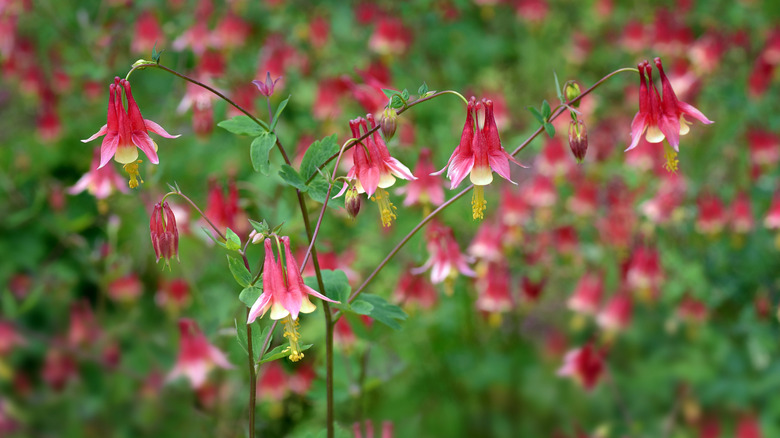
Wild columbine (Aquilegia canadensis) is an elegant, award-winning flower native to — you guessed it — Canada and eastern North America. It's hardy in zones 3 to 8 and while it's short-lived, it easily self-sows, with delightful offspring popping up wherever birds or you deposit its seeds. Hummingbirds and butterflies appreciate its springtime blooms at a time when other perennials have yet to open. Plant it in full sun to part shade in a pollinator garden, shady border, or woodland area.
Oakleaf hydrangea
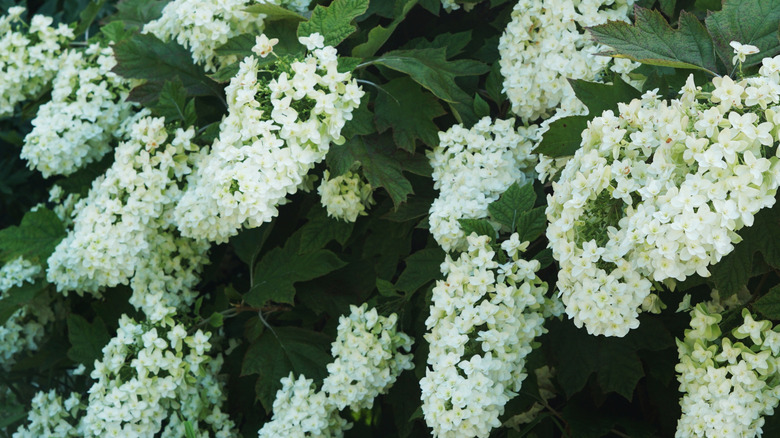
Oakleaf hydrangea (Hydrangea quercifolia) is a low-maintenance shrub that shows off flowers ranging from white to lavender in late spring to early summer. It then returns for an encore in fall with brilliant red oak-shaped leaves. This hydrangea is hardy in zones 5 to 9, and can easily fill a space, growing upwards of 8 feet tall and wide. Plant them in full sun or part shade, either singly or in a series for a year-round privacy hedge. Its flowers and seeds attract pollinators and songbirds.
Foxglove Beardtongue
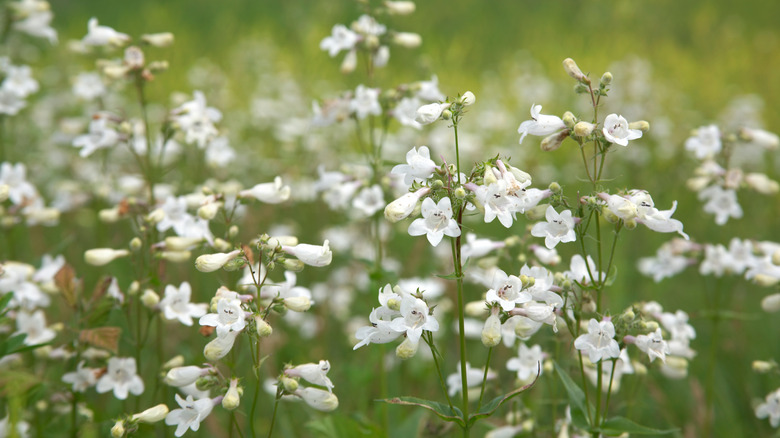
Relax, those who know that foxglove (Digitalis purpurea) is highly poisonous. Foxglove Beardtongue (Penstemon digitalis) resembles foxglove in appearance but is an entirely different and non-toxic species. It blooms in late spring to early summer, attracting hummingbirds, bees, and butterflies. Hardy in zones 3 to 8, foxglove beardtongue produces an abundance of long-blooming, white to pale pink, tubular flowers on its 3 to 5 foot stems. Plant it in full sun in the back of a perennial border or in a native wildflower garden.
Solomon's seal
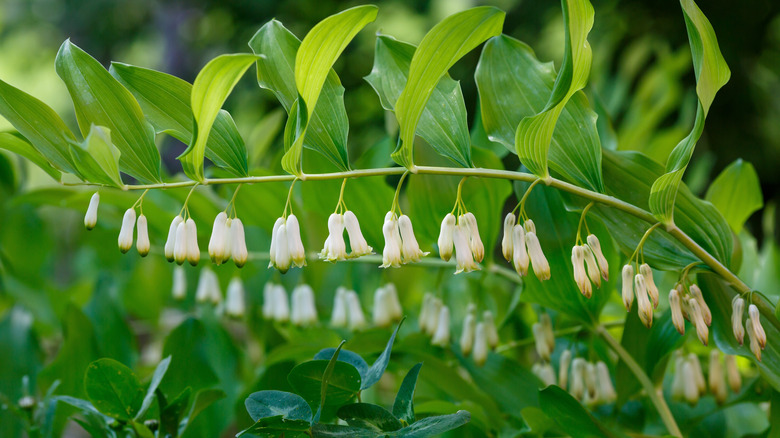
Solomon's seal (Polygonatum biflorum) is a late spring bloomer ranging from around 1 to 3 feet tall, with tubular, whitish flowers gracefully dangling from long, arching stems. The plant grows best in deep to partial shade and is a favorite of bees, butterflies, and birds. Once its flowers fade, it produces dark blue to black fruit that provides visual interest. All species of Solomon's seal are hardy in zones 4 to 8, give or take a zone on either end.
Bleeding heart
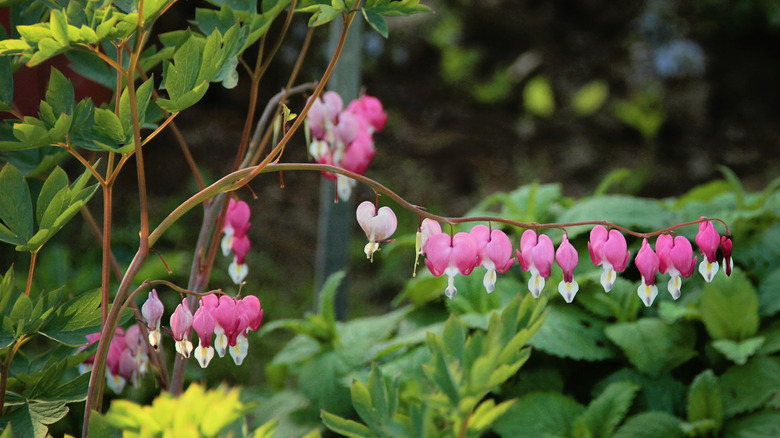
Bleeding heart or Dutchman's breeches (Dicentra cucullaria) is a gardener's favorite that graceful blooms with drooping, heart-shaped or tear-dropped, white-to-red flowers blooming in late spring to early summer, then dies back to the ground soon after its blooms have run their course. The plant is hardy in zones 3 to 9 and does best when growing in part to full shade. It is toxic to humans and animals, especially if ingested. The leaves can also promote skin allergies. Wear gloves while handling if you have sensitive skin.
Woodland phlox
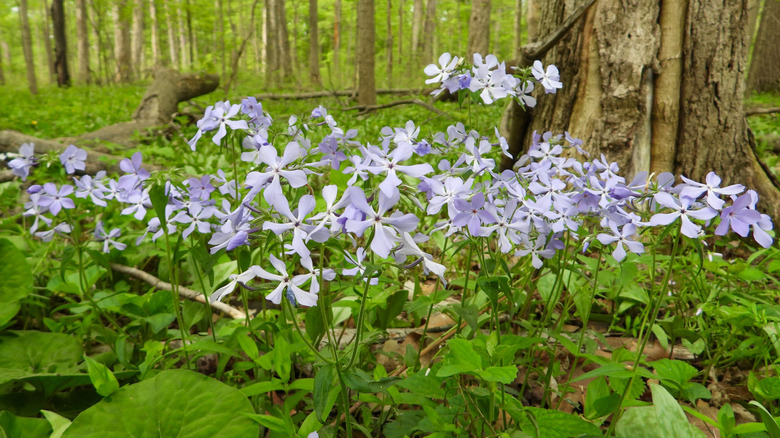
If you have a shady spot but still want showy, creeping flowers, woodland phlox (Phlox divaricata) is creeping phlox's shade-loving cousin. It can handle deep shade but also does well in part to dappled shade. Hardy in zones 3 to 8, its slightly sweet-smelling flowers are pollinator magnets, though its leaves often attract rabbits. Blooming from March to July, depending on your region, it is also a well-behaved ground cover, suitable for shady rock gardens, around the base of trees, or among taller spring perennials providing it with shade.
Blue false indigo
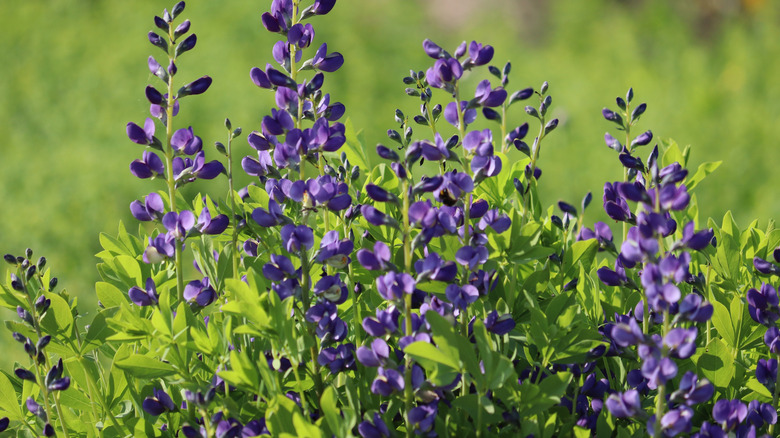
Blue false indigo (Baptisia australis) is a lovely member of the bean family (Fabaceae), looking like an overgrown pea plant. It can grow in a clump up to 4 feet tall and 4 feet wide in a wide variety of environments. It's hardy in zones 3 to 9, handles many soil types, and only needs full sun and well-draining soil to delight you (and pollinators) with spikes of blue flowers that open in late spring. The flowers turn into deep black seed pods that can last into the winter.
Cranesbill
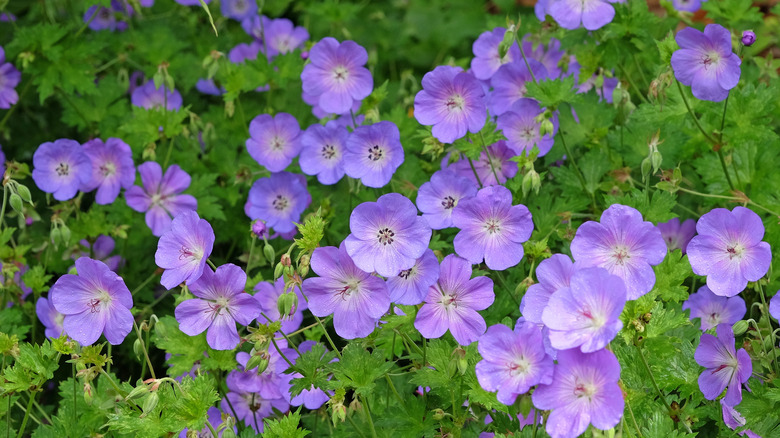
Cranesbill (Geranium spp.) is a genus of true geraniums, not to be confused with the Pelargonium plant that goes by the name scented geranium. Depending on the species, it can be hardy in zones 3 to 9, but the garden favorite "Rozanne" is hardy only in zones 5 to 8. Low-growing cranesbills can act as a ground cover in full sun or part shade, as the plant will slowly spread to fill in a space in your garden. To benefit from its exceptional flower display in late spring to mid-summer, keep it in the sun.
Amsonia
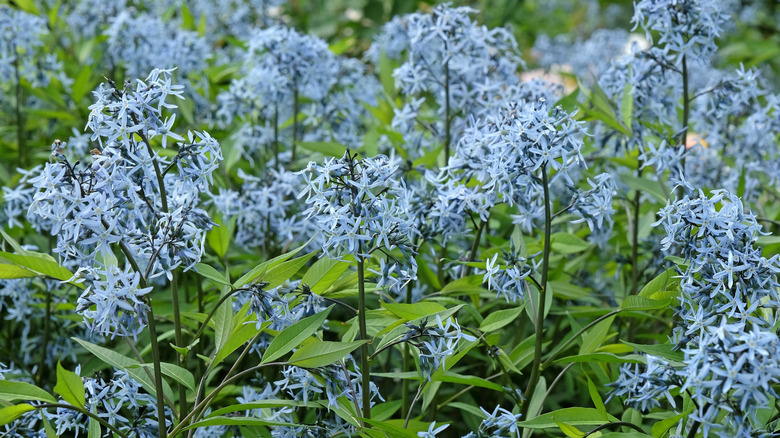
Amsonia (Amsonia tabernaemontana), is a low-maintenance, robust plant with graceful, light blue star-shaped flowers (thus the plant is commonly called Bluestar). Its flowers emerge in spring, while its leaves turn an eye-catching golden red in fall. It grows 2 to 3 feet tall and is hardy in zones 3 to 9. You can plant it in full sun or partial shade in a wide range of soils. Find a spot for it in a border, cottage garden, or wildflower meadow. Pollinators and hummingbirds will thank you.
Pinxterbloom azalea
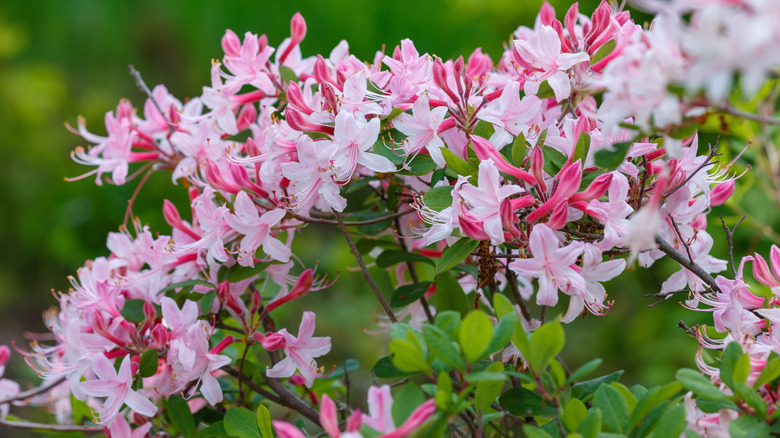
If you're looking for a tall shrub that can put on a springtime show, Pinxterbloom azalea (Rhododendron periclymenoides) is a top candidate. While some azaleas bloom all summer, Pinxterbloom produces stunning pink and white blooms throughout spring, then puts on a second show in fall with its yellow leaves. It's hardy in zones 4 to 8. Plant it in part shade in the back of a border and give it room to spread vertically and horizontally. This azalea is toxic to pets and humans alike if ingested.
Jacob's Ladder
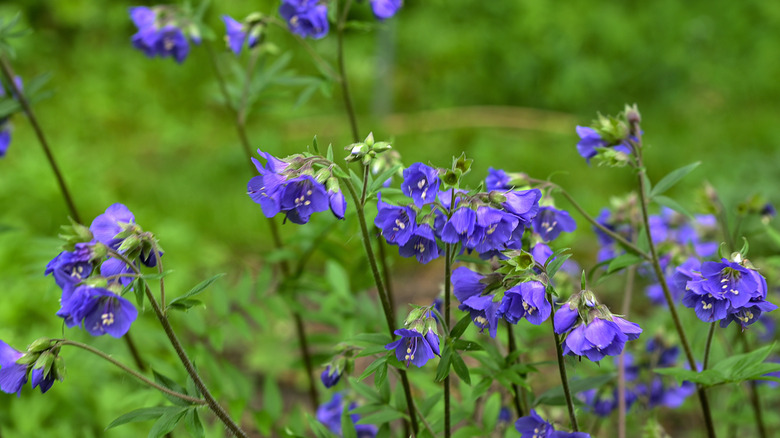
Jacob's Ladder (Polemonium reptans) is a favorite of hummingbirds, bumblebees, and butterflies. It produces clusters of purplish, bell-shaped flowers from April to June and its leaves can act as a host to butterfly larvae. Hardy in zones 3 to 8, it prefers moist, well-draining soil and doesn't do well in drought conditions or hot summers. Let this woodland native sprawl in a shade garden, where it will grow in foot-high mounds, then self-sow or spread by rhizomes.