

Why Hydrogen Peroxide Will Be Your Dirty Grout's New Best Friend
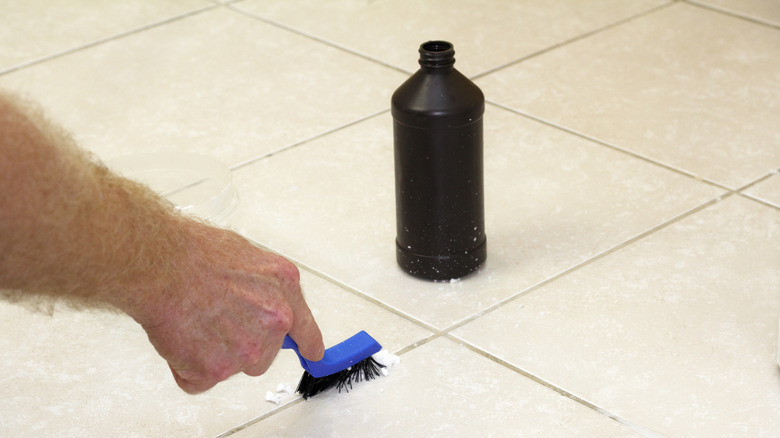
"Grout" — one of those household words where you probably know what it is but have no idea what it's made of. It's the stuff that goes between sections of tile floors and walls that seals them in place and keeps water out. But it's also the stuff that collects dirt and — if you're not diligent — mildew and mold. Grout is usually a mixture of fine particles (such as sand and cement) and water that dries hard when applied, but still retains its granular nature, which is what allows dirt and grime to accumulate there. You might be tempted to reach for a bleach solution when cleaning grout, as it does a decent job of doing so. But you should consider using hydrogen peroxide instead, as it has fewer downsides than bleach for cleaning tile grout.
There are advantages and disadvantages to chlorine bleach. While it's an excellent cleaner and disinfectant, it produces strong fumes and can react in harmful ways when mixed with other compounds like ammonia or vinegar. Hydrogen peroxide (H2O2) is good-old water (H2O) with an extra atom of oxygen that breaks apart molecules of dirt, viruses, bacteria, fungus, algae, mold, and mildew. Unlike bleach, hydrogen peroxide breaks down easily in the environment and doesn't produce powerful odors, making it better for spaces that are hard to ventilate, like many bathrooms.
How to use hydrogen peroxide to clean grout
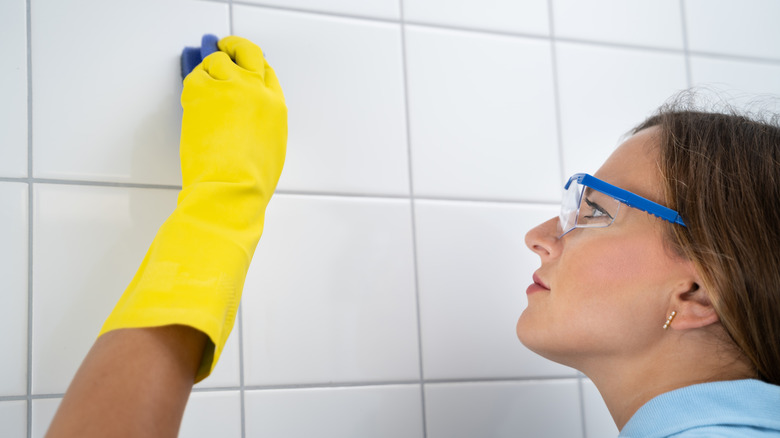
Pure hydrogen peroxide can be lethal, but the household formula purchased from pharmacies usually comes in a highly diluted 3% solution. Anything stronger than that can work too well in breaking apart substances, including the grout itself. Since grout is granular and porous, it can absorb hydrogen peroxide, potentially leaving it brittle. This is especially the case with older grout. If your grout is already crumbly or damaged, be sure to clean and seal your old grout to keep it strong and intact. Like bleach, hydrogen peroxide can bleach your grout, so if you have a colored grout, test it first on a small, discreet area.
Put on eye protection and rubber gloves, then grab a sponge or old toothbrush. You can use your 3% solution of hydrogen peroxide as is, or mix it with a small amount of baking soda to add grit to the formula if you have tough stains. You can also add a squirt of liquid dish soap, then stir your formula thoroughly to combine any ingredients. Use a spray bottle or squeeze-top bottle to apply the formula to the grout, without applying too much to any one area. If you're using baking soda along with hydrogen peroxide, let the formula sit for 5 or so minutes. Otherwise, proceed with lightly scrubbing the affected area until the dirt and staining have been removed. Then, rinse the area with a sponge and water. Repeat the process if the stain remains. If the first round was without baking soda, consider adding it to your second round. Then, let the grout dry completely.