

These 5 Invasive Flowers Are So Bad, They're Actually Illegal To Plant In The US
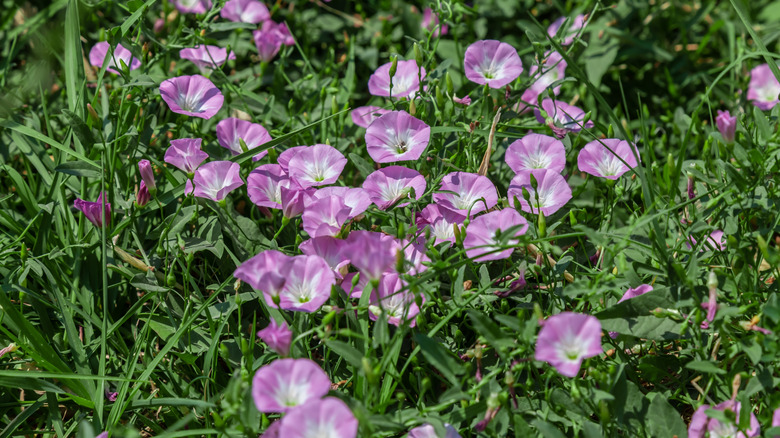
So, you're at a neighborhood plant sale and you see an attractive flower that you'd love to put in your own yard. "It's free," your neighbor says. "I have so much of it I can't get rid of it." That should be a red flag warning to stay away from it. Flowers that you can't get rid of are the last things you should plant in your garden. Not only is it unwise to take on such a burden: it may be illegal, since the plant could be on a list of invasive species that are banned in the United States. These are beautiful flowering plants that can wreak havoc in your garden, ruin native habitats, and spread like wildfire. Some of the worst offenders are banned nationwide.
Invasive non-native flowers are highly regulated and controlled in the United States. In some states, garden centers are inspected every year by "weed commissioners" to make sure they're not selling invasive plants. Not every state has laws that ban certain plants, but in those that don't, federal law requires gardeners to abide by the USDA's Federal Noxious Weed list. Failing to do so can result in state or federal officials entering your property and removing plants from your garden that threaten native habitats. If you (or your unlucky neighbor) knows the name of the plant they're trying to get rid of, you can use the USDA's Invasive & Noxious Search engine to see if it is on your state's list of banned flowers. These five are among the most likely to pop up on that list.
Purple loosestrife
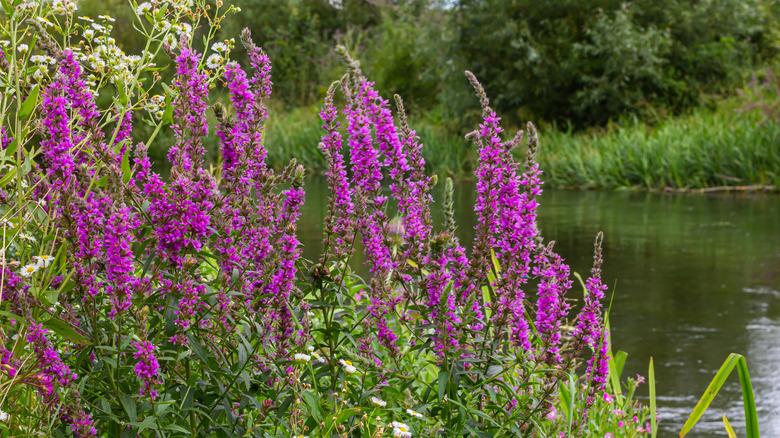
Purple loosestrife (Lythrum salicaria), banned in at least 30 states, is one of the most invasive plants that you shouldn't grow in your yard. Too bad, because it's a beautiful perennial with abundant purple flowers atop its tall, upright spikes. But, it's quite the nuisance: It can take over a garden and easily escape into the wild. A single plant can produce two million seeds a year, and also reproduce by runners, forming a wide underground network that crowds out all competitors.
Native alternatives that look similar and grow in similar conditions include blazing star (Liatris spicata), which also produces tall spikes that produce abundant purple flowers. It's a pollinator favorite and looks superb in mass plantings. Blazing star grows in full sun in USDA hardiness zones 3 through 8.
Another spiky native that can take the place of purple loosestrife is false dragon head (Physostegia virginiana), which produces purple or white flowers that attract bees and butterflies. It grows in consistently moist soil in full sun to part shade in zones 2 to 9. It can grow up to 4 feet tall and spread readily. If it spreads too readily, it fortunately has shallow roots, so the individual plants can be yanked out without much effort.
Carnation Spurge
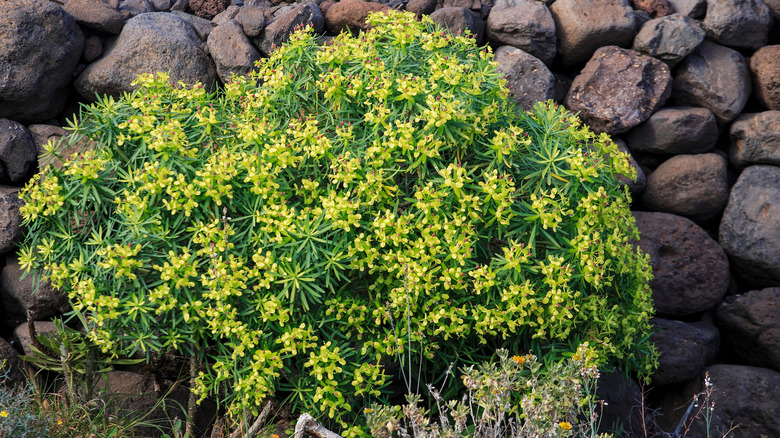
Carnation spurge (Euphorbia terracina) is a member of the spurge family (Euphorbiaceae) — which includes poinsettias — but which also includes many an invasive garden scourge. Also known as false caper, it can grow 2 to 3 feet tall and produce relatively small green or yellow flowers. But don't let its diminutive state fool you. While it mostly has been found in Southern California, it's banned throughout the United States, as it can rapidly form dense patches in disturbed areas and poor soil. The chemicals it produces can prevent the germination and growth of competitor species, and its sap is toxic to humans and livestock.
If you're looking for a North American native euphorbia, try Snow-on-the-mountain (Euphorbia marginata), hardy in zones 2 to 11. Snow-on-the-mountain grows 1 to 3 feet tall and produces flowers similar to carnation spurge but with lovely variegated leaves. Plant it in full sun in well-draining soil of any type, including nutrient-poor soil. As with all euphorbias, its sap can cause skin irritation, so wear gloves while handling. Snow-on-the-mountain is often planted as an annual ground cover and is a much better-behaved alternative to many of its invasive cousins.
Giant Hogweed
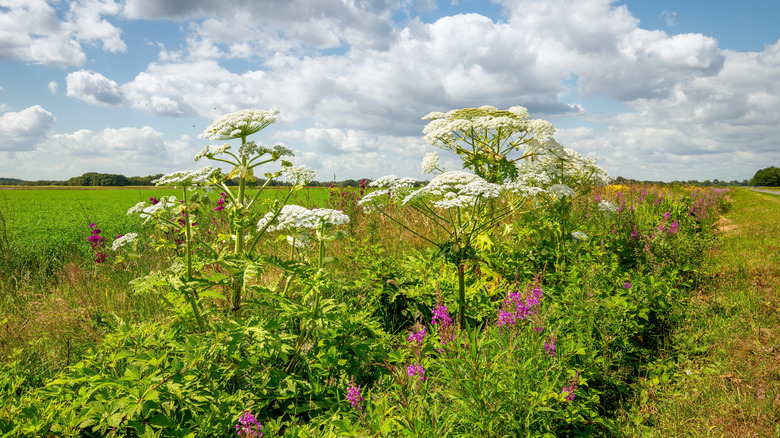
Giant hogweed (Heracleum mantegazzianum) is a beast of a plant, rapidly growing to up to 14 feet tall. Each plant produces thousands of seeds. This Asian import is banned nationwide as well as in 13 states. With its carrot-like cluster of small white flowers, it's often mistaken for a giant version of wild carrot, or Queen Anne's lace (Daucus carota), another invasive weed in many parts of the United States. And in case you have some lingering fondness for obnoxious giant flowers, know that it's also highly toxic to humans, causing severe blistering of the skin. Wear gloves and protective clothing if you're removing it.
You can easily swap out an invasive giant hogweed for a better-behaved one. American hogweed (Heracleum maximum) is a native of North America and typically grows up to 10 feet tall. Also known as cow parsnip, it has similar-looking flower heads (umbels, to be exact) that are attractive to pollinators and make a great substitute for baby's breath (also banned in a few states) in flower arrangements. American hogweed is hardy in zones 4 to 9 and prefers to be planted in full sun to part shade in a wide variety of soil types and moisture levels.
Cape tulips
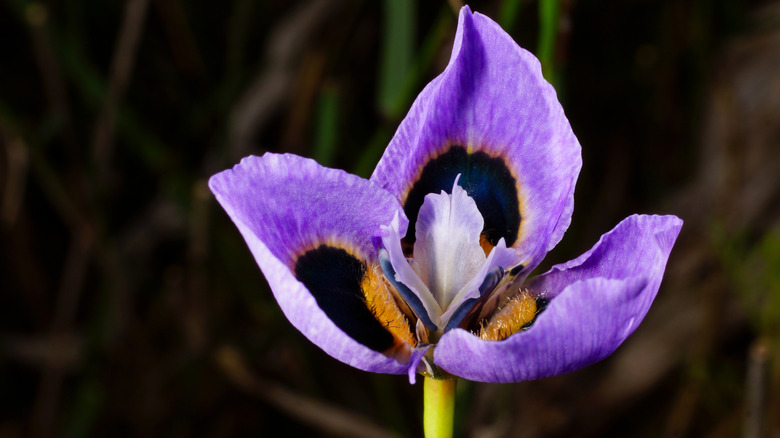
From Vermont to California, cape tulips (Moraea spp.) are on a lot of state's banned lists. Five of the species in the Moraea genus (including cape tulips) are on the Federal Noxious Weed List. Also known as butterfly irises, cape tulips are actually in the iris family, with three-pronged flowers similar to the petals of other irises. They come in many attractive colors, some especially beautiful, but don't be tempted. When they spread, they displace native species and degrade the soil.
Depending on the species, cape tulips bloom from early spring to mid-summer, so if you want to plant a non-invasive iris with a similar bloom time instead, you might plant Dutch irises (Iris x hollandica), Siberian Irises (Iris sibirica), or Japanese Iris (Iris ensata), which respectively bloom in early to mid-spring, mid-spring to early summer, and summer. But as their names suggest, none of them are native to North America. Native bulbs are harder to come by, but among them are camas (Camassia spp.), which grows 1 to 4 feet tall in zones 3 to 8, and brodiaea (Brodiaea spp.), which grow shorter (20 inches high) and are hardy in zones 5 to 9. These are planted in the fall and flourish in full sun or part shade.
South African ragwort
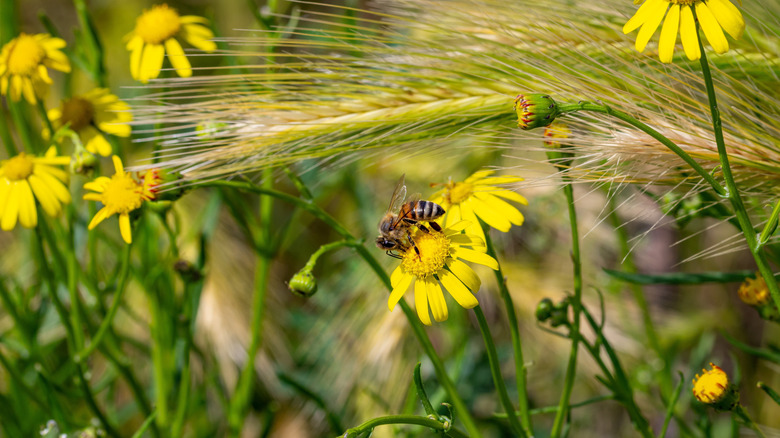
South African ragwort (Senecio inaequidens) is a highly invasive plant that can spread like wildfire in prairies and grasslands. That's why it's listed on the USDA Federal Noxious Weed list. It produces pretty daisy-shaped yellow flowers looking like easy-to-grow black-eyed Susans (Rudbeckia hirta), but with a yellow eye instead of a black one.
There are ample native alternatives to South African ragwort if you want a tall yellow daisy-shaped flower. Start with any member of the Rudbeckia family. Brown-eyed Susans (Rudbeckia triloba) grow 3 to 5 feet tall and produce more (but smaller) flowers than their black-eyed cousins. They grow in full sun and are hardy in zones 4 to 8. If you want an even taller variety, Giant brown-eyed Susans (Rudbeckia maxima) grow up to 7 feet high and are hardy in zones 4 to 9. Plant either one of them in full sun and they will self-seed to fill in an area of your garden.