

Prized Glass Items You Should Never Skip At Estate Sales And Thrift Shops
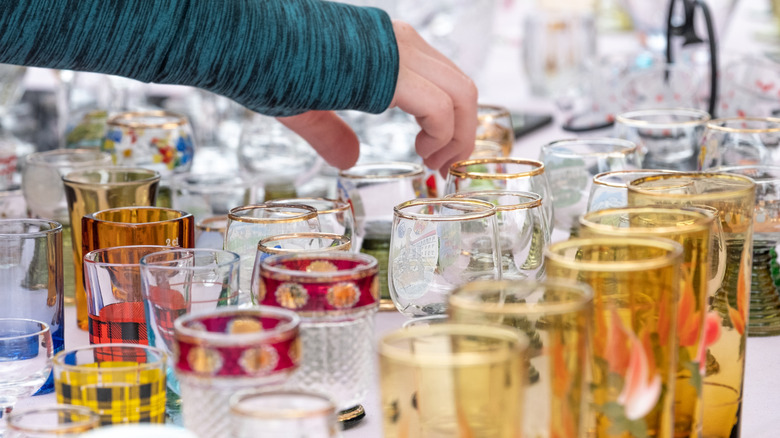
Whether you're a seasoned thrifter or you just like to have a look through an estate sale every once in a while, it can sometimes be hard to know what pieces are worth grabbing. And while you may know that there are home items you should never thrift, like bedding and towels, what should you be on the lookout for? Believe it or not, the glassware section is actually a great place to find versatile (and potentially valuable) pieces that could add a great flair to your own home or even fetch you a pretty penny!
When looking for secondhand glassware, there are a few tips and tricks that can make your experience both more enjoyable and more productive. Firstly, doing your research really is worth it. Before you even head out to the local thrift store, why not visit a local museum to have a look at their glassware collections and get a feel for what valuable pieces look like? Alternatively, if you're looking for handmade glass works, you may want to watch a few videos on glass blowing so that you know what imperfections and marks suggest that something has been made by hand. When shopping for drinking glasses, thrifting a full set is a good idea because this can be more valuable when sold. It is also a good idea to look for pieces that are still in relatively good condition. When you do take home a piece, make sure to wash it carefully by hand — particularly fragile crystal and delicate pieces — to help bring out its original shine. So, which types of glassware should you be on the lookout for next time you pop into the thrift store or spot an estate sale?
Fostoria glass
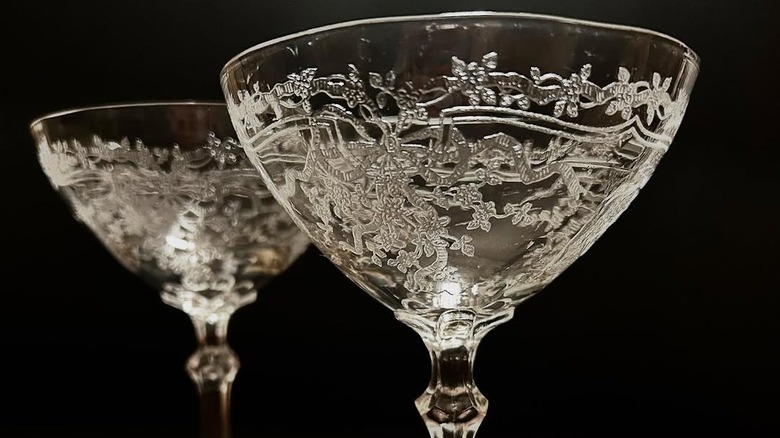
One way to know which glassware you shouldn't skip at the thrift store is to be aware of the companies that have gone out of business. Fostoria is a great example of this. It was a well-loved American glassmaking business that specialized in stemware and closed its doors in the 1980s after nearly 100 years of operation. It was even specially ordered by a variety of US presidents like Dwight D Eisenhower and Ronald Reagan. Now that Fostoria have stopped production, their pieces have risen in value, although some patterns are worth more than others.
While Fostoria didn't often label their pieces, and this can make them slightly harder to identify, they can often be easier to spot if you know a few of their key patterns. June, for example, is an etched pattern which includes flowers, garlands, and bows, and was produced between the 1920s and 1950s. Rose is another great pattern to look out for; these pieces are largely undecorated apart from a single etched rose and were a popular mid-century design for the company. They can be found at thrift stores, estate sales, and on online resale sites like Etsy and ebay, where they are sold for a range of prices depending on the condition and pattern of the piece, even going for up to $350 for a full collection.
Loetz glassware
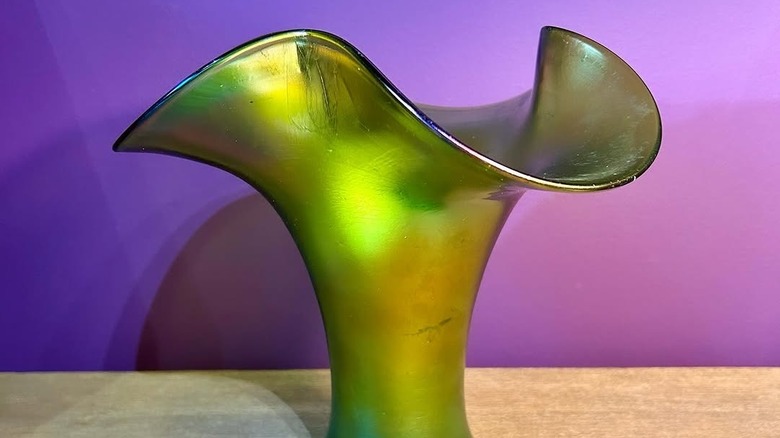
Have you ever been browsing an estate sale and spotted an iridescent, multicolored piece of glassware? You might have been looking at a piece of Loetz glass and not even known it! Loetz glass was started in the Czech Republic in the late 19th century by Johann Loetz and taken on after his death by wife, Susanne Loetz. What resulted was a range of beautiful Art Nouveau pieces that are now highly coveted today both for their look and their rarity. But, can you learn to spot them for yourself?
One reliable way to spot authentic Loetz is to look for their maker's mark, which is a pair of crossed arrows occasionally underscored by the word "Lötz". However, these marks were typically only placed on higher-valued objects and so are not found on every piece. Due to the fact that Loetz glassware was handmade, you can also check for irregularities such as a "pontil mark," which shows where the glassblower's rod was detached. Keep a keen eye out for any seams or perfect edges, as this may suggest the piece is a machine-made copy. If you're still unsure how to identify the piece or how to find out how much glassware is worth, you may also want to consider asking for the item's history or getting it appraised by a professional.
Uranium glass
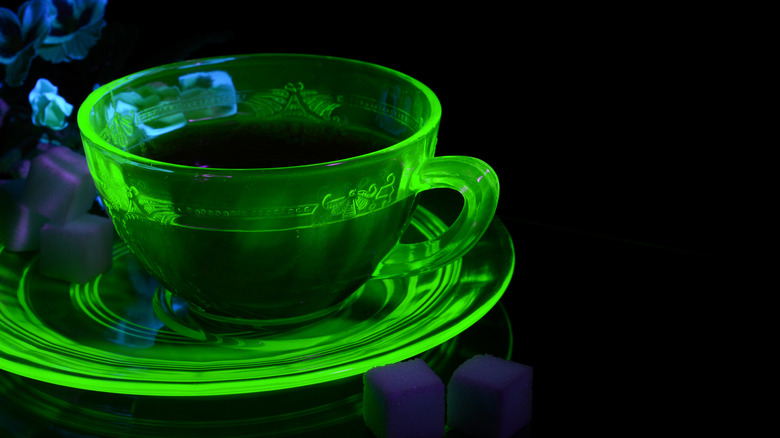
You may not typically associate uranium with home decor, but this rare and fascinating type of glassware actually glows. Uranium Glass is a type of dishware that has a small amount of uranium oxide within it, causing it to glow in the dark or under UV light. It was manufactured by a range of popular companies like the Fenton Art Glass Company until the radioactive properties of uranium and its dangers were better understood. This means that pieces are valuable because they can no longer be made. Uranium glass emits small amounts of radiation, so it's recommended that you store it in a cabinet to avoid prolonged exposure. They are also not generally recommended for eating or drinking from.
While this type of glass has a unique yellow-green sheen to it, the only reliable way to tell verified uranium glass from other colored glass is with a UV light or a Geiger counter. The UV light will excite the electrons and cause the glass to glow, a helpful way to tell if the piece was actually made with uranium. The Geiger counter, on the other hand, detects how much radiation is in a piece and will click if the piece is made of with uranium glass.
Steuben
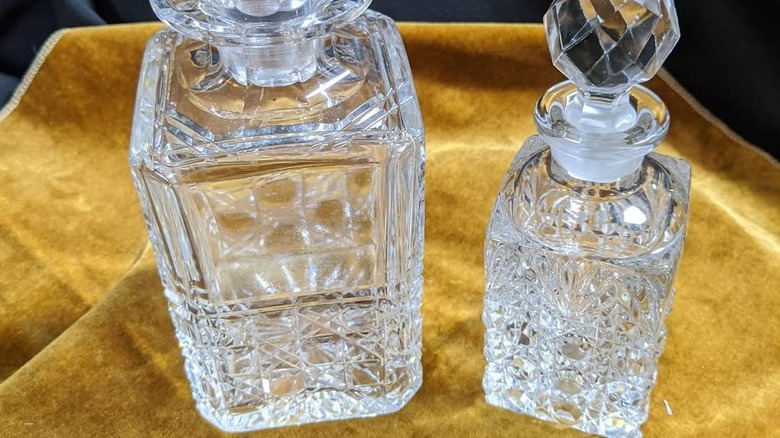
It would be very easy to walk past an authentic piece of Steuben glass at a thrift store or estate sale and not know that some pieces can sell for thousands of dollars, like the "Arctic Fisherman" sculpture, which sold on Live Auctioneers for over $1,000. This is because, unlike the fisherman sculpture example, many of the works from this glass company are simple and subtle, so may easily slip your notice. In order to spot them, remember that some Steuben works are signed on the bottom. One such signature includes a banner bearing the company's name and a fleur-de-lis style icon, though a range of other stamps have been used as well.
However, not all of their work is signed, so it can be useful to get to know their different styles to help you better identify these pieces on your own. This is worth doing because these pieces are known for their high quality and flawless crystal and can therefore fetch a decent price, even second-hand. For example, smaller bowls or vases can go for up to $400, while their fascinating animal figurines often sell for over $1,000. One type of Steuben glass to look out for is any piece that predates 1933 because they are rare and can sell for thousands of dollars.