

When You Use Too Much Mulch, Here's What Happens To Your Plants
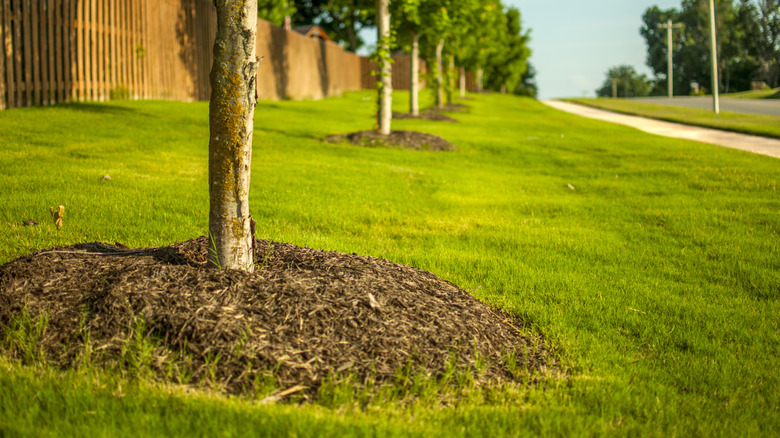
Mulch is well-known for its many great purposes. It retains moisture well and maintains temperature levels in the soil, increasing soil fertility, weed control, protecting roots from lawnmowers or weed trimmers, erosion control, while also covering bare spots with something more aesthetically pleasing. Mulches also attract beneficial insects like ants and predatory beetles, which feed on pest insects that harm plants. Too much mulch is not a good thing, however. Over-mulching can starve plants of water and oxygen, can reduce their ability to fight off pests and diseases, and can even contaminate the soil.
Follow these simple rules: Apply mulch 3 inches deep around flowers and vegetables, and 3 inches away from trees and shrubs. Hardwood mulches break down very slowly, so there's no reason to add new mulch every year. If you do, only add enough new mulch to maintain a 3-inch layer. If old mulch has decomposed, remove it or work it into the soil rather than letting it accumulate on top of the soil year after year. Mulch should be loose, not compacted, so that air and water can work their way through it. You can lightly rake the mulch from time to time to keep it loose, especially after a period of heavy rain. But how exactly do you figure out what over-mulching looks like? Let's dive into the details including more about why it is bad.
Over-mulching can either be too thick or too close
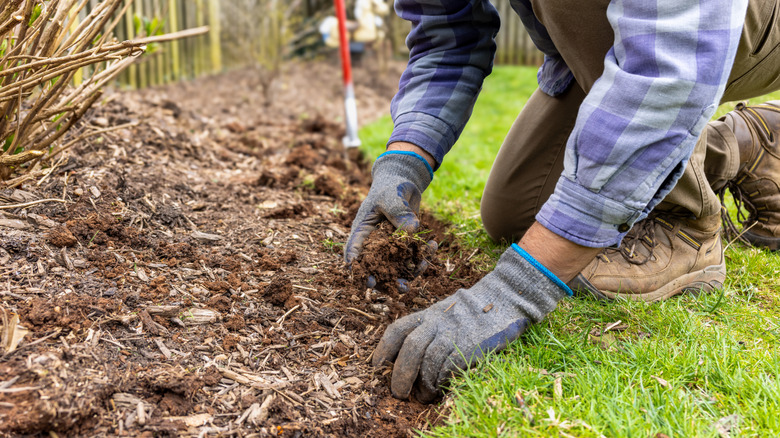
Its important to know how much mulch to buy and how much to use. Mulch that is too thick can starve plants of moisture and oxygen. If the mulch is too thick, its moisture-retaining ability can prevent that moisture from reaching plant roots. Mulch lightly around new plantings, since their roots don't extend as deeply as those of mature plants, making young plants more reliant on surface moisture. Limit your mulch thickness to no more than 3 inches so that rainfall and irrigation can work their way down to plant roots. The greater weight of a thicker mulch compresses it as it decomposes, creating a barrier that's harder for water and oxygen to permeate. Plants need oxygen to free up the energy contained in the nutrients they absorb. While leaves can produce their own oxygen through photosynthesis, roots can't. When roots are starved of oxygen, they can circle (or "girdle") around the plant's root collar, choking off the trunk. Starving the roots of oxygen is the leading cause of tree and shrub death.
Mulch that is too close to trees and shrubs can spread disease or infestation. Limit your use of mulch around trees and shrubs by keeping it at least 3 inches away from their trunks. The moisture in mulch pressing against a plant's bark can increase the chances of it rotting, decreasing the plant's ability to protect itself against pests and disease. That loss of its outer layer of protection is one of the leading causes of the death of shrubs such as rhododendrons, azaleas, mountain laurel, and boxwoods, and trees such as dogwoods, cherries, birch, and holly. Using pine bark doubles the danger, since bark from conifers actually contains fungi that can cause root rot in shrubs and trees.
Over-mulching can cause soil contamination
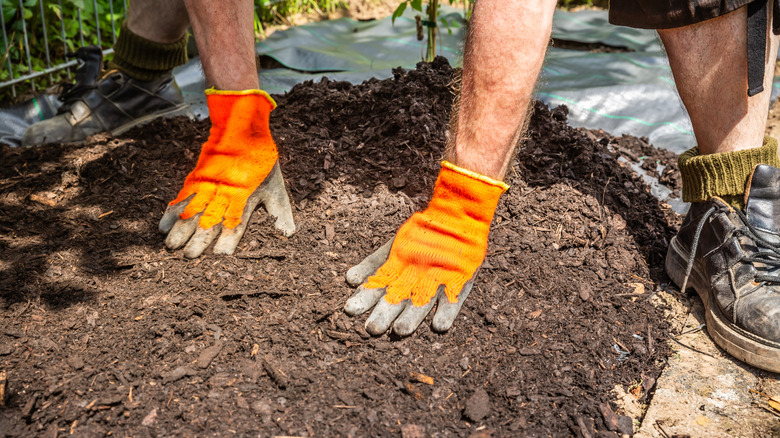
Spreading bark over a large area is also ill-advised. Trees have bark to keep themselves warm and dry but also to protect themselves from invasion by microorganisms (bacteria, viruses, fungi) and insects. That protective layer of bark contains anti-microbial compounds and natural pesticides. Some of these compounds are made of heavy metals, like lead, aluminum, manganese, cadmium, and zinc. Excessive and repeated use of bark mulch over a large area can lead to those metals accumulating in the soil below and changing its chemistry, even to a level that is toxic to plants. Accumulation of salts leached from widely spread mulch can also lead to soil infertility.
Know the difference between compost, mulch, and wood chips. Compost mulches, which use thick layers of compost rather than composted bark to act as mulches, are higher in organic nutrients like nitrogen than bark mulches are. Excessive use of compost mulches can lead to nitrogen runoff, which negatively impacts waterways by promoting the growth of algae and other fungi. By contrast, non-wood chip mulches that have not been composted, such as fresh grass clippings, fresh sawdust or wood waste, lack enough nitrogen to decompose, so they will draw nitrogen from the soil itself as they decompose, depriving plants of this vital nutrient. Stick to composted hardwood mulches that don't change the soil chemistry.