

Make Your Wood Cabinets Shine With A Simple Method That Actually Works
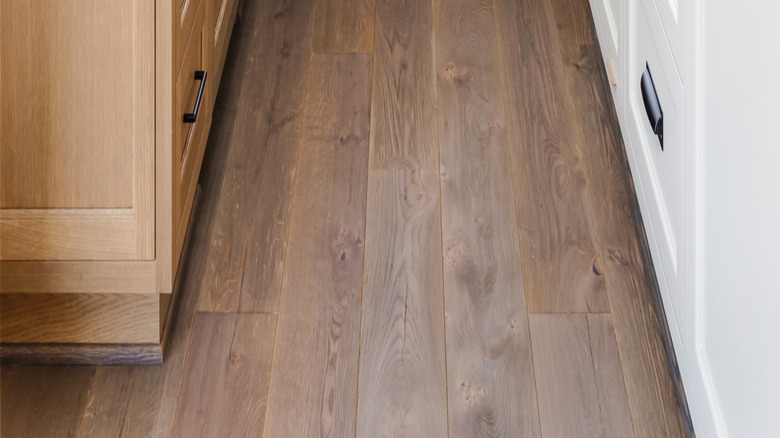
Stained wood kitchen cabinets are hot right now, with so many homeowners gravitating toward their organic warmth and natural beauty. However, after you've used and abused your cabinets for a while, they need a bit of elbow grease to remove accumulated grime, and the clear finish coat tends to dull over time. The good news is that there's one product that can help you on both accounts, cutting through grease or oil build-up and restoring shine at the same time. What's this magical elixir? We're talking about mineral oil here, folks.
Mineral oil, not to be confused with mineral spirits (a solvent which can actually strip away a layer of finish), is a purified petroleum-based oil with a wide variety of uses from cosmetics to household products. When applied to raw, unsealed wood like cutting boards and butcher block countertops, it seeps into the wood to condition and bring out the natural color and grain. However, the vast majority of wood cabinets are sealed with a coat of oil- or water-based varnishes, like polyurethane, meaning they are coated to protect the wood and prevent substances from penetrating into the material for longevity and durability. This means mineral oil won't break through the varnish barrier to condition your wood, but at the same time, unlike harsh chemical cleaners and some polishes, it won't compromise or break down the integrity of the sealer either. Instead, it will sit on top of the protective varnish layer to loosen greasy build-up, as well as make your stained wood cabinets look fresh and glistening. By simply using a clean cloth to wipe on a small amount of mineral oil and then buffing to finish, your once-stunning wood cabinets will be restored to their original shine and glory. Let's break down all the details!
Apply a small amount of mineral oil to your wood kitchen cabinets, then buff to shine and protect
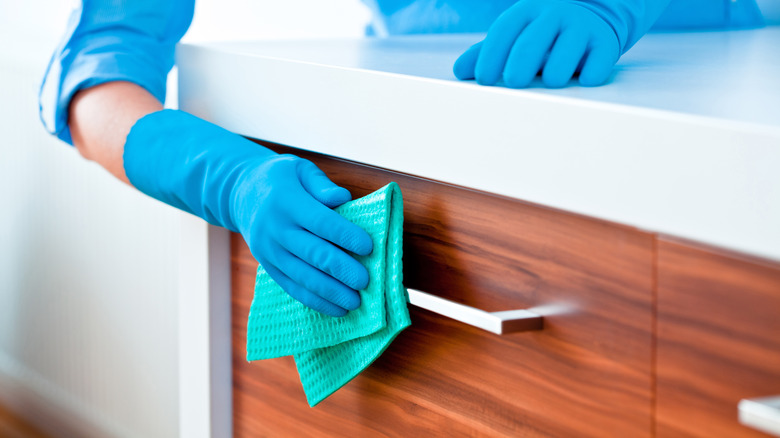
Unlike formulated polishes that may contain unsafe ingredients for your varnish layer (causing deterioration or accumulation of a film, which can make the wood look blotchy or attract grime), mineral oil is generally considered safe to put on top of a water- or oil-based varnish, since it simply sits on the surface without absorbing. Even so, it's best to test in an inconspicuous spot first, like on the inside of a door, to ensure you're happy with the results and that your cabinet finish is compatible with mineral oil before proceeding. When it comes to applying, while mineral oil is odorless, you'll want to work in a ventilated area (outside or open your doors and windows in the kitchen) and potentially wear a mask for larger projects to avoid too much exposure. Additionally, wear gloves and other protective clothing, as contact with the skin can cause irritation. And the last rule of thumb when applying mineral oil is that a little goes a very long way, so be mindful of how much you're applying to avoid an oily finish.
Add a few drops of mineral oil to a clean, dry cloth and apply a thin layer to the cabinet. Depending on the level of cleaning you need to accomplish, let it sit for 5-15 minutes to loosen grime and work its magic. Finally, use a second clean, dry cloth to wipe the excess and buff to shine the cabinet front. And there you have it – mineral oil polishing gives you a gorgeous wood cabinet front with a sheen like brand new, as well as an additional protective layer against fingerprints, dust, and grime accumulation for a cleaner, better-looking kitchen.