

What To Do If Your Neighbor's Tree Is Crossing Over Onto Your Property
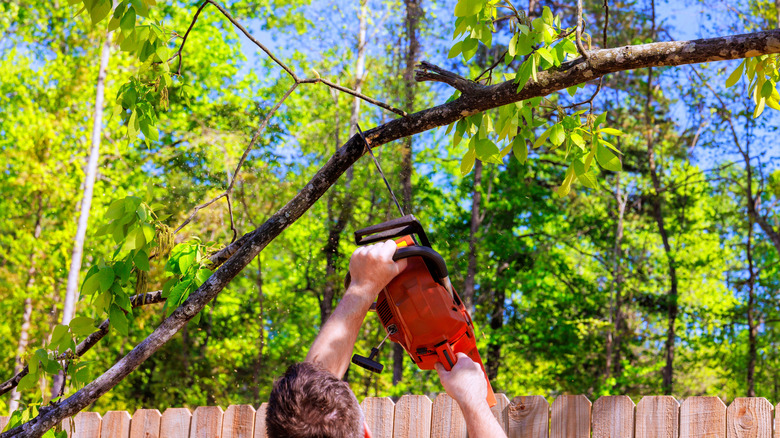
"Good fences make good neighbors," as Robert Frost famously put it. Trees are another matter, however. A tree overhanging your property, shading out your garden, sending roots into your septic system, threatening your roof with dead limbs that could fall at any minute, dropping leaves that you need to rake up, scattering helicopter seeds which turn into hundreds of little seedlings in your yard — is there anything you can do about it? Yes, there is. There are limits to what you can do, but there are also laws on your side.
According to traditional English common law, "whoever owns the soil, it is theirs up to Heaven and down to Hell." The tradition that you own everything below and above your property was fine until the advent of air travel in the 20th century. In 1946, the U.S. Supreme Court limited vertical property rights to "the immediate reaches of the enveloping atmosphere." Within that sphere, you have the right to remove or modify anything that interferes with your "use and enjoyment of the land," as the Supreme Court put it. And since it's your property, knowing how and when to trim a tree or dig up roots is important. You don't want to damage your neighbor's property, nor your own. If a tree limb overhanging your yard falls on your roof, you're the responsible party that has to pay for the repairs. But if your neighbor planted a tree and its roots damage your foundation or swimming pool, they may be liable. As with anything involving property rights, it's complicated and there are rules and laws at every level of jurisdiction. And each law or regulation comes with exceptions and limitations to what you and your neighbor can or must can do with your arboreal property.
Good communication is key to handling overhanging tree branches on your property

To avoid conflicts with your neighbor, it's important to know any limitation on your rights. Start with knowing who owns the property next door. Your neighbor may not own the home they live in, so you'll need to find out who owns the property. Homeowner association and utility companies may have rights that limit yours. States and localities also have laws and codes delineating property rights. For example, your neighbor may be prohibited from planting new trees that shade your solar panels. Landowners may be prohibited from creating private nuisances such as messy yards or unsafe equipment. Your neighbor's property rights aren't unlimited, either.
Once it's clear who owns what, you'll have a better sense of what you can and can't do. Don't assume that you can pick fruit from your neighbor's tree that hangs over your yard: It may belong to your neighbor. Your ownership of your neighbor's tree only extends to your side of the property line, so if you want to trim branches or dig up roots, it's wise to discuss your desires with your neighbor first. You can only trim branches or dig roots on your side of the property line. You also can't do so much trimming or digging up tree roots that you cause your neighbor's tree to weaken, die, or lose its aesthetic appeal. To trim some higher limbs, arborists may need to gain access to your neighbor's yard so that they can climb the tree. Know your rights, know your neighbor's as well, and remember that like good fences, good communication makes good neighbors.