

The Biggest Downside To Planting Dogwood Trees That No One Warns You About
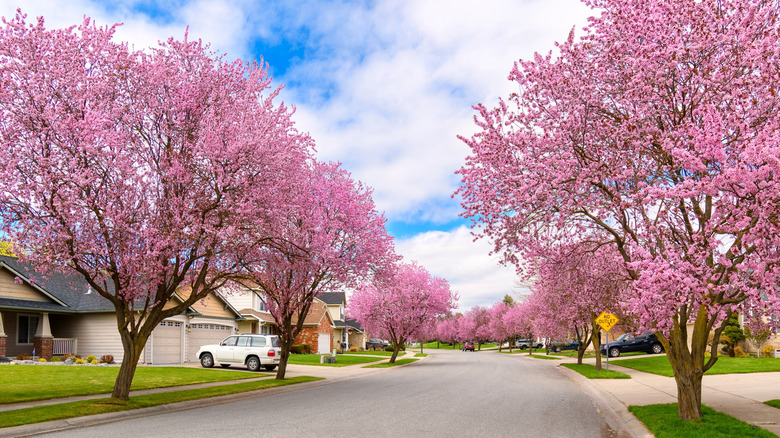
It pays to do a little research before heading to the garden center, especially when it comes to picking out trees. They're a bigger commitment than annuals and perennials: They cost more, they take up more space, and they're harder to remove once they've established a decent root system. Dogwood trees are a prime example of this. They should not be an impulse buy. Yes, they're beautiful and can be an ornamental anchor to a yard, but they have a downside you should consider before you buy: They are prone to fungal diseases. While that problem can be overcome with proper attention, the tree may require more maintenance than alternatives.
The most familiar dogwood in the American landscape is Cornus florida, native to eastern North America. Dogwoods are hardy in USDA hardiness zones 5 through 9. When shopping for dogwoods, ask your local garden center about pests and diseases affecting dogwoods in your area, and select a variety of dogwood that is more disease-resistant, such as the "Appalachian Joy," "Appalachian Blush," "Appalachian Snow," and "Appalachian Mist" cultivars of Cornus florida. In general, dogwoods prefer full sun to partial shade, well-draining soil that's neutral to acidic. Give them room to grow, and prune your trees if the branches get too crowded, not only because they can grow 15 to 25 feet tall and 15 to 30 feet wide, but because proper air circulation and adequate sunlight are key deterrents to fungal growth. If you don't have those conditions, ask about alternatives. Now let's talk about how you can maintain a healthy dogwood tree.
Maintaining a healthy dogwood tree
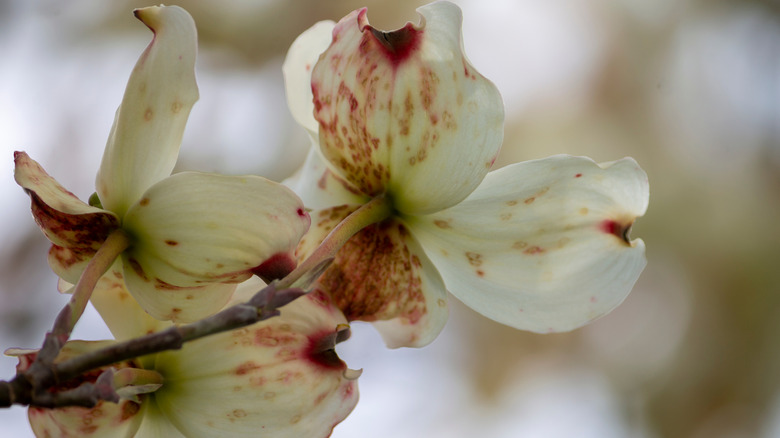
There are insects that pester dogwoods, including midges, scales, and borers, but these are minor nuisances compared to fungi. Spot anthracnose, dogwood anthracnose, and powdery mildew are fungi that plague dogwoods, especially during a wet spring. Anthracnose fungi appear as brownish spots on the leaves and petal-like bracts of the flowers. A few spots are normal, but severe outbreaks should be treated. Powdery mildew is a white dusty powder that is usually benign if it affects dogwoods in late summer, after the peak growing, blooming, and fruiting seasons, but if it appears in spring, it can impede the tree's growth. Other fungi, including cercospora and septoria leaf spots, appear during wet summers and can cause dogwood leaves to turn brown. A significant outbreak of these diseases can result in early leaf drop and a weakened tree, making it even more susceptible to pests and disease.
You can treat anthracnose and powdery mildew with a vinegar spray or copper sulfate as a fungicide. Do so early in an outbreak to keep the tree healthy. Cercospora & septoria leaf spot may require a more powerful fungicide. Just use caution and spray any fungicide after sundown when pollinators like bees and butterflies have retired for the evening.
If dogwoods are high-maintenance trees in your area, you can opt for alternatives which can give you similar beauty with lower demands on your attention. Serviceberries (Amelanchier canadensis) are a native hardy in zones 3 to 8 that match dogwoods' profile. They bloom in spring, require similar sunlight and soil types, and grow to similar heights. Another option is a native magnolia tree (Magnolia grandiflora), hardy in zones 6 to 10, which produces sweet-smelling flowers in summer that attract pollinators, though most grow taller and wider than dogwoods.