

The 5 Best Ways To Keep Weeds From Growing In Between Cracks
We may receive a commission on purchases made from links.
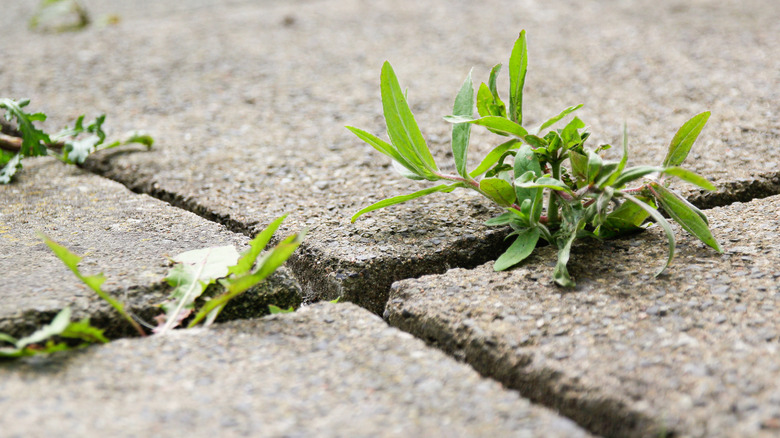
They may seem harmless at first — a few green shoots poking up between the cracks of your patio or walkway — but weeds between pavers or in asphalt cracks can quickly become a costly and persistent problem. Beyond being an eyesore, these unwanted plants can undermine the integrity of your hardscaping, widening joints, trapping moisture, and even dislodging pavers over time. Nobody wants to spend hours every few weeks doing the laborious task of pulling weeds, either, so it's important to find ways to keep weeds from taking hold of the cracks between your pavers.
Not all herbicides are created equally, so it's important to know what you're looking for. For instance, if you want something that's safe to use around kids and pets, you'll probably want to opt for a natural, organic solution, like corn gluten meal, which we'll explore this option in the article. If your priority is finding a solution that is fast-acting and reliable, you'll want a top-rated commercial weed killer. No matter what your priorities are, we'll walk you through picking the best solution for your weed problem to keep your garden looking great.
Corn gluten meal prevents weeds from growing

Whether you just installed your pavers, or just got done with the backbreaking labor of removing existing weeds from your asphalt, consider using corn gluten meal to keep weeds at bay. Corn gluten meal (CGM), traditionally used as to feed livestock, is known as a pre-emergent herbicide. That means that while it won't kill of any fully grown weed patches, it prevents new weeds from being able to sprout and take root by desiccating tiny, new roots. CGM has been shown to be effective against some of the major weed culprits: crabgrass, dandelion, pigweed, and much more. And for the environmentally minded, CGM is a natural byproduct of corn milling, making it a totally naturally derived herbicide.
It's important you're working with a clean slate for CGM to work effectively, so be sure to clear out any established weeds from between the pavers. The meal will come as a powder, much finer than culinary corn meal, which you then sift into the crevices. For optimal results, apply it in the early spring and late summer every year. Be careful when using it near other plants, as it will also prevent grass seeds and other kinds of seeds from sprouting.
Vinegar kills off weeds naturally
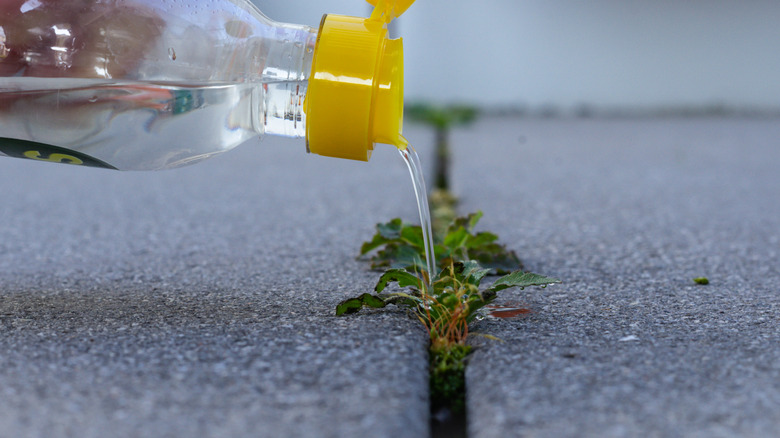
As well as a wonderful cleaner you can use around the house, vinegar also happens to be a pretty solid natural weed killer if you're in a pinch or don't want to use a synthetic herbicide. Vinegar's primary ingredient is called acetic acid, and when it comes in contact with plants, it damages the plant cells. Over time, the fibers break down and the plant will leak, dry out, and die off. Vinegar only impacts the part of the plant it's applied to, so you need to be thorough with it if you plan to use it on the weeds between your pavers. Even though vinegar is decent contact herbicide, it may have a hard time standing up against well-established, leafy weeds, making it ideal to use on young weed sprouts. Vinegar is also non-selective, meaning it won't just target weeds, but will damage any plant it comes in contact with, so be precise when using.
Cleaning vinegar is already diluted to about 6% acetic acid, so you don't need to further dilute it with water, which would cause it to lose potency. Instead, try adding vinegar to a garden sprayer, then drench the cracks between your pavers, or apply directly from the bottle. Repeat weekly to ensure new weeds don't become established, and to knock out any seedlings that have started germinating since the last application.
Install weed barrier fabric
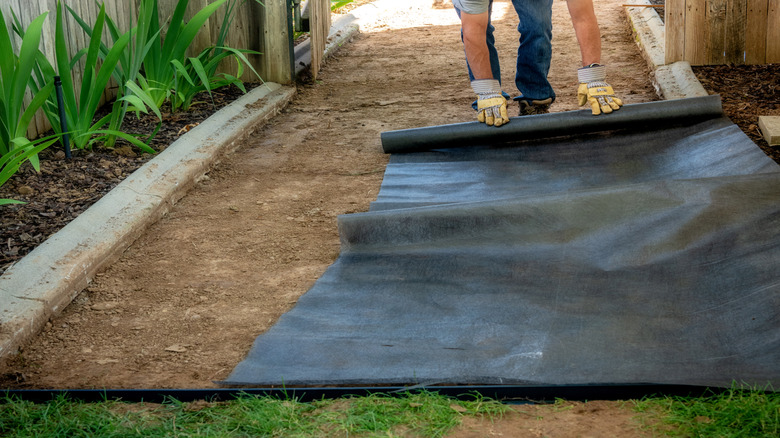
Prevention is key to making sure weeds don't take over your pavers, and one of the best choices for this is weed barrier fabric. Before you install a paver patio or walkway, we definitely advise picking up some from any hardware store. Weed barrier fabrics create a physical barrier between the soil and fallen seedlings, and by blocking out sun and water, effectively kills of any seedlings below. There are a number of weed fabric materials to choose from — anything from polyester or polypropylene to recycled jute, so you should be able to easily find something that suits your needs and price range.
Most weed fabrics come in a roll, so you'll just need to roll out enough fabric to cover the desired area, then cut. From there, you'll simply install your pavers in whatever order or pattern. Make sure the fabric is totally flat as you bring the pavers on, or else you can have unwanted bunching between them, creating an uneven surface. We only recommend this method for pavers that are going to be pushed close to each other, otherwise you may not love staring at less than attractive barrier fabric between the cracks.
Fill the gaps with polymer sand
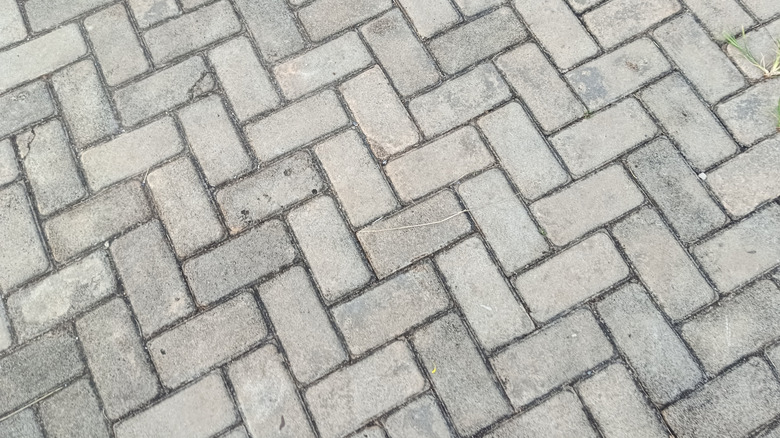
Polymeric sand is a smart upgrade if you're tired of weeds constantly popping up between your patio or walkway pavers. Unlike regular sand, this special blend contains binding agents that activate with water. Once set, it hardens into a durable, weed-resistant seal akin to tile grout that helps keep cracks clear and doesn't erode with wind and rain like regular sand. It's a low-maintenance way to keep your hardscape looking tidy and free from weeds.
Before you get started pouring polymer sand, take a look at your weather forecast. You need the pavers to be completely dry, and some polymer sands require consistently warm temperatures to fully cure. You should also ensure that there are no weeds, pebbles, or other joint compounds between the pavers. You'll want the polymer to fill in the entire gap, top to bottom, so it will be even with the pavers. Then spread the sand into the cracks with a push broom before using a spray hose attachment to thoroughly wet and activate the bonds. The curing time will vary from brand to brand, but it will likely take a few weeks to set completely.
Go for a tried and true weed killer
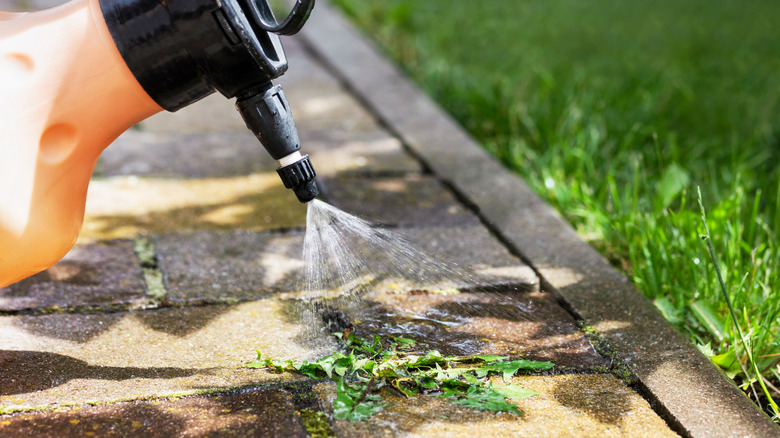
Sometimes you just need something you know will work quickly and effectively — that's when it's time to hit up the hardware store and find a weed killer. Make sure to select an herbicide that is specifically designed to eliminate weeds from hardscape areas like patios, driveways, and walkways. Our top pick is Spectracide's Weed & Grass Killer, which has more than 5,000 5-star reviews on Home Depot's website. It's formulated to target already grown, established weeds like dandelion, crabgrass, and chickweed by targeting and killing the root of the plant, ensuring it won't grow back.
Complete with a sprayer, all you need to do is follow the instructions and apply the product to the weed-infested cracks. Be sure to wear gloves and eye protection. The label says you can expect visible results in just 3 hours, and that you can safely plant new trees, shrubs, or flowers just one day after application! Keep in mind that this product is not recommended in areas that already have desired vegetation like your garden beds or lawn, as this solution will harm their root systems as well.