

If Your House Is Always Humid, You're Probably Overlooking One Thing
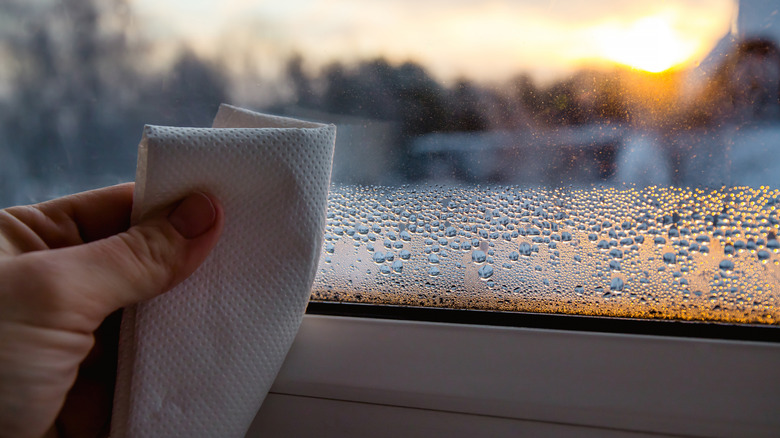
Humidity is the amount of moisture in the air compared to what the air can hold. It's important to have the right level of humidity for comfort and temperature control. If the humidity is too low, it creates a dry heat that can dehydrate your skin and cause static electricity. But high humidity can create a whole host of different problems in a home. For starters, mold and mildew love humidity, which creates unhealthy living conditions as it leads to breathing problems, asthma, severe allergic reactions, or lung infections. Humidity can also cause swelling and warping of wooden furniture and the structure of the home, such as floors and doors. It also makes it harder for the AC unit to regulate the temperature in the house, which increases utility bills.
What is a good humidity level in a house? For the greatest comfort and best indoor air quality, humidity levels should be 30% to 50%. If your humidity is higher than 50%, it could be caused by several things, but one of the most overlooked is improper ventilation. The movement of fresh air into and out of a building is crucial for healthy air quality. Improper ventilation can be caused by several things, including poor insulation and clogged air vents.
Improper ventilation can cause high humidity indoors

Fortunately, there are several things you can do to improve ventilation. The simplest is to open the windows to let fresh air circulate through the house. Of course, this isn't a permanent option, but when the weather is nice, opening them for a few minutes every day can certainly help. Other ways to dehumidify a room without a dehumidifier include using fans to circulate the air in the home. Ceiling fans, a box fan in the window, and exhaust fans are all great options. Exhaust fans in the kitchen and bathroom will keep the humidity low in these areas, which are notoriously high in humidity. Run the bathroom exhaust fan for a few minutes after your shower to remove most of the humidity. Also make sure these fans stay free of dust buildup.
Your home's HVAC system is a big contributor to good ventilation. As long as it's functioning properly, it can help maintain healthy indoor humidity levels. Change the air filters once a month and have the system serviced regularly to ensure it keeps working properly. If you have window units, air purifiers are another great way to reduce indoor humidity. You can also try one of these 5 DIY dehumidifiers to reduce the humidity in your house without having to purchase an additional device.