

Why You Might Want To Stop Mixing Vinegar And Baking Soda For Cleaning
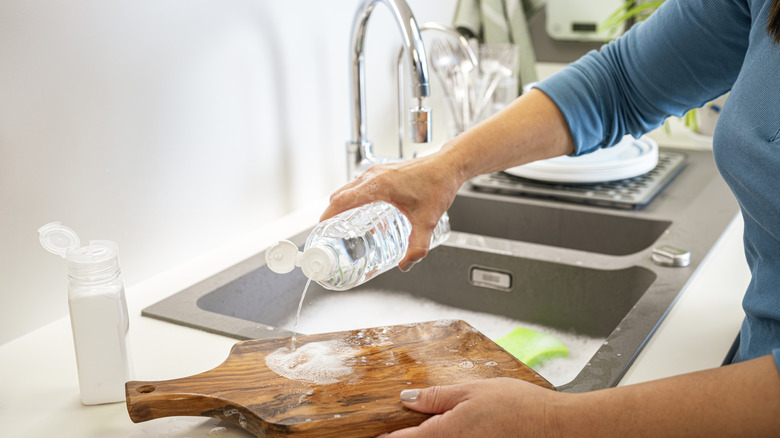
Take a look at any DIY cleaning solution list of ways to naturally clean your home, and you'll see one combo come up over and over again: baking soda and white vinegar. This duo is supposed to be able to tackle a myriad of household troubles, from removing hard water stains from faucets to making your silverware sparkle like new. When combined, baking soda and white vinegar make satisfying, fizzing bubbles. When we see bubbles, most of us assume there's some sort of cleaning action happening, but despite the popularity of these two ingredients being used together, they probably aren't as powerful as you've been led to believe.
That's because baking soda and vinegar are opposites on the pH scale, meaning baking soda is a lightly alkaline powder, while vinegar is acidic. Many people reasonably assume this is perfect, because you can harness the power of both alkaline and acidic cleaning solutions at once, but that's not the case. Instead, the two react upon contact, neutralizing any possible chemical powers. Rendered useless, they dissolve into nothing more than carbon dioxide (responsible for those fizzing bubbles), good old fashioned water, and salt. Essentially, you've got salty club soda, not the world's strongest DIY cleaner. There's no major health risk if you do decide to mix the two, but why work harder when you can work smarter? Thankfully, there are still a number of ways to effectively use these everyday ingredients in your cleaning routine.
Use baking soda and vinegar separately
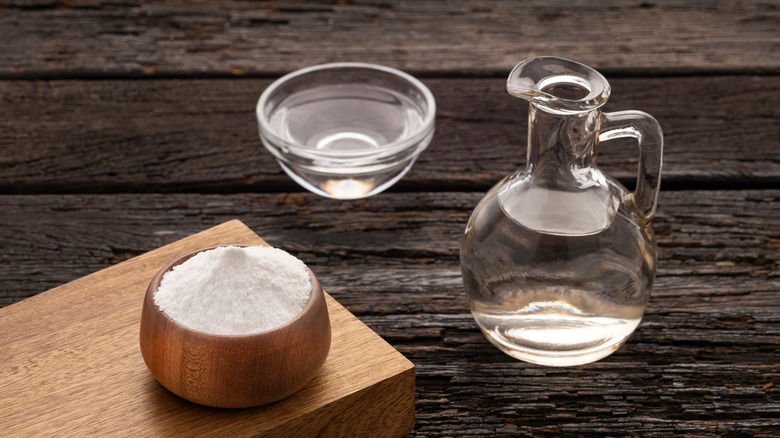
While we don't recommend using these two together, baking soda and vinegar, when used on their own or with other compatible ingredients, can be amazing, natural cleaners. As an alkaline, baking soda is well suited to tackling acidic stains. Acidic stains often include food stains like olive oil or tomato juice, making baking soda an excellent aid when removing laundry stains. All you need is a little baking soda and a pump or two of dish soap to form a thick paste that you can spread over the stained area, then rinse and wash as normal. The alkaline paste will chemically break down the acidic compounds in the stain, while the gently abrasive powder of the baking soda physically separates it from the fabric. Baking soda is also incredible at deodorizing, as the particles absorb nasty smells. To harness these benefits, place a quarter cup of baking soda or so in a shallow ramekin, then place it anywhere you notice malodors, like in the fridge, bathroom, or an old desk drawer.
Vinegar is amazing at breaking down alkaline buildup. This can be anything from cleansing laundry detergent buildup on your favorite towels, or removing water spots on your shower glass door. Try adding vinegar to the rinse cycle to get rid of excess detergent after the wash cycle, and you can expect to find the fabric softer than before, or spray your shower down with white vinegar and water, then scrub and rinse for streak-free shine.