

8 Beautiful Snake-Repellent Plants To Consider Adding To Your Garden
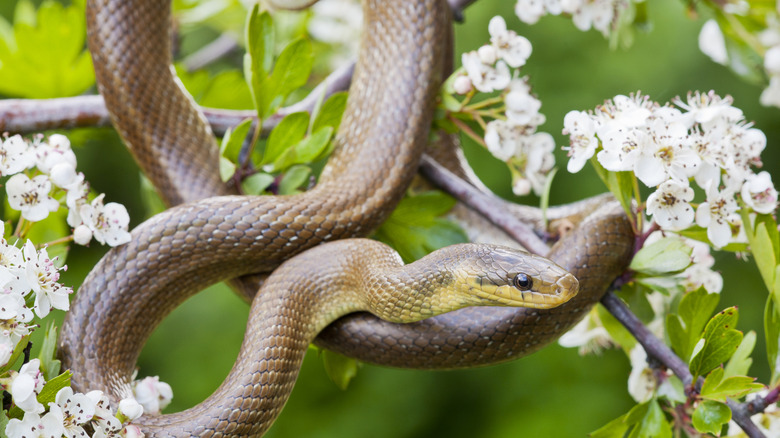
Bees should offer webinars. Over the years, the little pollinators have (mostly) had their reputations reconstructed so that we (mostly) no longer flee bees, shrieking in terror. We have come to understand their importance to our ecosystems, and we (mostly) welcome them into our yards and our gardens. But bees are cute, and some of the other reviled but beneficial critters that need a bee webinar are decidedly not cute. We're thinking of you, wasps and — particularly — of snakes.
Snakes come with a lot of baggage. Some are poisonous, some are so strong scientists now think they can literally collapse the blood vessels of their prey, and some are both. They have the dead eyes of sharks, and (perhaps not coincidentally) they're a symbol of actual evil in some religions. So, until they find time for image-rehabilitating webinars and ad campaigns, we'll probably continue to try to get rid of them.
But, since they're generally beneficial, a more holistic approach to good snake riddance is probably called for. Consensus seems to be that strong scents will deter snakes, and some of our favorite garden plants fit that bill nicely. It also helps to understand what attracts snakes to our yards, since that can also inform our anti-snake plant choices. They come, obviously, for food and water, and they seek safety and sanctuary in the form of cover from bushes, ground covers, and unmowed grass. What emerges as you think through all this is that certain cultural practices can be combined with certain taste in plants to make your garden much more serpent-free than some other gardens you might have heard of.
Holly
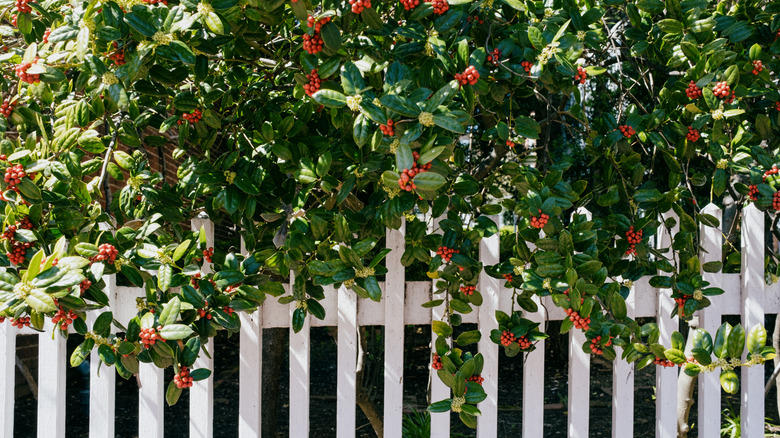
Holly (Ilex aquifolium) is pretty and, to many of us, even festive. But if you crawl through holly bushes or on the ground where dropped holly leaves are refusing to decompose, you certainly wouldn't think of holly as any sort of sanctuary. Snakes don't like how it feels (who would?), and they don't like how it smells. So here we have a couple of the key tenets of snake deterrence: Make things smell strongly, make the environment uncomfortable, and make whatever cover they seek unpleasant for them to inhabit.
Lavender
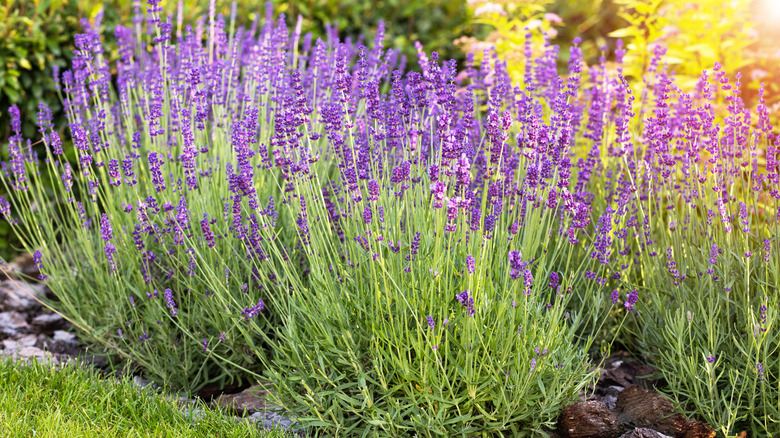
The snake's aversion to strong smells is, unsurprisingly, a common theme when tracking down beautiful garden plants they don't care for. And what strong smell could be more pleasing to humans or more abhorrent to snakes than lavender (Lavandula)? Plant it in transition areas in your yard and near your decks and porches. It's also worth noting that sachets of dried lavender will, reportedly, also send snakes packing, so hold some back for protection after the lavender growing season.
Marigolds
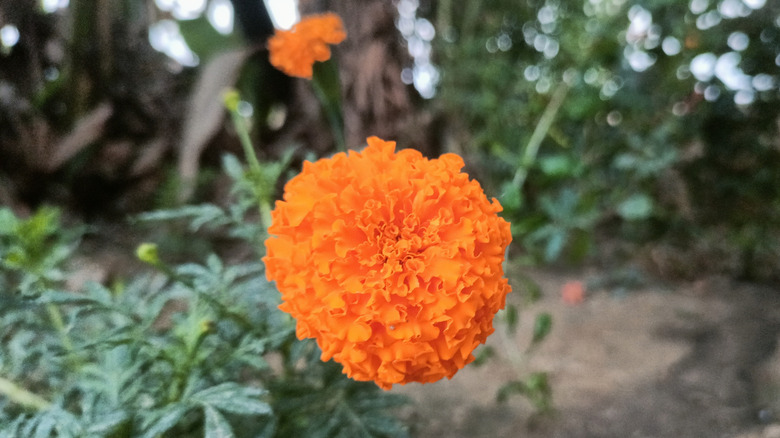
Ahh, marigolds. What can't these flowers, scientifically known as Tagetes, do? They're very pretty, of course, but they also have a knack for attracting the right sorts of visitors (pollinators, for example) while being politely inhospitable to the wrong sort (pests, snakes, and possibly motorcycle gangs). This isn't just about the pungentness of marigold plants and blooms, which not many will claim as their favorite. It's also about the marigold's habit of releasing this scent into the soil via its roots, which keeps snakes from trying to burrow under them.
Lemongrass
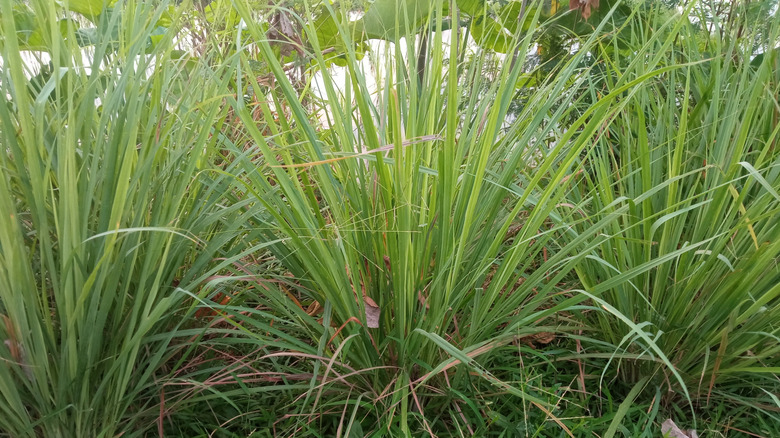
Lemongrass (Cymbopogon citratus) is a strong-smelling type of tropical grass related to citronella that's native to Asia but will grow well in USDA zones 9 to 11. It's common in Thai cuisine and aromatherapy, which are presumably not among the favorite ways that snakes find comfort in their daily lives. It also repels wasps and, while that's not necessarily a good thing, people who annoy wasps are convinced that it is. Snakes are more annoyed by citronella, and maybe Tom Yum soup and Massaman curry.
Rosemary
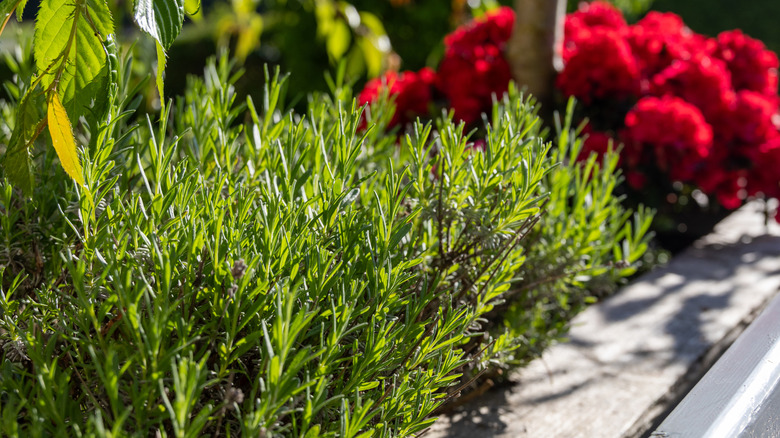
Rosemary (Salvia rosmarinus) is often mentioned as a plant that deters snakes. It's certainly strongly scented and, as we've seen, snakes aren't fond of that. But if you've ever been near a commercial chicken house, you know that the lure of food can be stronger than an aversion to smells, and sometimes rosemary can attract snakes by providing a good environment for rodential snake snacks. So rosemary is a great choice — unless you're also battling an infestation of herb-scented mice. You can also always extract oil from rosemary and sprinkle it around areas less rodent-friendly.
Alliums
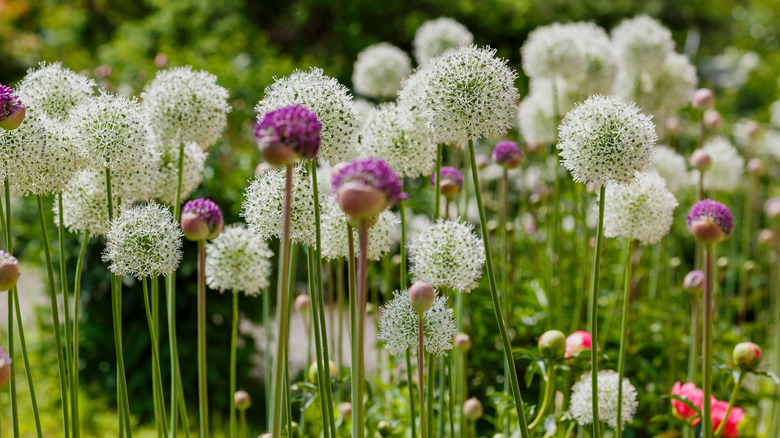
While we're getting all culinary about our snake deterrence, another thing they apparently slither away from is alliums. You might know them as alliums if you value their gorgeous, globe-shaped flowers, but otherwise you'll mostly know them as the family of plants that includes onions, garlic, and chives. Apparently snakes are driven to distraction by the pungent, sulfurous scent of alliums — the exact lack of gustatory sophistication you'd expect from a critter that eats herbed rodents.
Yellow alder
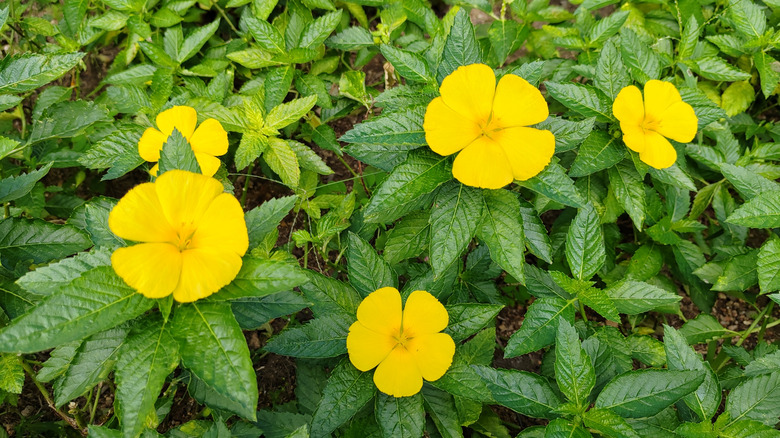
While rosemary might attract snakes, albeit with a bit of cognitive dissonance, as a potential source of food, other plants can discourage them by repelling the food itself. This is the case with yellow alder (Turnera ulmifolia), a pretty if unremarkable plant that also reportedly has a number of medicinal benefits, from improving digestive health to improving sex drive to improving your odds of not being around rodents and snakes. Whether it actually works or not, yellow alder has another undeniable benefit: You can constantly refer to it by its terrifically fun other name, Ramgoat Dashalong.
Daffodils
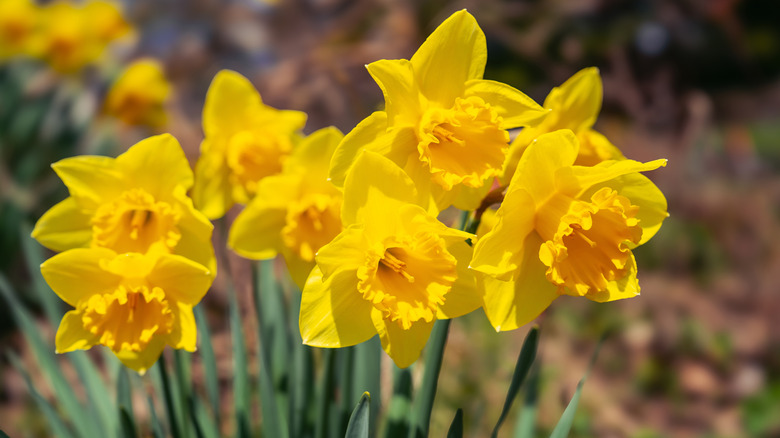
Another way to discourage snake food, and therefore snakes, from taking up residence in your garden is to plant plenty of narcissus. Narcissus, a genus of bulbs commonly called daffodils, have a secret weapon that rodents seem to know about: They are poisonous to squirrels, mice, voles — pretty much everything except certain insects. The poison is found in both the leaves and bulbs of narcissus, which keeps snakes from having much reason to visit. Unfortunately, the poison means they're also dangerous to dogs, so keep an eye out if you have pets.