

The Old-School Tableware Trend That's Suddenly Taking Over Kitchens Again
It's leafy, it's showy, and it's setting the prettiest tables again. Cabbageware, also known as lettuceware, brings a pop of verdant color straight from the garden, offering a playful twist that both delights and surprises. Once seen as the prized possession in grandma's china cabinet, these whimsical plates and serving bowls have charmed a new generation, and collectors are scrambling to get their hands on them.
While cabbageware hit peak popularity in the U.S. during the mid-twentieth century, its story begins in 19th-century Portugal, when ceramicist Rafael Bordallo Pinheiro opened a factory producing the first leafy earthenware designs. In 1887, the Connecticut-based Wannopee Pottery Company launched its "Green Lettuce Leaf" pattern, helping the style cross the Atlantic. Decades later, American artisan Doris "Dodie" Thayer put her own spin on the look, creating sculpted greenware beloved by Frank Sinatra, Jackie Kennedy Onassis, and Palm Beach's fashionable set. Now, more than a century since its debut, cabbageware is enjoying another lush moment thanks to the funky-retro shopping trend that's taking over.
Why cabbageware is back
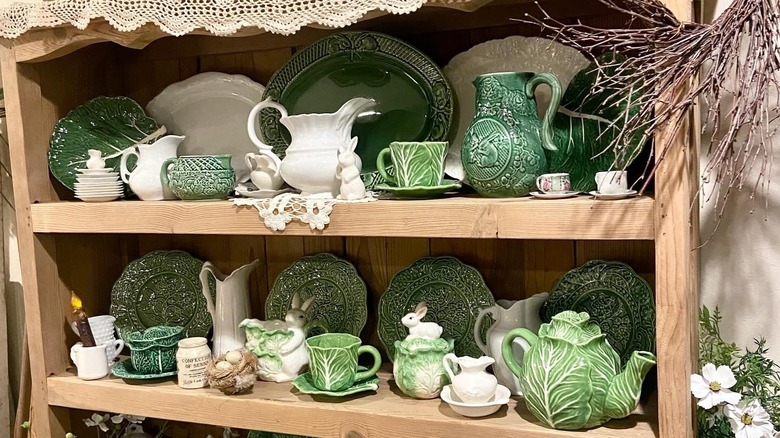
So why is cabbageware back and more in-demand than ever? This may be due to a few factors, but almost certainly thanks to Dodie Thayer yet again. Before passing in 2018, Dodie collaborated with Tory Burch to rerelease her leafy designs in 2013. These pieces are still available today on Tory Burch's website in classic green, as well as pink and white color ways. No doubt that this put cabbageware back in the public consciousness.
But we are also in a broad cultural shift at this moment — the modern minimalism that prioritized clean lines, neutral palettes, and clutter-free cupboards that dominated interior design trends through the 2010's has lost its appeal. Instead, people are looking back at more vibrant design trends from the past, drawing inspiration from the kitschy, playful interiors from America's mid-century. There's not a particular reason these trends reemerge en masse, as they're usually the result of a lot of little things. For one, the generation that grew up admiring cabbageware in their grandparents' homes are now old enough to buy items for their own homes, letting nostalgia shape their tastes. Cabbageware also builds off the already popular cottagecore kitchen design trend, which is characterized by the romanticization of pastural landscapes and quaint old world gardens with a hint of storybook fantasy. Finally, as trends swing, maximalist tableware feels like the perfect counterpoint to years of stripped-down style. And just because their roots are old school, these leafy classics can be styled in ways that feel completely fresh.
How to find and style cabbageware today
If you're convinced you need to get some cabbageware in your kitchen, we don't blame you, as these stunning pieces work as functional but playful artworks. Because they've remained popular since their inception, you can still buy them new at major retailers like Williams Sonoma, but we recommend trying to find them secondhand if you can. Cabbageware can be found at antique stores, thrift shops, and estate sales — this means you'll need to hunt, and understand that you might not get a full matching set, but there are numerous benefits. The biggest pro is that secondhand cabbage pieces are typically much more affordable, since they've been mass-produced for so long and often end up on the shelves of secondhand stores. Made from earthenware, these pieces are incredibly durable, so they last a long time and often look like new. It's also better from a sustainability perspective as you won't be creating demand for new plates. You can always supplement your thrifted collection with new pieces if there's a particular or rare piece you're desperate to have.
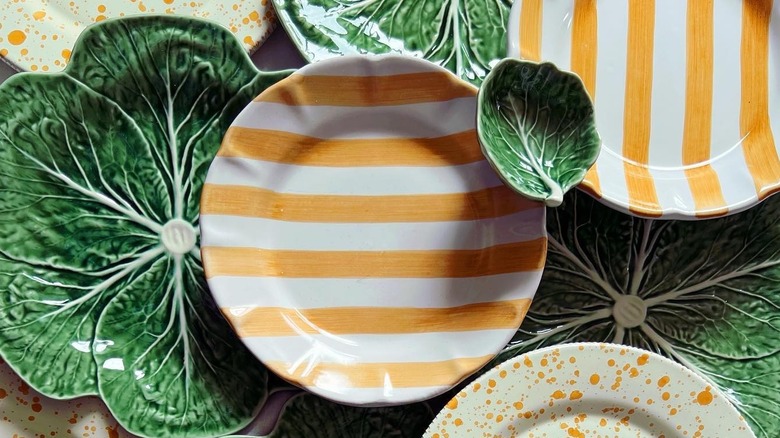
Once you've built up your collection, you can get to styling the china cabinet or making your tablescape look expensive. We love pairing the kitschy leafy green plates and serving platters with bold, modern designs, like the speckled and yellow-striped plates photographed above. The vibrant yellows stand out nicely against the deep gem tones of the cabbages, and delightfully springy vibe. To lean more into the vintage vibes, you can also try pairing your cabbage pieces with antique patterned china like toile, chintzware, or transferware.