

The Flooring Design That Can Make Your Home Much Harder To Sell
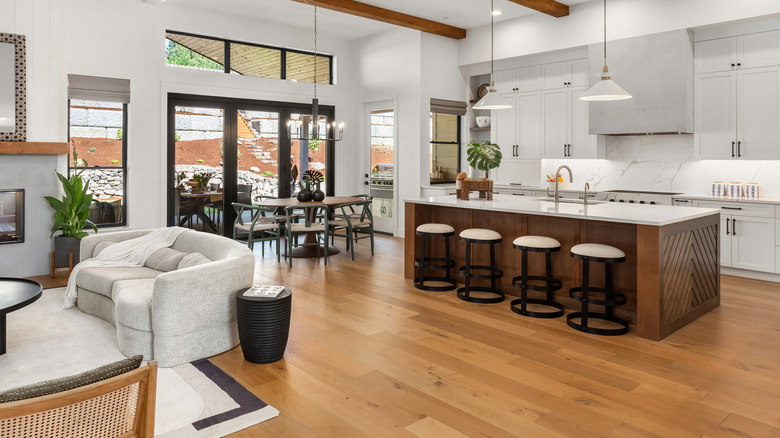
When people think about putting their home on the market, they often consider how the furniture and appliances will affect potential buyers' impressions, and even which paint colors will help their house sell for thousands more. However, one often-overlooked aspect of home design can actually have a huge impact on whether visitors are interested in purchasing a property: the flooring. Believe it or not, having different types of flooring in various rooms of your house can actually cause it to be less attractive to potential buyers.
Now, of course, it's natural to have tile in the bathroom or kitchen, while your bedrooms may have carpet or hardwood. But when every room in the house boasts a different flooring style, it can cause the spaces to feel choppy, disconnected, and smaller than they really are. This is because flooring helps to lead the eye from room to room. So, if the flooring isn't consistent, the space can end up feeling jarring and even cheap. Don't worry, having consistent flooring doesn't mean you have to rip out every room in the house and replace it with one single material. But opting for one or two styles and colors, even in different materials, can help your home feel more open-plan and inviting. But what do you need to consider when using consistent flooring throughout your house?
Important considerations for consistent flooring

While consistent flooring does help keep buyers interested, there are a few aspects of this design choice it is worth knowing about. Firstly, you will need to consider the style of your rooms. A cool-toned laminate like this one from Menards, for example, might go well in a living room with a minimalist design, but it may not be suitable for a traditional study that uses lots of dark leather or earth-toned paint. So it is important to select flooring that you feel will fit the style of each room. You may also need to think about the cost of any repairs that will have to be done in the future. If you are not planning to sell your home straight away, it is likely your floors will need to be fixed at one point or another. Having one consistent flooring type throughout can actually make this more difficult because there are fewer seams between the different rooms, meaning that whole areas may need to be taken up in order to repair even a small section.
Another thing to consider when choosing flooring for your whole house is climate. A good, high-traffic carpet is great for busy families and colder climates because it helps to insulate rooms by trapping in heat. However, it is not a great option for those with asthma or allergies because the fibers can retain dust or other particles. Alternatively, hardwood, laminate, and tile are best for warmer climates as they allow heat to dissipate. However, keep in mind that hardwood flooring and laminate do not do well with too much moisture, so these may not be the best choice to use throughout your home if you live in a more humid climate.