

The Easiest Way To Get Rid Of Unwanted Ant Hills In Your Yard
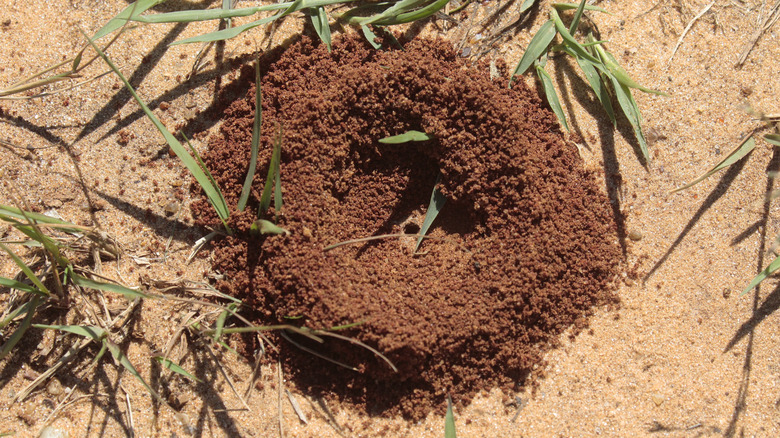
Ants are hardworking little critters. They can carry 50 times their weight, and there are over 12,000 different species of ants in the world. Sometimes it can feel like 10,000 of them are living in your yard, waiting to snack on your bare feet. They can be beneficial to your yard and garden because they nest in the ground and help aerate the soil. They also help decompose organic waste and eat insects that can harm plants. But that doesn't necessarily mean you want mounds of anthills all over your yard. Some ants sting, or find their way into the house. Insecticides will eliminate them, but may do more harm than good. The goal is to get rid of ants without harming pets or children. Not only that, but insecticides may also kill beneficial insects such as bees.
There is a remedy that you likely already have in your shed. For a safe and effective anthill killer, simply use a rake or a shovel to flatten it. This makes the hill harder for the worker ants to find the entrance to the mound. Then dig around the hill toward the center, where the queen lives. Scoop up the soil, place it in a bag or container, and move it to another location where it won't cause problems.
Flatten the hill with a rake or a shovel
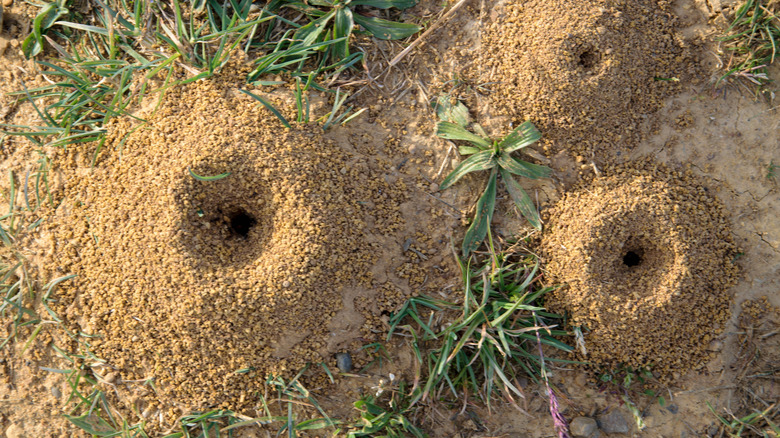
This works because ants live in colonies within the mound, where the queen continues to lay eggs and produce new worker ants. As more baby ants grow into workers, more chambers are built and the mound gets bigger. Flattening the mound confuses the worker ants, and digging it up removes the hill and ants. Afterward, douse the area with boiling water. That will kill any ants that are left in the area and keep them from rebuilding. Once the ants are gone, you'll want to keep them from coming back. Taking away their food sources is effective for that. Ants love feasting on honeydew left by aphids, so you'll often find ants on your rose bushes or other ornamental plants. Getting rid of aphids will discourage ants from coming back to rebuild. You can also get rid of ants fast by making an ant spray with ½ cup of vinegar and 1 cup of water, or sprinkling boric acid on some jelly and placing it near the ant hill.
It should be noted that these suggestions are for most types of ants that build mounds. But if you're dealing with fire ants, you may need to take a different approach. These biters can leave red bumps and blisters that sting, and that is dangerous if you're allergic to them. The most effective method for getting rid of fire ants is by using an ant bait sprinkled over the mound.