

Using Coffee Grounds As A Fertilizer For These Plants Is A Big Mistake
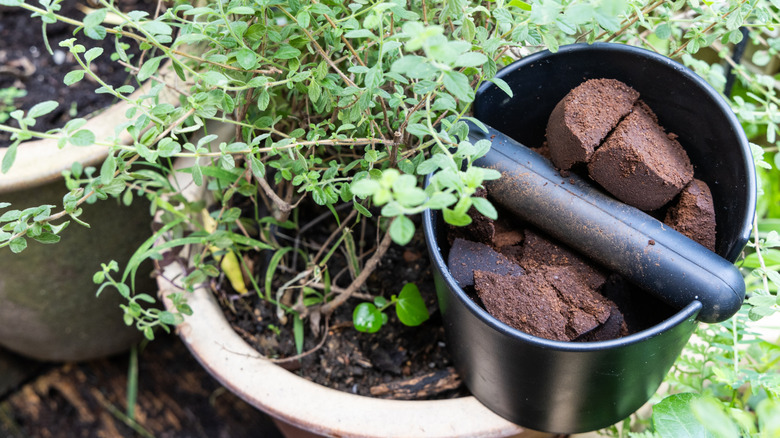
Coffee grounds are not the quick stimulant for plants that they are for humans. The main reasons humans love coffee – the caffeine and the various acids that give coffee its aromas and flavors – are precisely the things that can be harmful to certain plants. Spent coffee grounds do contain many nutrients essential to plant life, especially nitrogen, potassium, and phosphorus, but applying them directly to plants can alter the soil's pH and harm the growth of many types of plants. Some are more vulnerable than others to the harmful effects of coffee grounds, so it's a big mistake to apply your spent grounds directly to them.
Before applying coffee grounds to your garden, take soil samples so that you know which plants are best suited for your garden. If you want to plant plants that prefer alkaline soil, there are ways to make your soil more alkaline, as they won't do as well in a soil that is acidic. Increasing the acidity by adding coffee grounds just makes things worse.
Plants you should not treat with coffee grounds
Seeds and seedlings are especially susceptible to the toxins in coffee. Even spent coffee grounds can still contain traces of caffeine, which coffee plants produce to give them a competitive advantage over other plant species. Caffeine has been shown to prevent seeds from germinating and to greatly reduce the growth of seedlings.
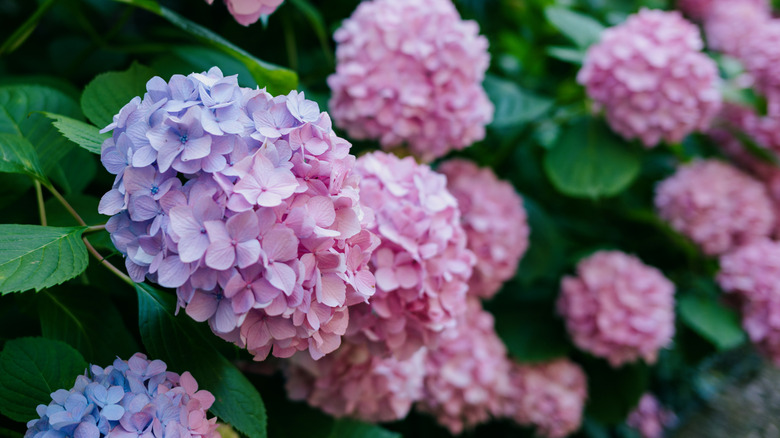
The acids in spent coffee grounds, including tannin and chlorogenic acid, are what change the soil pH and make it inhospitable for alkaline-preferring plants. Many herbs, including lavender (Lavandula angustifolia), oregano (Origanum vulgare), and thyme (Thymus vulgaris), prefer neutral to alkaline soil. So too do veggies like asparagus (Asparagus officinalis), beets (Beta vulgaris Garden Beet Group), and spinach (Spinacia oleracea). The same applies to ornamental plants like lilacs (Syringa vulgaris) and clematis (Clematis spp.), and if you want your bigleaf hydrangeas (Hydrangea macrophylla) to have pink blooms, grow them in alkaline soil.
Rather than applying spent coffee grounds directly onto plants, it's recommended to add your grounds to a compost pile, where they decompose and release their acids and traces of caffeine, making the pH relatively neutral. So learn how to compost if you don't know how to already, and save your coffee grounds for the compost pile.