

These WD-40 Hacks Are Game-Changers For Painting Around The House
We may receive a commission on purchases made from links.
Painting has a dual nature: You are at once torturing yourself and doing something that will make you happy in the long run. WD-40 can help with painting because of its own multiple personalities, and maybe alleviate a bit of that torture, from WD-40 hacks that make spray painting easier to easing the cleanup process.
With WD-40, one is often left wondering if any particular use is a hack or just, you know, another of the zillion things the water displacer/lubricant/penetrating oil/cleaner does. When it comes to painting, using WD-40 isn't always exactly what the wonder spray's makers intended, but that never stops it from working. A lot of the power of WD-40 comes from the 45-50% of the product made up of aliphatic hydrocarbons. Aliphatic hydrocarbons are commonly used as solvents. Examples include naphtha and mineral spirits, both of which are used for cleaning and thinning paint, among other things. It also contains less than 35% of a petroleum-based oil, the viscosity of which is reduced by the solvent, making it a good choice for removing paint from surfaces and brushes, just as mineral oil is.
Use a WD-40 nozzle on your spray paint can
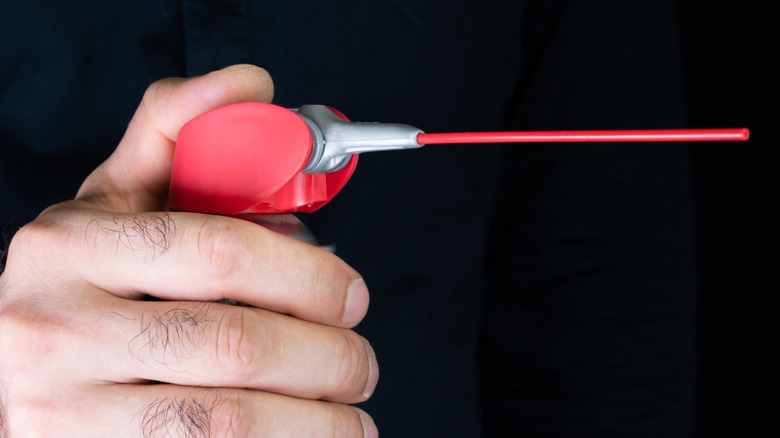
If someone suggests swapping your WD-40's spray nozzle cap onto your spray paint can, you might react like YouTuber @DuncanCustomAirbrush and think, "There's no way that will work." Or your reaction might be more like, "There's no reason to bother." @DuncanCustomAirbrush doesn't have the second reaction because he already knows that the straw promotes precision and reduces overspray. They're also useful for spraying hard-to-reach areas and for decanting spray paint into a container.
You can buy spray paint can nozzles like Hyatt's master cap set and, if you do a lot of varied spray painting, it might be worthwhile. But WD-40's Smart Straw is more comfortable and more flexible than the cap that comes on most spray paint cans. It has an easier-to-use trigger, and the straw can be flipped up for precise application or down for wider application.
The real WD-40 aficionado, however, might be wondering if one can use Rust-Oleum's comfort grip with WD-40 rather than paint. Or, perhaps even better, can one stick a can in one of those spray can extension pole adapters and extend the reach of WD-40 to the very heavens? We don't know yet, but we'll certainly be finding out. This afternoon, if possible. The point is that spray can nozzles are often interchangeable, so why not interchange them? Just don't forget to invert the can and give it a good blast after spraying paint to clear the valve nozzle.
Do you even lift lids, bro?
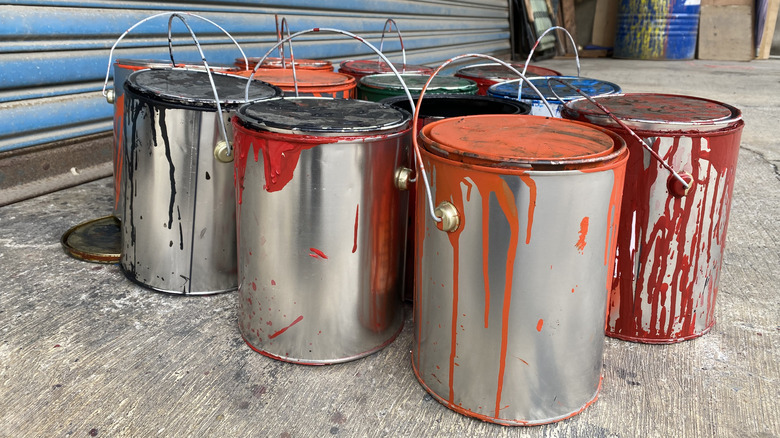
You've heard the old "we can put a man on the moon, but..." bit. As in, we can put a man on the moon, but we can't make a paint can that doesn't get drips of paint all over it and refuse to open the next time we need to use it. It's a maddening problem, and in spite of our most inventive efforts, chances are most paint cans in your storage room have that telltale V of paint down their sides from pouring it into a roller tray or paint cup.
Thankfully, all you need to do to get around this challenge is to spray the joint between lid and can with the miracle stuff, give it a few minutes to penetrate, and the can should open right up. There could be a lot of things going on here. WD-40 is aided in its penetrating power by having its lubricating oil thinned by its solvents. So, you have a solvent that dissolves paint, oil that lubricates the surfaces and makes them separate more easily, and a low viscosity that allows the oil to get into tiny cracks in just a few moments. How could it not work? But, again, take care with latex paint and make sure you clean all the WD-40 away before its oil can contaminate the paint.
Keep paint brushes clean and supple
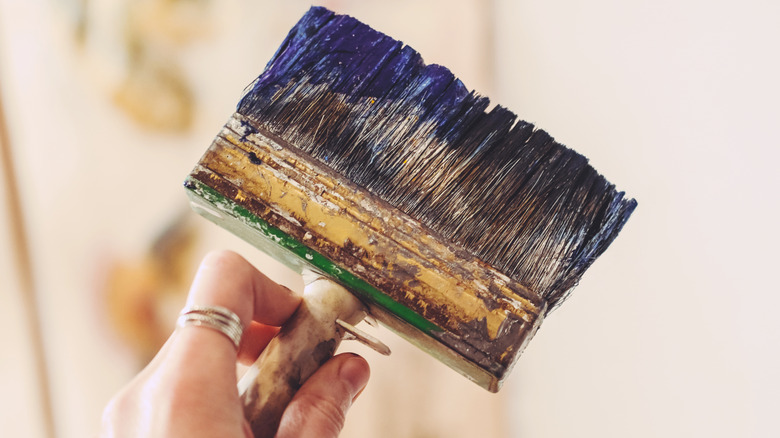
It usually goes something like this: Time to paint has rolled around once again, and you go in search of your brushes. When you finally track them down, you find them in various states of disrepair. Half are covered in dried paint; half appear to be paint-free but are nonetheless so stiff they suggest chisel more than brush; and half have rusty ferrules, those metal bands that somehow hold brushes' bristles to their handles. Yes, that's three halves — this is the scope of the problem we're dealing with here. But take heart: WD-40 can make reusing paint brushes easier than ever
The original WD-40 formulation can go a long way towards resolving all of these problems. Not only can WD-40 help with cleaning paintbrushes and protecting the ferrule from rust, but it really excels at reviving brushes with dried-on paint from last year's hallway refresh. And perhaps the best part is that it will keep your brush soft for the next time you drag it out to appease the gods of fashionable color. The oil in the WD-40 can even help restore a natural fiber brush that's been inappropriately used for water-based latex paint, but note that you'll need to make sure all the oil is cleaned away before you use a brush for latex paint again because the combination can cause "fisheye" paint bubbling ... and if you've never heard that term before, just know that you'll hear it again in a moment.
Remove stains from walls so they don't make painting even harder
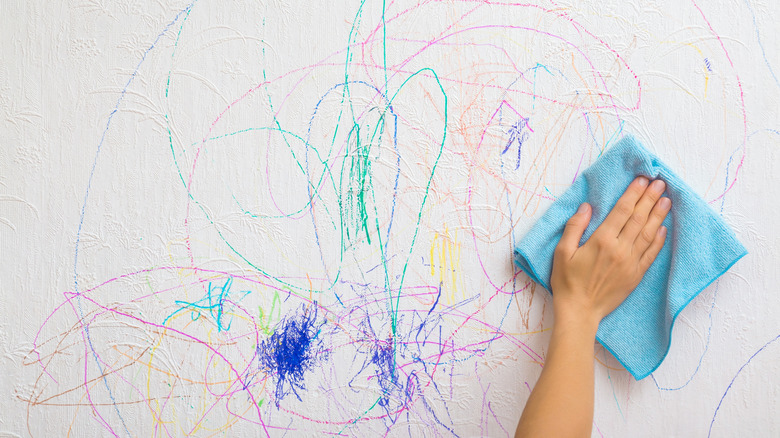
Okay, remember that fisheye paint bubbling problem that's caused by contaminating latex paint with oil? It turns out that oil isn't the only cause of fisheye in paint, and unfortunately, if you're a parent you're not going to like some of the other causes. Wax and grease on your walls will keep paint from adhering properly, and there's no better source of wax and grease on a wall than a child with a chicken nugget in one hand and a crayon in the other. And even when you can paint over your child's wall art without adhesion problems, it can require extra primer or paint to cover properly.
For even stubborn wall stains, WD-40 can come to the rescue. Just soak the stain in WD-40 for 5-10 minutes, and it will probably wipe away with a dry cloth. For less cooperative stains, replace the dry cloth with fine steel wool or a microfiber cloth. But remember that WD-40 does contain oil, and even though it's a light oil, it can still cause problems with water-based paint, so it's a good idea to give the wall a good cleaning with some dish soap before painting to remove any traces of oil.
Unpainting is harder than painting, and it's what WD-40 does best

You have the idea by now that WD-40 is most useful for undoing the unfortunate side effects of painting. And the most unfortunate side effect is that, from time to time, you will have painted something that you would like to unpaint. The best case for using WD-40 to remove spray paint comes from @ArchieHere, a somewhat indescribable YouTuber who likes to test TikTok claims. In this video, however, he shows you that WD-40 will remove spray paint from a Volkswagen (or, any car, for that matter).
It takes a little time, but he gets all the spray paint off with fairly little effort and almost no expense. As they say about most hacks (and most Volkswagens, for that matter), your mileage may vary. A car with a good clear coat or a surface with well-cured paint will probably be easier to remove fresh spray paint from, and obviously a more porous surface might require other techniques.
Of course, cars aren't the only places one accidentally gets paint. It seems far more common to find spilled or over-sprayed paint on one's floors, and WD-40 can help there as well. Just soak the unwelcome paint, scrape it away, and finish up with a quick soapy water cleaning.