

The Best Way To Keep Mice Out Of Your Home - And Most People Don't Do It

We may receive a commission on purchases made from links.
Many of us look forward to fall and its cooler temperatures and seasonal delights like fresh apples and pumpkin spice lattes. You know who does not like cooler temperatures? Mice. As the weather gets colder mice will seek warmth, like the inside of your home. That's why you'll see an increase in mouse activity in the late fall and early winter, and why you should take steps now to prevent their easy access to your home and save yourself from cleaning mouse urine and feces from clothes and surfaces. Plugging up gaps and holes in your home is the absolute best preventative action you can take to keep rodents outside where they belong. You may be thinking, there is no way I'll find and fix every gap that may let a mouse into my house — and you may be right. But every hole you plug will decrease the chance of a mouse making a home in your house. Although they can travel further, most mice don't move more than 10 to 50 feet from their birth nest. So, every access point you block will decrease entry, as Mickey and Minnie won't be going on a safari to find a new home.
Start your efforts on the outside of your home. At ground level, examine foundation and lower wall sections. Any gaps wider than ¼ inch should be plugged with steel wool. Mice can't chew through holes plugged with steel wool. It is also a good idea to caulk narrower cracks. You can caulk over the steel wool as well to further weatherproof your repair. Next make sure the weather stripping on your doors is free from cracks, especially at the bottom of the doors.
Bringing your pest-proofing indoors
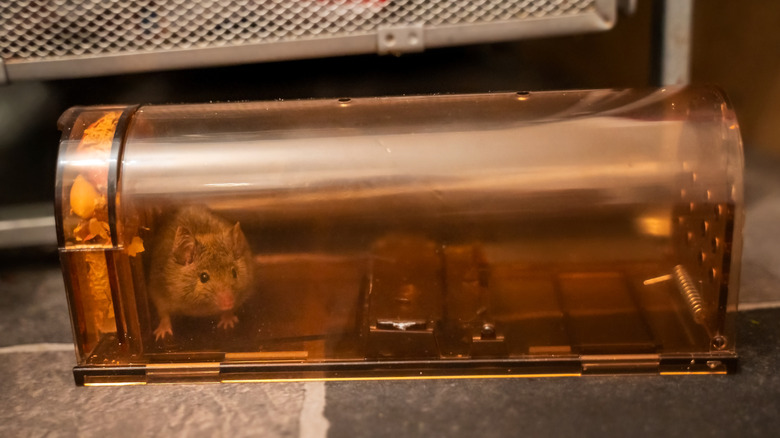
When it comes to mouse proofing your home an ounce of prevention is worth a pound of cure. Taking the time to prevent their entry now when the weather is still nice is an effort well worth undertaking. Inside your home, inspect where the electrical service and plumbing enter your house. Fill any gaps with more steel wool, tamping it tightly into the openings. In the same way, look under your sinks in the kitchen and bathrooms, and plug the gaps you find around the pipes. Check window wells and vents, including your dryer vents, for gaps. Inspect areas around any ducting in your home, looking for mouse poop. Even if you think the mouse poop is very old, it is a good place to put mouse traps, as the area was inviting to a mouse once, so it can be again.
Speaking of mouse traps, place them near walls. Mice usually don't like to traverse wide open rooms. Traps are also an effective way to address an established infestation. There are even no kill traps available the Teal Elite rodent trap from Amazon. And, as always, if the problem becomes a health hazard (mouse droppings in food, near where children play) it's time to call in a professional exterminator.