

How To Grow Hostas From One Plant Forever (It's So Simple!)

That popular foundation of a shade garden, the hosta (Hosta spp.), is a beloved perennial due to its diverse green foliage and thick coverage. With over 3,000 varieties to choose from, you may have planted a wide array of colors and sizes of this groundcover in your own garden, and no doubt there is a standout or two that catches your eye each growing season. While it isn't hard to learn how to grow hostas, propagating your favorite variety may be a bit of a mystery. But you can actually keep replicating your favorite plant forever, for your own enjoyment or to share with a friend, by following a few simple steps.
Hostas grow by rhizomes, which are plant stems that grow horizontally under the soil. Multiple "eyes" or shoots grow up from these rhizomes, and separating and replanting these shoots is a method of asexual propagation, where you can create an exact genetic copy of your favorite plant. Hostas are actually very easy to propagate in this way, meaning you can have endless copies of your favorite variety.
Easy steps for hosta propagation
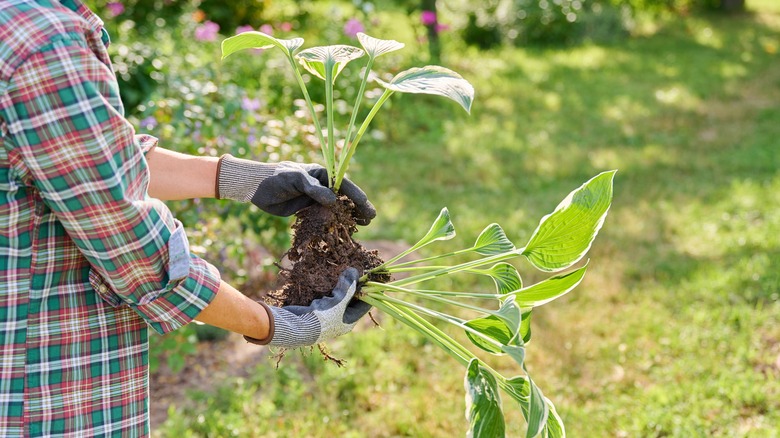
Early spring, when hostas are just emerging, is a good time to propagate your plant. Fall also works for hosta propagation, but make sure to do it a few weeks before the first anticipated frost so your new mini-hostas have time to take root. Water the soil around your plant well a day or two before you dig it up to make the extraction process easier. Depending on the size of your hosta, you'll have to dig down between a few inches to nearly two feet to ensure you are getting to all of the roots.
Once you dig out your hosta, gently break it free from all its dirt and begin to separate it into parts that include roots, rhizome, and stem. You can start with the stem and work your way down to the roots to determine the best place to split it. Don't worry too much about cutting in the wrong place — hostas are notoriously resilient, and their parts are easy to see once you pull the plant free of the soil. Use a sharp garden knife to cut the plant apart, leaving two or three leaf points attached to each cutting.
Replant your little hosta copies into containers with a well-drained soil mix that includes plenty of organic matter and grit. You don't want the new plants to become waterlogged, although they will need plenty of watering in the first weeks after propagation. Plant your new hostas in the ground in spring after the last frost or in fall ahead of the first freeze to ensure healthy rooting. You can keep splitting your favorite hostas over and over again as they grow, keeping your garden full of fresh plants and your friends happy with hosta gifts for years to come.