

The Common Kitchen Staple That Doubles As A De-Icer During Frozen Winters
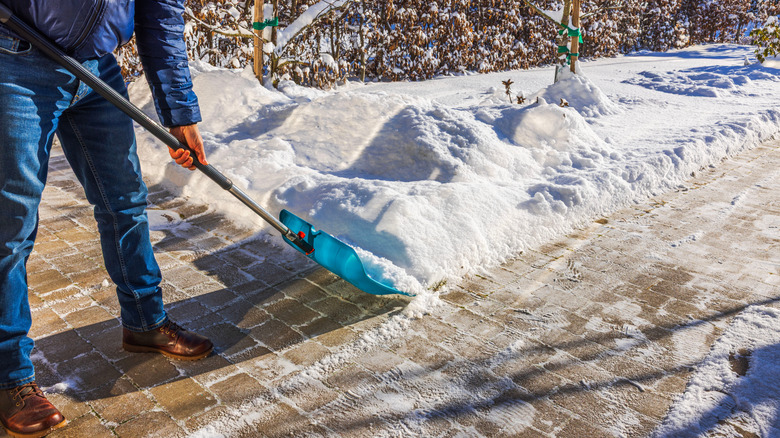
In the lead-up to winter, stores and garden centers will put out the seasonal tools: shovels, car scrapers, and salt-based ice melts. This last one can vanish in a hurry, as it is highly useful for melting ice and preventing it from building up on your driveway. However, if you're not able to get your hands on some, or run out before a major freeze, you could find yourself in a slippery position. Thankfully, there is a common kitchen staple that will double as a de-icer: white distilled vinegar.
White distilled vinegar is effective as a de-icer because its naturally acidic nature will lower the ice's melting point. It's an excellent alternative to the numerous different types of salts you can use to de-ice your driveway and walkways. It is an especially good alternative if you want to avoid rock salt. Vinegar's ice-melting properties come from acetic acid, the chemical compound that lowers the melting point of ice. On its own, vinegar is enough to melt away small patches of ice or, at the very least, turn them into slush that can easily be brushed away. However, this is not the most effective way to use it.
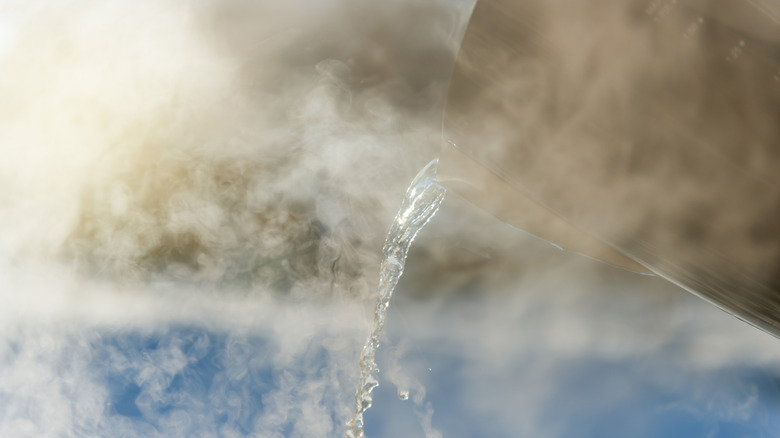
The best way to utilize vinegar as a homemade ice melt is to combine it with equal parts boiling water. When combined, these two will melt away sheets of ice. You may need to use several applications depending on how thick the ice is, but it will soften the ice so it can easily be broken up and shoveled away. Keep in mind to remove any of the remaining water that accumulates from using this method, as it will refreeze and cause the same issue.
How to effectively use vinegar for de-icing
A vinegar and water solution can also be highly effective at preventing frost and ice from building up on your car. While you should never use hot water on a freezing windshield, a bottled mix of one part water to three parts vinegar, applied to your windshield, windows, and rear window at night, will prevent frost from accumulating. You can also spray it on in the morning, as the vinegar will help dissolve any ice build-up. Overall, vinegar is a handy ingredient to have when you need to get yourself out of an icy situation.
Even if you have rock salt on hand, there are drawbacks to it. For one thing, it contains various chemical compounds that will cause irritation for pet paws and gastrointestinal distress if swallowed. Rock salt will also cause damage to your driveway and walkway over time, due to the increased freezing and thawing cycle, as well as the chemicals found within it. So, if you're averse to rock salt and don't find yourself utterly encased in super thick ice every winter, vinegar can work just fine for you. If you're still keen to use it, it's important to know how to properly dispose of rock salt.