

Is This Popular Tree Growing In Your Yard? Prune It In Winter For A Thriving Spring
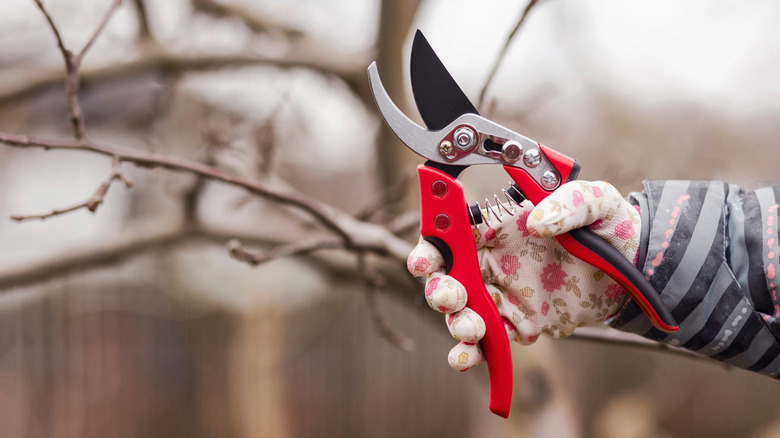
When the summer is gone and you're knee-deep in autumn, landscape maintenance tasks can fall pretty far down on your to-do list. The temperatures are cooling, and you're bringing out coats, hats, and wool socks as you admire the golden and crimson leaves as they fall to the ground. But don't put away your pruners and garden gloves just yet. Some of these very trees that are shedding leaves in your yard, particularly oak trees, may require a little TLC now to ensure they have a splendid spring.
Oak trees don't require pruning every year, but you should trim them every two to five years, depending on their age. Learning how to age a live oak or understanding the life cycle of oak trees can help. The challenge is understanding when to give them a haircut. Oaks are susceptible to a disease called oak wilt that usually strikes in the spring. And when you prune during this time frame — April through July — you can actually give oak wilt open doors into your tree, as pests that spread the disease are tempted by those fresh pruning wounds. The better time to trim your oak is during the late fall and winter, from mid-November through March.
How to prune your oak tree like a pro
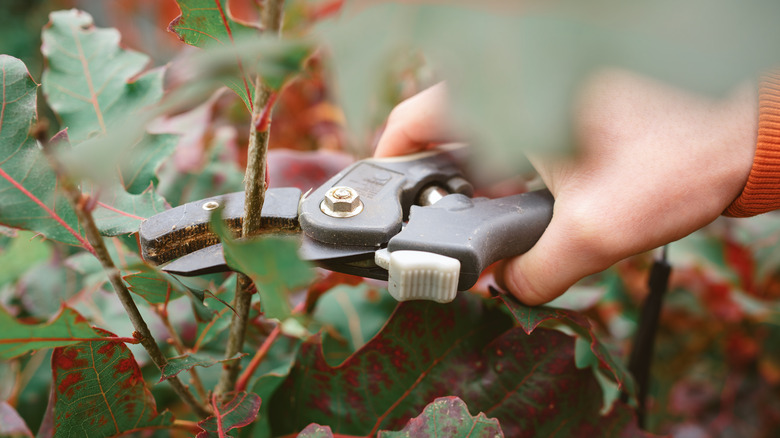
Oak trees have unique characteristics, making them a homeowner favorite. If you're planning to trim your oak yourself, make sure you have essential safety gear like a hard hat and goggles to protect against falling limbs. Smaller tools like pruning or lopping shears are great for removing dead branches, while larger limb or rope saws can handle thicker wood. Unless you're experienced, skip the chainsaw. Always use a ladder carefully, and never overreach while trimming; oak branches can be heavier than they look.
When it comes to shaping your oak, the technique matters just as much as the tools. Start with thinning, which removes dead wood and crowded leaves to improve airflow and light around the tree. For low-hanging limbs, crown raising can make space for walkways or driveways, while reducing height can help manage oaks that are growing too close to roofs or power lines. The key is to make clean cuts without nicking the branch collar: the spot where the branch meets the trunk. And if any trimming requires you to climb high or handle large branches, it's safest to call a professional arborist. With proper pruning, you can look forward to your oak tree getting its leaves in the spring.