

Gardener Urges Homeowners To Remove Highly Invasive, Tick-Magnet Plant: 'Get This Out'

Common buckthorn (Rhamnus cathartica) and glossy buckthorn (Frangula alnus) are species of invasive shrubs that have begun to cause problems across the United States. Considered restricted noxious weeds in several states, both species spread quickly and aggressively. The shrub, native to Europe and western Asia and brought to the U.S. in the 1800s, can eliminate plant diversity in the understory if allowed. It also crowds out other native trees and shrubs and kills native plants such as wildflowers. Worse, buckthorns are extremely hardy, growing easily in a wide variety of conditions. The berries on the plants are also harmful, as they act as laxatives for birds who then spread the seeds in their excretions. Posting on TikTok, gardener @powers_plants called buckthorn "the most invasive shrub we deal with up here in North Crook County," adding: "Get this out."
In addition to damaging the plants and understory around them, buckthorns provide an excellent home for ticks, which carry harmful diseases such as Lyme disease. The dense nature of buckthorns, the shade they offer, and the higher levels of humidity they create makes them inviting to these pests. Their dense foliage also hosts small rodents that can carry them. With more ticks around, you could see an increase in disease transmission to animals and humans. As such, removing buckthorns from your yard or garden is crucial to protect yourself and any pets you may have from dangerous illnesses. Aside from removing the buckthorns near your home, you can also keep ticks away with a DIY repellent and explore some home remedies to kill them.
How to identify and remove buckthorns
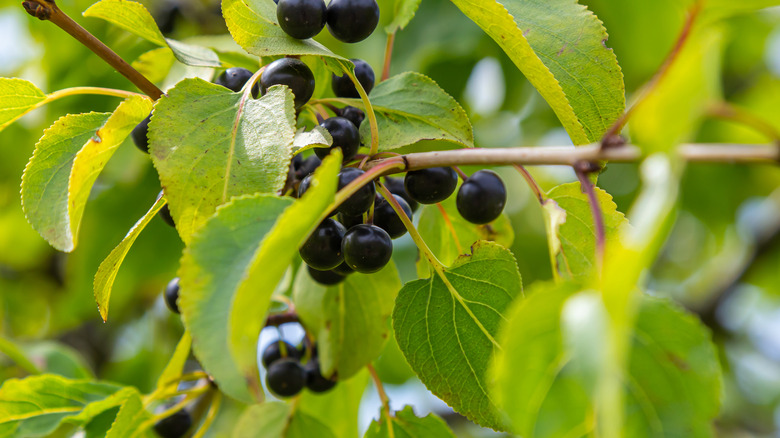
Clearly, buckthorns are one of the invasive plants you want to avoid growing in your yard. Luckily, they're easy to identify — especially in the late fall, because their leaves stay on their branches much longer than other plants. The shrubs, which also appear as small trees, grow up to 25 feet tall and carry small, dark berries that birds will eat. Common buckthorns have finely serrated oval leaves, while glossy buckthorns have longer leaves with veins that curve toward the tip. Common buckthorn can grow in and on the edge of woodlands, prairies, roadsides, and yards. Glossy buckthorn can grow anywhere, whether it's in full sun or heavy shade. You will find thorns on common buckthorn, but not glossy buckthorn.
If you find buckthorn, you should always remove it. One of the best times to do this is the late fall, as the shrubs will be easier to identify. However, if you spot it earlier, you should remove it before it has a chance to spread. If the buckthorn is still young and smaller than ⅜ inch in diameter, you can pull the plant by hand. If the diameter of the base of the buckthorn is between 1 to 2 inches, you should dig the entire plant out. For larger buckthorns, use pruners or a handsaw and cut as closely to the ground as possible, then either apply a herbicide to the stump to kill the roots or cover the stump with double-thick plastic, fastening it as tightly as possible. Leave the covering for a year and cut any sprouts. Whenever you remove buckthorns, gather all the organic material and dispose of it in a plastic bag so it doesn't sprout again.