

Don't Toss Yellow-Stained Pillows — These 5 Easy Hacks Will Make Them Look New
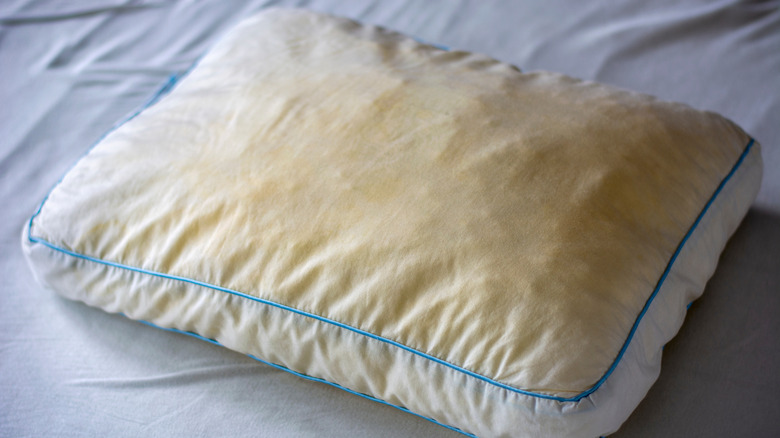
In a perfect world, our pillows would stay fresh and white forever. But even if you regularly wash them and change your pillowcases, all pillows will eventually turn yellow. The reason? Sweat, saliva, and body oils can accumulate on pillows, resulting in discoloration. Skincare products and wet hair can contribute to stains too. So, as long as you're using pillows every night, they're bound to develop stains one day.
If you're tempted to toss pillows with stains, you might want to hold that thought. It's possible to make them look new again, and you don't even need bleach. In fact, it's recommended to avoid using bleach to clean bed pillows, as it can be harsh and damage the fabric. Instead, consider using the following hacks for brightening your pillows. Not only are these methods simple enough to do at home, but they're generally safer and gentler than bleach. You might even already have some of these cleaners, such as baking soda, hydrogen peroxide, and vinegar, sitting in your cupboards.
Pre-treat with baking soda
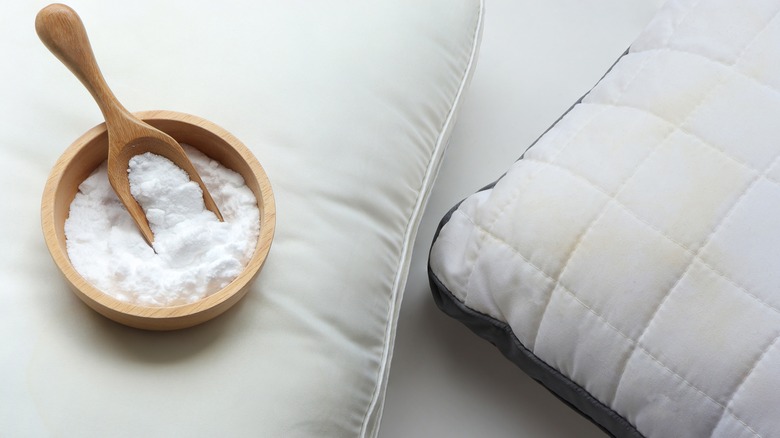
Before deep cleaning your stained pillows, pre-treat them with baking soda. The humble cleaning product has natural whitening properties, which can be helpful for boosting stain removal. Baking soda also breaks down dirt and grease, making it easier to remove them with water. What's more, the white powder neutralizes smelly odors, so it will leave your pillows smelling fresh.
For best results, make a baking soda paste. Combine 3 parts baking soda and 1 part water in a bowl, then mix until the ingredients form a thick and creamy paste. Want extra cleaning power? Swap the water for hydrogen peroxide, which will lift stains from the fabric as it foams. Spread the paste on the pillow stains, let it sit (or scrub with an old toothbrush for extra stubborn stains), then wash away with water. If there are stains leftover, you can move on to a deep cleaning method.
Use hydrogen peroxide on stains (or in the wash)
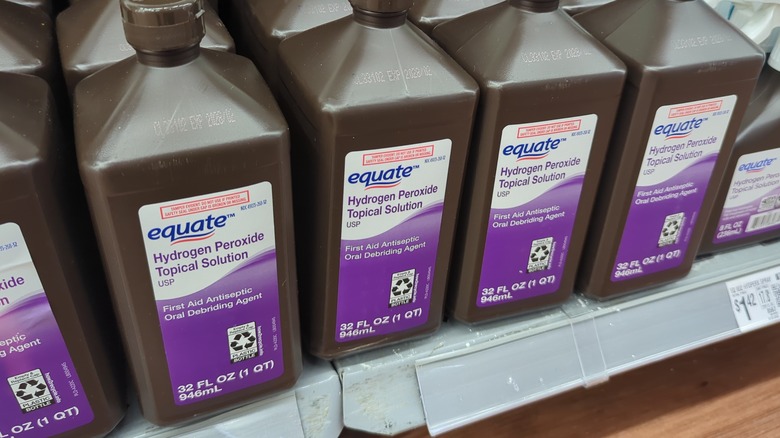
As mentioned, another trick for brightening stained pillows is to use hydrogen peroxide, a staple in first aid kits. The product is made of water and hydrogen, so it looks like plain water, but it can do so much more. When used on fabric items like pillows, hydrogen peroxide will break down protein-based stains like blood and sweat. The liquid can also destroy bacteria, making it helpful for disinfecting and sanitizing your pillows.
Hydrogen peroxide comes in various strengths, but for cleaning purposes, you can use the 3% version from the grocery store. For small stains, pour the liquid on the area straight from the bottle or use it to make the baking soda paste mentioned above. For larger stains, transfer the hydrogen peroxide into a spray bottle and apply it as needed. Let it sit for 10 minutes, then wash the pillow on a gentle cycle with warm water. Alternatively, if you want a more hands-off method, pour 1 cup of hydrogen peroxide to the drum when washing your pillows in a washing machine.
Worth noting, there's a right way to use (and not use) hydrogen peroxide as a disinfectant and brightener. Before starting, always test a small spot on your pillows to make sure it doesn't change the color of the fabric. It's also important to never mix hydrogen peroxide with cleaners like vinegar, ammonia, or bleach, as doing so can produce dangerous gases.
Apply foaming shaving cream
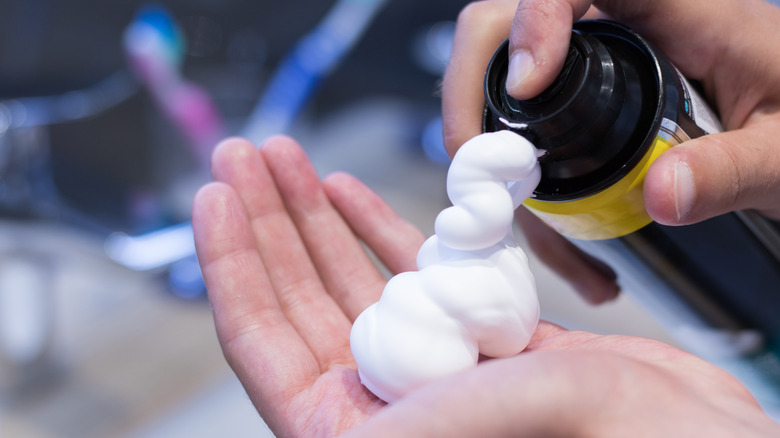
It might sound strange, but gross pillows are no match for an unexpected shaving cream trick. In other words, foaming shaving cream can be used to refresh stained pillows, as it's made with the same cleaning ingredients as liquid and bar soap. This includes surfactants, a type of chemical compound. Essentially, surfactants can join together and create chemical structures called micelles, which surround dirt and pull it off surfaces. The result is a cleansing effect.
To use shaving cream on pillows, spray it on the stains and let it sit for an hour. Next, use a damp cloth to remove the shaving cream, then toss the pillow in the washing machine to remove any leftover residue. Again, be sure to test the shaving cream on a small spot before trying this trick. It's important to use shaving foam without added colors, as they may transfer to your pillow. Avoid shaving gels or creams — these products don't contain the same stain-lifting ingredients.
Reach for enzyme-based cleaners
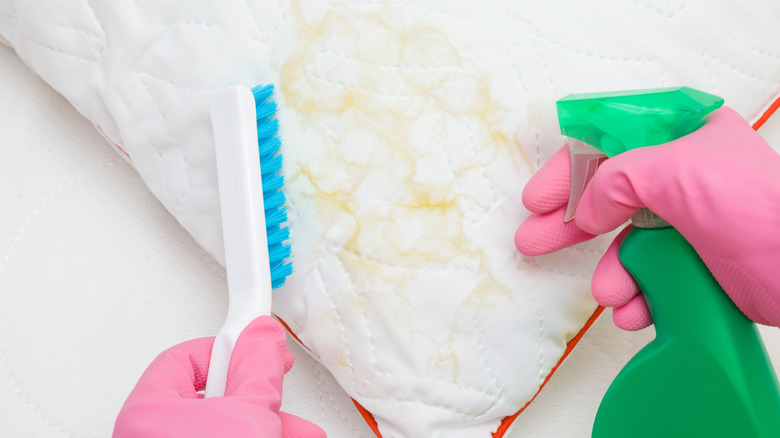
If the aforementioned hacks don't work on your yellow-stained pillows, it might be time to try enzyme-based cleaners. You can find them at the grocery store in the cleaning aisle. These products contain beneficial bacteria, which produce molecules called enzymes. A quick biology lesson: Enzymes can catalyze, or accelerate, chemical reactions. There are many kinds of enzymes that trigger different reactions, but the ones that break down proteins are best for cleaning. That's because stains, including those on yellowed pillows, are typically protein-based.
In general, enzyme cleaners are best used as a pre-treatment before washing dirty pillows. Simply apply them to the stains, let them sit for several minutes, then submerge the pillows in cold water. You may want to do this in a clean, empty tub. After about one hour of soaking, wash the pillows with warm water on a gentle cycle. It's the simple tip you need to make yellow-stained pillows look like new again.
It's worth noting that enzyme cleaners can trigger respiratory allergies and asthma, but the risk isn't the same for everyone. There is a higher risk in industrial settings, where exposure to enzyme cleaners is high. In contrast, the cleaners are less likely to cause respiratory issues in the average consumer household, where the exposure is lower. However, if you have a history of respiratory conditions, check with a healthcare professional before using enzyme cleaners.
Wash or soak with vinegar
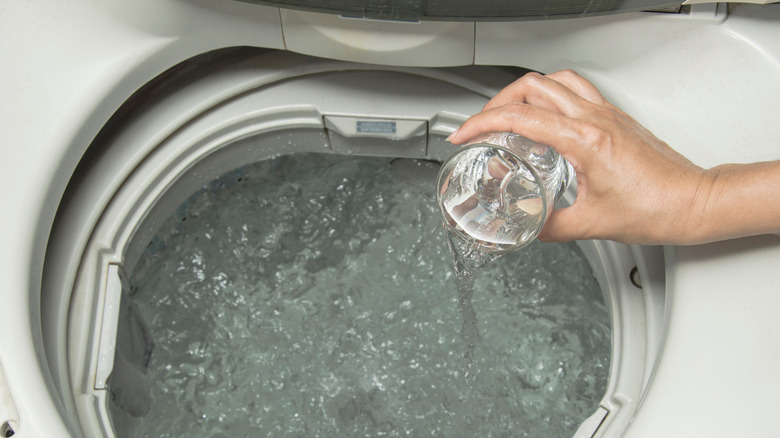
Vinegar cleaning hacks are everywhere now, and for a good reason too. The cleaning staple is inexpensive, natural, and wonderfully versatile, as it can be used to clean multiple areas of the home. This includes — you guessed it — stained pillows. So, how does it work? Vinegar is an acid, which can chemically change the molecules in the stain. This allows the vinegar to pull the stain's molecules off the fabric. In turn, the molecules can be washed away, leaving your pillows looking fresh. It doesn't hurt that vinegar is also a natural deodorizer, so it can help remove bad odors from your pillows, too.
There are several ways to use vinegar on stained pillows. One option is to combine equal parts warm water and vinegar in the bathtub or a large container, then soak the stained pillows for several hours (or overnight, if possible). Next, wash the pillows in a washing machine with warm water on a gentle cycle, along with your favorite mild detergent. Alternatively, you can apply vinegar to a cloth and blot the stained spots.