

How To Prepare Your Hibiscus For Winter So It Comes Back Thriving Next Season

Hibiscus plants (Hibiscus spp.) look absolutely spectacular in your garden, and their large blooms provide a shining spot of color that attracts lovely pollinators such as butterflies and hummingbirds. While hibiscuses might be the crown jewels of your garden, the prospect of losing your plants in the winter can be challenging, especially after you took the time to grow and care for them. So, to overwinter them, you have to start by understanding the needs of your specific plants.
Tropical hibiscus plants are only hardy in USDA zones 10 to 12. These prefer much warmer climates, so, in colder zones, they will act like an annual plant and die in the winter. A tropical hibiscus can survive the winter if you safely transport it inside during the cold months, however. If you have a hardy hibiscus, such as the rose mallow or swamp hibiscus, they can be overwintered outside with the proper care. This variety of hibiscus plant is hardy in USDA zones 4 to 9, so they can endure fairly extreme cold if you protect them in the correct manner. They won't grow at their full height, but they will be ready to grow back in the spring with the same magnificent blooms they showed in the previous growing season.
How to overwinter your hibiscus plants
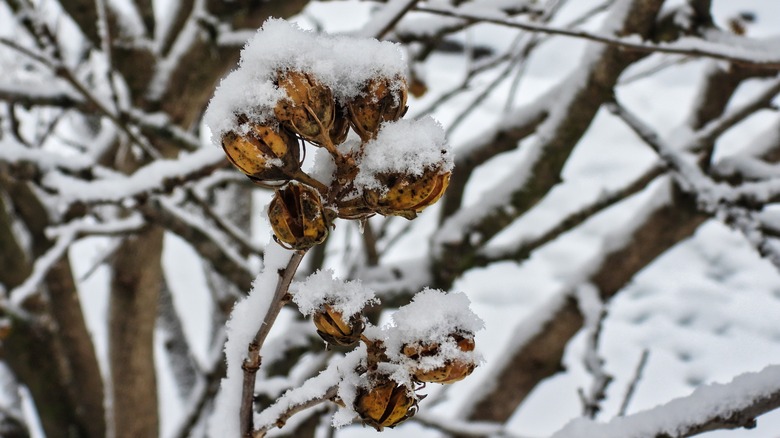
A hardy hibiscus will require the most preparation for the winter, especially in colder USDA zones. While it might die down to the ground on its own, you may be best suited to cut it down yourself. After you've had the chance to preserve a hibiscus flower in full bloom and the flowers and foliage begin to die, you should cut the stems of each plant down to just a few inches off the ground. Mulch around the base of the stems to insulate the roots and retain moisture, then cover the stems. To do this, you can use the traditional burlap or tarps — or you can reuse old bed sheets to beat the freeze. When you cover the plants, just make sure the material you use doesn't come into direct contact with the hibiscus plants, which you can accomplish by propping up the covering.
For your tropical hibiscus plants, you can keep them happy and healthy through the winter by bringing them indoors. Before the first frost, dig up and pot any plants that are in the ground and bring them inside. If you're thinking of planting more tropical hibiscuses in future, you can plan ahead for the winter by first planting them in pots outdoors. Before you bring your hibiscus inside, be sure to thoroughly clean the plant and check it for insects and pests. Once your hibiscus is clear, place them in a spot with lots of sunlight and warmth. Your hibiscus might lose all its growth once brought inside, but it will grow back again soon.