

How To Prep Rosemary For Winter So It Keeps Growing Beautifully Next Season

Rosemary (Salvia rosmarinus) is a wonderful addition to your garden. Along with its beautiful aroma and excellent uses in the kitchen, you can also keep mosquitos away from your home by burning it. If you want to grow rosemary in your garden, however, you must also learn how to care for it, as it'll need assistance to keep it alive and thriving in the winter. To determine what kind of preparation you might need to do, you should start by figuring out your USDA hardiness zone.
If you are in hardiness zones 8 to 11, you can keep your rosemary outside through the winter. These warmer climates mimic the plant's native Mediterranean origins, where it can survive well through the colder season. In zones 6 to 7, you can keep winter-hardy rosemary cultivars such as 'Arp' and 'Madeline Hill' outside — but you may need to take certain precautions to keep them safe, including pruning and burying them. In colder zones, and even in zones 6 to 7 if you don't want to bother with the upkeep, you should bring your rosemary inside to give it the best chance of survival during winter. If you overwinter your rosemary and care for it right, you can keep the same plant for 20 to 30 years.
How to overwinter rosemary
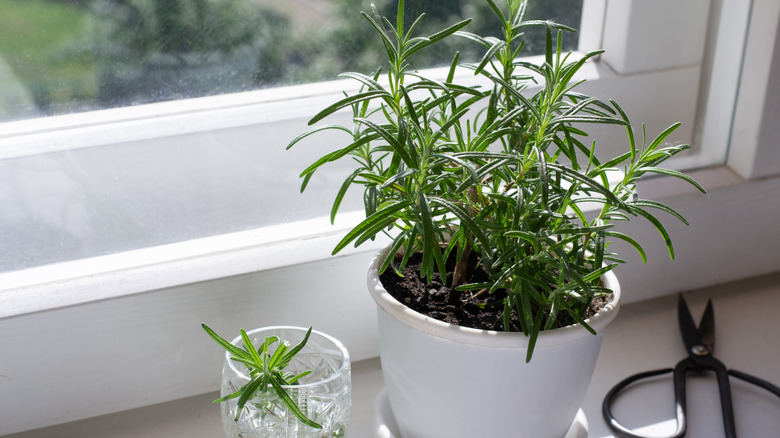
Ideally, you should grow rosemary in pots for easy transport indoors later in the year. If you planted it in the ground, you will need to dig the plant up and pot it. Make sure to use sandy, well-draining, slightly acidic soil for your rosemary. Before you bring any plants inside, you should carefully inspect and clean them for any pests. While rosemary is typically pest resistant, you should still check just in case, as you don't want to infect other plants in your home. The best time to move rosemary is in early to mid fall, as this gives the plant time to acclimate. When you bring it inside, place it in a south facing window that gets plenty of sun. Don't let it get too warm, though — about 50 to 60 degrees Fahrenheit will do.
In zones 8 to 11, it's relatively easy to overwinter your rosemary outdoors as these plants can tolerate temperatures down to 20 degrees Fahrenheit. In colder zones or during extreme cold flashes, you will need to do more. After the first frost, you should prune the plant down to about 3 inches tall. After pruning, bury it in soil or compost, then add several inches of mulch on top. During times of extreme cold, you can cover your plants with frost blankets or reuse bed sheets to beat the freeze. While there is no guarantee your rosemary will survive the winter, these precautions will give it the best chance of surviving — and providing fresh sprigs of rosemary once the cold goes away.